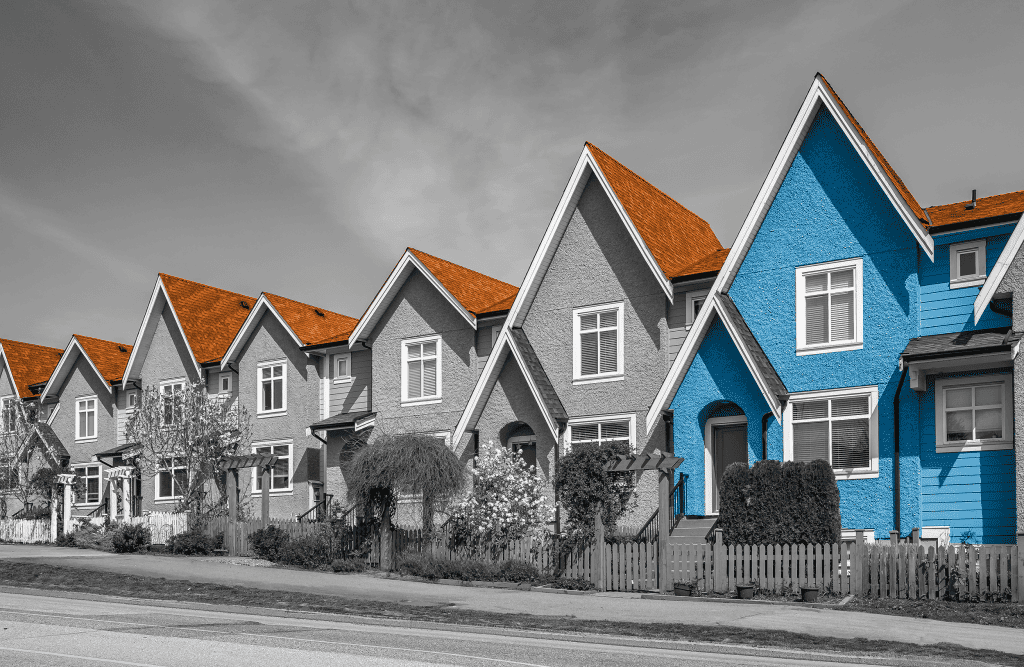
Growing up, the common property we saw in television and movies was always the detached home with a white picket fence. The desire to own one of those otherwise elusive homes is still an aspiration for many Canadians.
In fact, a 2023 Zolo survey found that 62% of Canadians prefer single-family homes. This is a significantly higher percentage than those drawn to condos or apartments (20%) or townhomes (10%).
The location was even more in line with the type of home Canadians look to move into. The suburbs reigned supreme. A majority of 71% of buyers look to escape the city, either to the suburbs (44%) or a rural community (27%).
However, before making a big financial decision that significantly impacts your livelihood, there are some things to consider. Things such as the cost of commuting and overall lifestyle change.
How Does Living in the Suburbs Affect Your Lifestyle?

Depending on your hobbies, passions and the ways you prefer to spend your free time, the suburbs might hinder a lifestyle that is important to your happiness and well-being.
After all, most of the suburban neighbourhoods in Canadian cities are isolated from central locations. But that doesn’t mean that all of them are limited as far as shopping, trendy restaurants, and community events go.
As inner-city markets and downtown metropolitan areas continue to develop, the density increases. This alone forces Canadians to choose a market where there is more space, more amenities, better pricing and better schools — which leads them to live in the suburbs.
Andrew Daniels, a suburban homeowner from Winnipeg, Manitoba, says his decision was easy. “We bought outside the city because the land was more affordable and gave us more space.”
Daniels and his wife decided based on where they’d like to raise their kids. Additionally, the strong sense of togetherness in a small community and the ability to choose their own builder.
“In the city, developments are owned by individual building companies, so you are picking from preset builders if you want a particular lot.”
Otherwise, Daniels says, if anything, suburban living has done the opposite of hindering their lifestyle. They have a tight-knit group of friends on their block, and their kids spend more time outdoors than they would if they lived in downtown Winnipeg.
The Cost of Inner-City vs. Suburban Living

Many homeowners who buy suburban homes assume they get more bang for their buck when living in the suburbs. However, do the savings in the home outweigh the expenses they’ll incur commuting?
Today, buying property in downtown Vancouver can run you an average of $1.5 million. But, buying in a suburb or on the outskirts of the inner city will come in a more comfortable price range of $1 million.
No matter where you choose to live — province or city — affordability is an issue for everyone. But, the suburbs tend to be more affordable overall. This means the next thing to consider is how much your family will spend commuting back and forth between work and home.
MoneySense crunched the numbers. They looked at how much the average family would need to earn to afford a detached home in Vancouver, Calgary, Toronto and Montreal. The longer the commute to downtown, the less income a family will need to afford a home.
For those who buy a property that requires a 30-minute commute, you’ll need to earn an average income of $137,156. The highest income sits at $233,813 for Vancouver, and the lowest payment sits at $69,977 for Montreal. However, depending on the vehicle you drive and the work schedule you run, the annual cost of living — which includes commuting costs — could run you an average of $56,894 of that $137,156 income.
Most financial experts will tell Canadians to try to spend an average of 20% of their total income on housing. However, these added commuting costs force that 20% expense by more than half. This brings the total to 41% of their annual income spent on housing. It’s important to crunch the numbers to determine what suburban living would cost you. Sometimes averages don’t always tell the full story.
5 Questions to Ask Yourself Before You Buy a Suburban Home

Now that we’ve looked at the lifestyle changes and financial burdens that living in the suburbs might have on a homeowner, it’s time to analyze what’s best for you and if you’re meant to live in the suburbs. What are the benefits and pitfalls of living in the suburbs?
- What is the overall affordability — including, on average, pricing per square foot?
- How much space do you need, and how important is privacy?
- Are the amenities above or on par with inner-city properties?
- How is community engagement, and how would this affect your current social circle?
- Do the costs of commuting affect your decision?
It’s never an easy decision to choose what neighbourhood is best for you and your lifestyle, but doing the appropriate research and finding the answers to these five questions can help you determine whether living in the suburbs is for you.