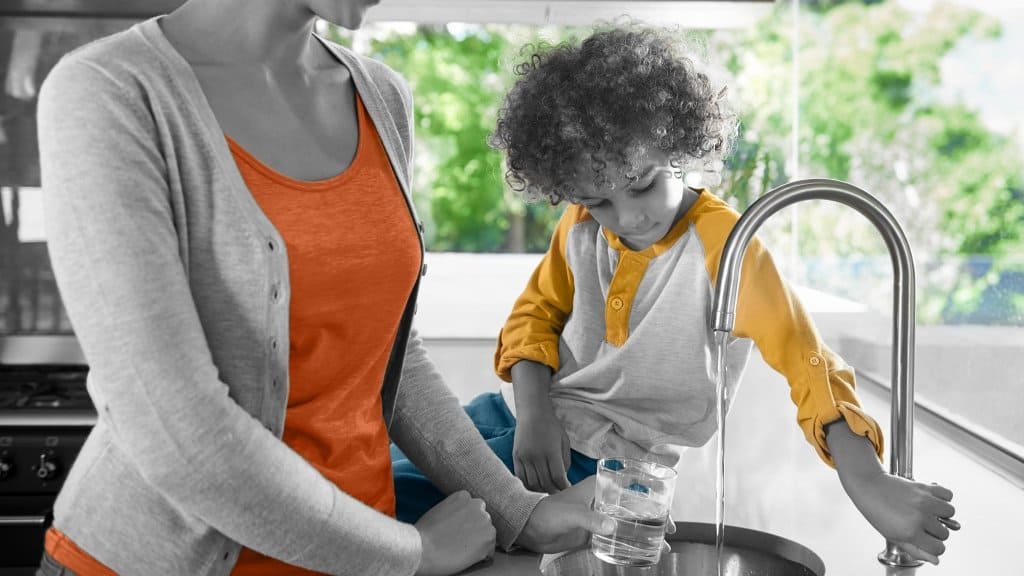
Conserving water is important. The average Canadian uses around 250 litres per person daily (roughly 300 bathtubs full of water each year). Thanks to more Canadians living and working at home, that number is on the rise. Households account for the third-highest water consumption in Canada — learning how to save water at home can help protect our environment and preserve our water supply.
There are small, water-conscious habits you can form at home to make a positive impact on the environment and your wallet. To get you started, we’ve created a room-by-room guide to help you learn how to save water at home.
Why Should We Conserve Water?

Around 9% of Canada’s total freshwater use is consumed by households. This consumption makes households are the third-highest water users after thermal-electric power generation and manufacturing. Though progress has been made due to updates in the water efficiency of household appliances, there is more to do in the home to limit water waste. Canada is responsible for 20% of the planet’s freshwater resources, so it’s important to make wise choices that will benefit the planet.
How to Save Water at Home
Saving water in every room of your home (and outside) is easy. From taking shorter showers to upgrading your appliances, we’ve sourced various ways to be water-wise at home. Saving water saves you money, too, so don’t be surprised if you see a positive impact on your water bill!
Water Conservation Methods for the Kitchen

We’re all spending more time in the kitchen these days, and while cooking at home is a great money saver, it also means more dishes to clean. Use the following tactics for conserving water in the kitchen.
Opt For the Dishwasher Over Hand Washing
It may seem counterintuitive at first, but washing dishes by hand uses much more water than running full loads in a dishwasher — even more so if you have a water-conserving model.
An ENERGY STAR-certified dishwasher uses 30% less water on average than a standard model and doesn’t require prewashing. When you skip rinsing, scrubbing and drying your dishes, you save time and more than 1,211 litres of water per year.
Another hack for saving water in the kitchen is to designate one glass for drinking water daily. This will cut down on the number of glasses to wash. Better yet – use a water bottle!
Soak Rather Than Rinse Your Pots and Pans
For pots, pans and other items that are too big to go into the dishwasher, soak them rather than letting them sit under running water. Running your pots and pans under the faucet for 10 minutes can waste 100 litres of water, so instead, fill up your sink and allow your pots and pans to soak overnight.
Reuse Cooking Water
Reusing cooking water whenever possible can be a huge water saver. This includes water used to cook pasta and rice, boil eggs and even clean your fruits and vegetables. Since boiling pasta and rice takes roughly four litres of water, you’ll save that amount by reusing it or watering plants with it.
Don’t Let the Faucet Run While Cleaning Food
While cleaning your fruit and vegetables is important for hygiene, don’t let the faucet run while cleaning them. The average faucet flows at about eight litres of water per minute. Similarly, avoid running water to thaw food and defrost it in the refrigerator instead.
Compost to Limit Garbage Disposal Use
Composting is a great way to limit running your garbage disposal. Garbage disposals use about 30 litres of water per day. Reducing the use of your garbage disposal can save 190 to 567 litres of water per month. A better way to dispose of fruit and vegetable scraps is to compost them for your garden.
Compost also reduces plants’ need for water by increasing how much water soil can hold. Only a 5% increase in organic material quadruples the soil’s water-holding capacity. As a result, mixing compost into your lawn or garden reduces the need for watering by up to 60%.
If you aren’t interested in composting but don’t want to put scraps down your garbage disposal, most major cities have a Green Bin collection service you can use.
Ways to Conserve Water in the Bathroom

Leaks, baths, flushes, oh my! There are many ways to waste water in the bathroom. Try the following ways to save water when cleaning and bathing.
Turn Off the Water After You Wet Your Toothbrush
Turning off the water while brushing your teeth can save 95 litres a month. Also, be mindful of turning off the water when washing your face or shaving.
Check Your Toilets, Faucets and Pipes for Leaks
Fixing leaky faucets can save 530 litres a week. One way to test if your toilet leaks is to put a few drops of food colouring into the toilet tank water. If, after 10 to 15 minutes, the colouring seeps into the toilet bowl without flushing, you leak. Fixing it can save up to 3,785 litres a month.
Take Shorter Showers
Of Canada’s domestic water use, 35% goes toward bathing. You use about 10 litres of water per minute by taking a shower, so shortening your shower by a minute or two will save up to 568 litres per month. If you’re an avid bath taker, filling up your bathtub halfway uses about 200 litres of water. Instead, treat yourself to one bath a week, filling up the tub one-quarter full to conserve water.
Install Low- Or Dual-Flush Model Toilets
Toilet flushes consume one-third of household water, ranging from 6 to 14 litres per flush. If your toilet was installed before 1993, it probably uses almost 8 litres more water per flush than more modern toilets. Install low- or dual-flush model toilets to use far less water.
Install Water-Saving Showerheads
If your shower fills a 4-litre bucket in less than 20 seconds, you should consider replacing the showerhead with a water-efficient model. Installing water-efficient showerheads can save you up to 2,839 litres a month.
How to Save Water When Doing Laundry

Doing laundry consumes 20% of your home’s annual water usage — try implementing the following conservation methods in your laundry room.
Run Full Loads and Use Cold Water
Run your clothes washer only when it’s full. You can save up to 3,785 litres a month.
Hand Wash Your Delicates
Hand washing can be essential for some delicate clothing items and saves more water than throwing them in the machine on the “Delicate” setting. Machine washing uses around 53 litres per wash, and when you don’t run the water and put a stopper in the sink, hand washing uses only 20. Make sure to collect the items you need to wash so you can do one batch together. Limiting the amount of detergent you use is also a good idea. A little bit will go a long way, and fewer suds means less need for rinse water.
Use Concentrated Detergents
Concentrated detergents save water, as manufacturers avoid the expense of adding water to the bottle. Non-concentrated liquid laundry detergents contain 60% to 90% water, so choosing a concentrated detergent can save you hundreds of litres of water a year.
Don’t Wash After One Use
Not all laundry needs washing after one use. Bath and hand towels, jeans and pyjamas can go three or more uses before washing. Due to the size of towels, wait to wash them to help you save one to two full loads a week (49 to 87 litres).
Upgrade to an Efficient Washing Machine
New ENERGY STAR-certified models use less energy overall and half as much water than ENERGY STAR-certified washers made before January 1, 2007. An efficient washing machine can save your household as much as 26,498 litres per year.
How to Save Water Outdoors

Whether you live in a dry or wet climate, saving water outside can impact the environment and your wallet. Learn about the different methods for saving water outside of your home.
Use a Hose Nozzle to Turn the Water On and Off
A running hose can discharge up to 38 litres of water a minute, so using a hose nozzle can save water as it immediately turns itself on and off. You can water many plants at the end of the day when it’s cooler, and the possibility of evaporation is lower.
Inspect Irrigation Systems Regularly
Inspect your irrigation systems regularly and check for leaks and broken or clogged sprinkler heads. One broken sprinkler head can waste up to 94,635 litres of water over a six-month irrigation season.
Install Drip Irrigation and Add a Smart Controller
Installing a drip irrigation system and a smart controller can save 57 litres each time you water. Also, consider grouping plants with the same watering needs together to avoid overwatering some while underwatering others.
Use a Broom to Clean Driveways and Sidewalks
Cleaning outside walkways with a broom saves around 113 litres of water every five minutes you don’t use the hose. The average homeowner can save more than 11,356 litres a year by sweeping and not by washing.
Collect Rainwater to Reuse
Collecting rainwater is a great irrigation method for reusing water in your yard or garden. The most common method of collecting rainwater is using a rain barrel that holds 190 litres.
Before collecting rainwater, be sure to research provincial laws and regulations about how much rainwater you can collect.
Other Ways to Conserve Water at Home

There are many other ways to conserve water in your daily life.
Insulate Your Water Pipes
Insulating your water pipes helps reduce heat loss and keeps your water from freezing when temperatures drop. It can also save energy and decrease your heating bill.
Recycle Your Water Where You Can
Finding opportunities to collect and recycle water around your home is easier than you might think.
Below are a few ways to collect and reuse your water:
- Place a bucket in your shower: Collect water while waiting for it to warm up, and reuse it in your garden or for watering your plants.
- Reuse water from drinking bottles: Water your plants with extra water in your bottles or cups before recycling or washing them.
- Scatter extra ice cubes on your lawn: Ice cubes will melt and replenish your lawn.
Eat Less Meat and Dairy
The largest freshwater user is the livestock industry, so eating fewer animal-based products can help reduce water consumption. It takes nearly 9,000 litres of water to produce just one pound of beef; a plant-based diet can save up to 567,812 litres of water per person.
Practice Responsible Car Washing
Take your car to a commercial car wash or find a location where the wastewater won’t flow into a catch basin. If you’re washing your car at home, only use a small amount of water in a bucket and empty it into a toilet or laundry sink when you’re done.
Resources for Conserving Water
Saving water can be beneficial for the environment and your wallet. For more information and ways to conserve water, explore our resources below.
- Resources for Wise Water Use
- Teaching Kids About Water Conservation
- 100 Ways to Conserve Water
- Water Conservation: 10 Ways to Conserve Water in Your Home
- Urban Homesteading Basics
We hope our room-by-room guide has inspired you to add some water-wise choices to your homesteading routines. Whether you live in an apartment or townhouse, there are so many ways to conserve water.