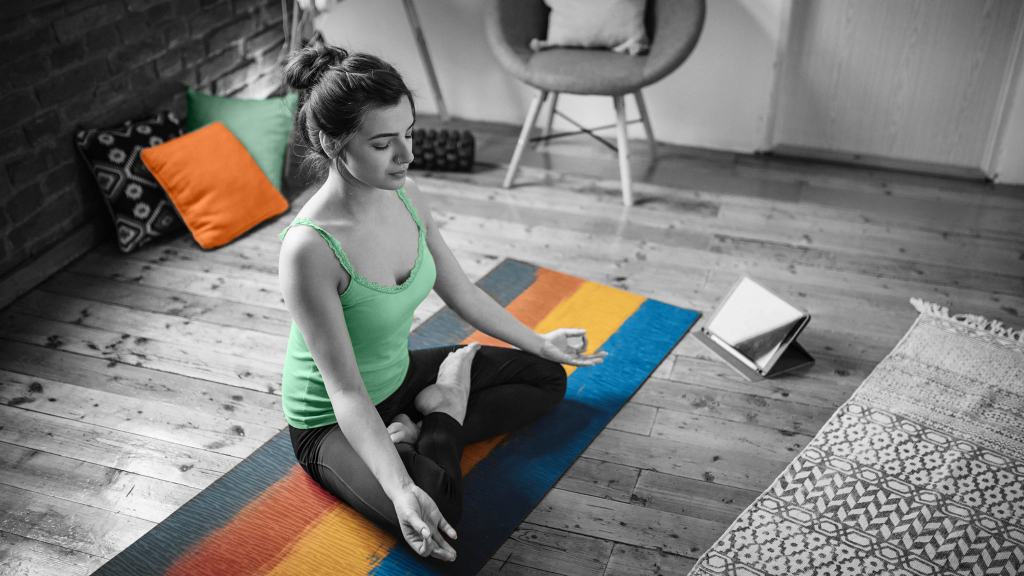
It isn’t news that the pandemic and the social isolation we’ve experienced as a result have impacted our lives. So what can we do to cope with the stress of the past year? One intervention that can improve our mental health and help us become more resilient in times of pressure, stress and sadness is adding a meditation room.
Whether you’ve been practising forever, just picked meditation up during the pandemic or have always wanted to dedicate time to let your mind wander, creating a meditation room in your home is a great way to motivate yourself to stick to your practice.
Our guide covers the many health benefits of meditation and offers inspiration for creating your very own meditation room.
What Is a Meditation Room?
A meditation room is a designated space for your meditation practice. It can be as simple as a few comfortable cushions in the corner of your living area, or you can dedicate a whole room to it.
If you have an extra room in your home, turning it into your meditation room can make it easier to stick to your practice. You won’t have to worry about kids, pets or roommates disturbing you while you’re meditating, and since the room will only serve this one purpose, it shouldn’t distract you while you’re letting your mind wander.
The Benefits of Meditation
Meditation comes from the Latin word “meditatum,” which means “to ponder.” The practice may be as old as humankind itself. Regardless of its roots, meditation has become a popular practice worldwide.
A global study by Fitbit revealed that while everyone has been cooped up during the pandemic, stress relieving activities that don’t require gym-access have been on the rise. In fact, meditation practice increased by 2,900% globally. Mindfulness activities like yoga or meditation can help stimulate endorphin and serotonin levels while reducing stress hormones. This is just one of the many ways meditation can impact your emotional, physical and mental health.
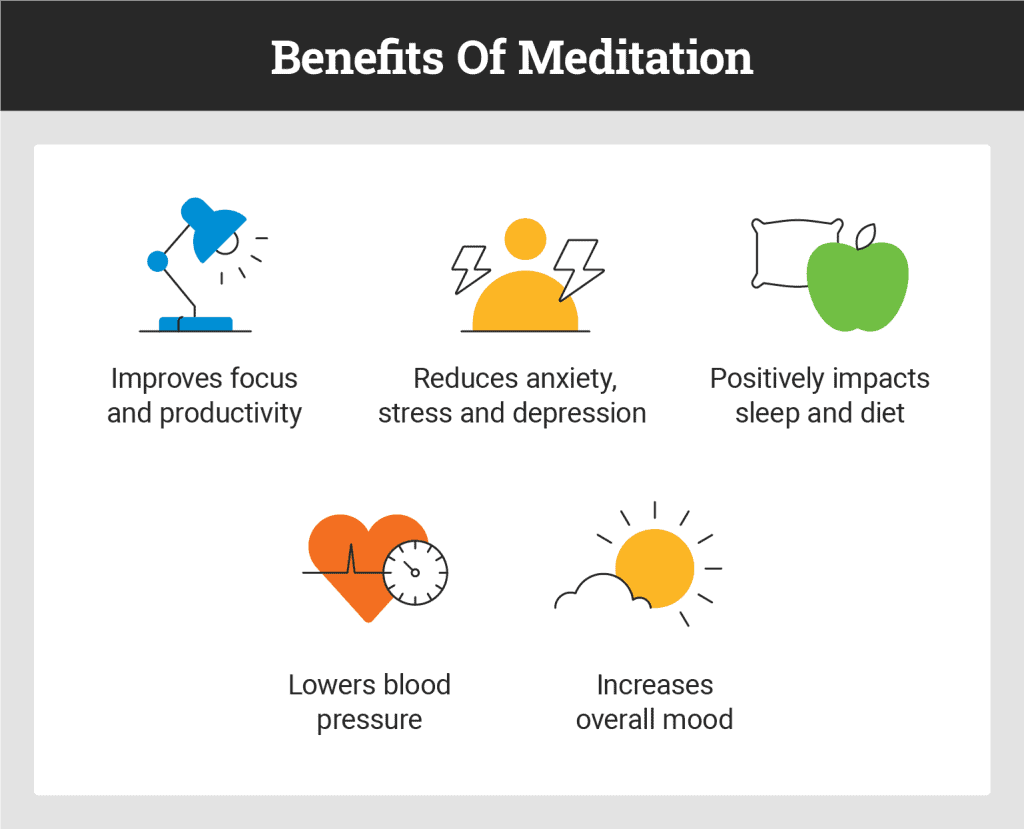
Lowers Blood Pressure
According to US studies, meditation can change the expression of genes that regulate glucose metabolism, circadian rhythms and inflammation. These changes lead to lower blood pressure in people who meditate on a regular basis.
Reduces Anxiety, Stress and Depression
Meditation has become a popular approach as a therapeutic intervention. Research suggests that mindfulness-based therapy (or MBT) effectively treats psychological problems like anxiety, stress and depression.
Positively Impacts Sleep and Healthy Eating
Mindfulness training can improve your sleep quality and help you stick to a healthier diet. In a 2015 study, researchers found that mindfulness meditation leads to less fatigue and insomnia after only six weeks of regular practice. While mindfulness practice is proven to promote a healthy eating behaviour, better sleep is also linked to a more nutritious diet and more regulated appetite.
Improves Overall Mood
A study on guided meditation found that this practice can improve your immediate and long-term moods. The longer participants used the meditation app created for the research, the better their reported overall mood was.
Improve Focus and Productivity
Finally, meditation can help you in your professional life. Meditation-based mental training can improve your attention and productivity. A study using the popular meditation app Headspace showed that just one session could improve focus and mind-wandering by 22%.
The Different Types of Meditation
Meditation is so much more than sitting still and trying to clear your mind. There are many different forms of meditation, and while everyone defines them differently, there are some types that have grown in popularity in Western culture over the years. Here are three types of meditation that are great for beginners to do at home.
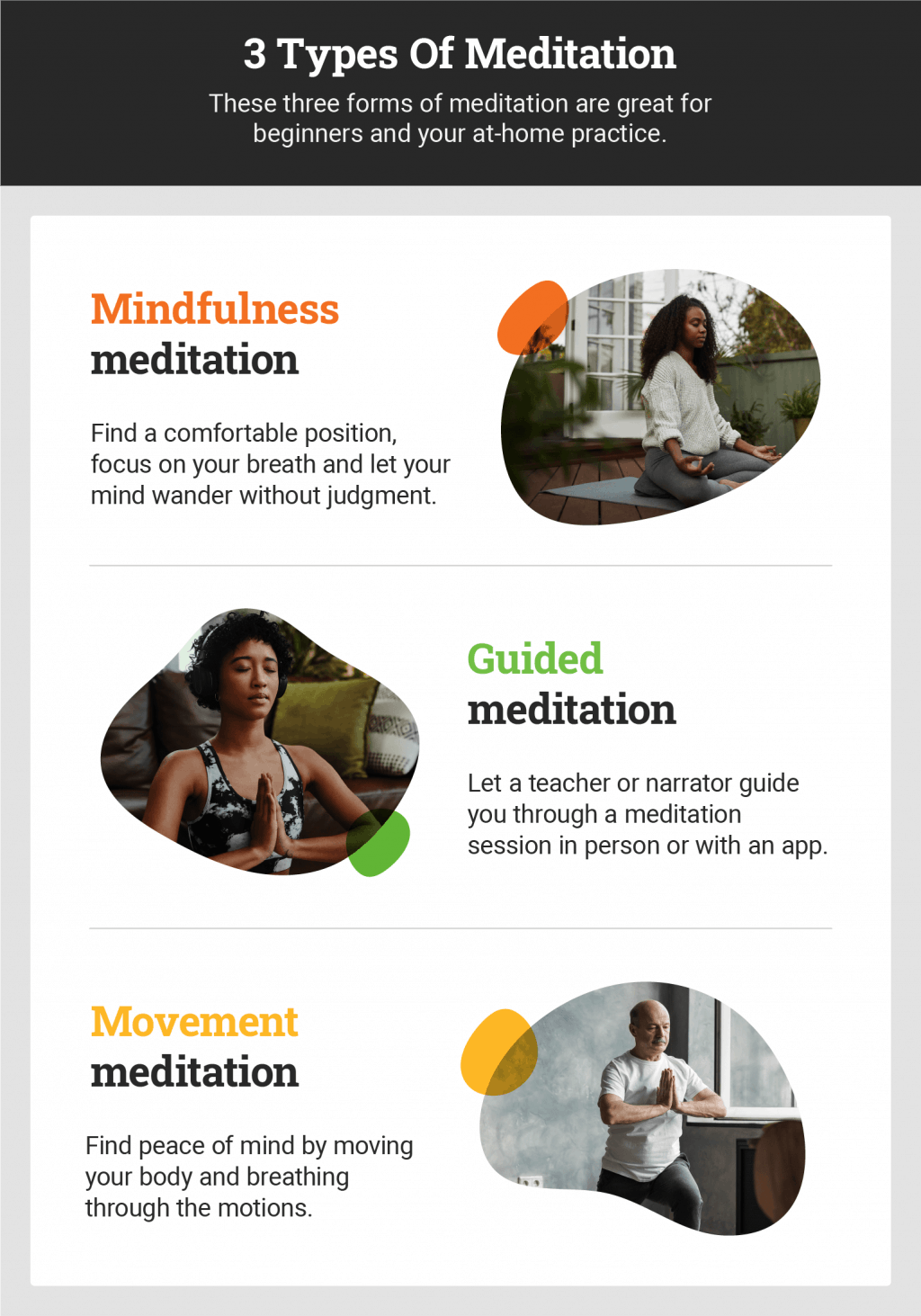
Mindfulness Meditation
Mindfulness meditation can help you calm your mind. Mindfulness is a state of presence in which you acknowledge and accept your current thoughts and feelings without judgment.
You can implement this practice by finding a comfortable place to sit and setting a timer to make focusing on your meditation easier. Start off with short five-minute sessions to get used to this exercise and slowly increase the sessions by five or 10 minutes until you feel comfortable meditating for half an hour at a time.
Try to focus on your breathing and welcome all thoughts that come up during your meditation session. The idea is to acknowledge your thoughts rather than judge them, and to use your breath as an anchor to remain calm. If your mind wanders somewhere that makes you feel uncomfortable (fear, worry or stress), try to center yourself with a few deep breaths and return to a place of mindfulness.
Remember that you’ll have days when mindfulness meditation comes easily and others when you can barely sit still. It’s a practice, so trust the process and don’t give up — keep going and notice how settling into your meditation and breathing through longer periods of time without feeling restless will get easier over time.
If you feel overwhelmed by this practice, perhaps guided meditation is the better choice for you.
Guided Meditation
A teacher usually guides this form of meditation, but you don’t have to hire someone or join a class outside of your home, thanks to technology. There are plenty of websites, apps and streaming services that offer guided meditation sessions via audio or video.
These sessions can last anywhere from a couple of minutes to two hours and center around different times of day, emotions or concepts. If you want to try guided meditations at home, download an app or search for free guided meditation sessions on a streaming service or YouTube.
You can bring a laptop into your meditation room or connect your phone to a Bluetooth speaker so you can listen to the voice guiding you through your session. If you can, put your device in a “do not disturb” mode or download the session beforehand so you don’t get distracted by text messages, calls or emails.
There is no scientific evidence that suggests guided meditation is better than unguided meditation or vice versa. It’s all up to your personal preference, and, in the end, it’s about what works best for you. If your mind wanders places you don’t want it to go, a guide can help you feel centred during your meditation practice.
Movement Meditation
Finally, there is movement meditation. Your mind likely associates this type with a flowing practice like yoga or Qigong (meditation that involves movement exercises and controlled breathing). Still, there are many different forms of movement meditation. You can practise while you’re taking a walk in nature, doing yard work or cooking. It’s all about your mindset and focusing on your breath while doing these activities.
If your mind finds peace in movement, make sure that your meditation room is big enough for you to walk around, do yoga or follow a Qigong or Tai Chi sequence.
Now that we’ve gone over the different forms of meditation let’s talk about how you can make a relaxing meditation space in your own home.
How to Focus in Your Meditation Room
Certain activities usually define your home’s spaces: you cook in the kitchen, sleep in your bedroom, and work in your home office. A designated meditation room is a great feature that will clearly define the boundary between the rest of your life and your practice space.
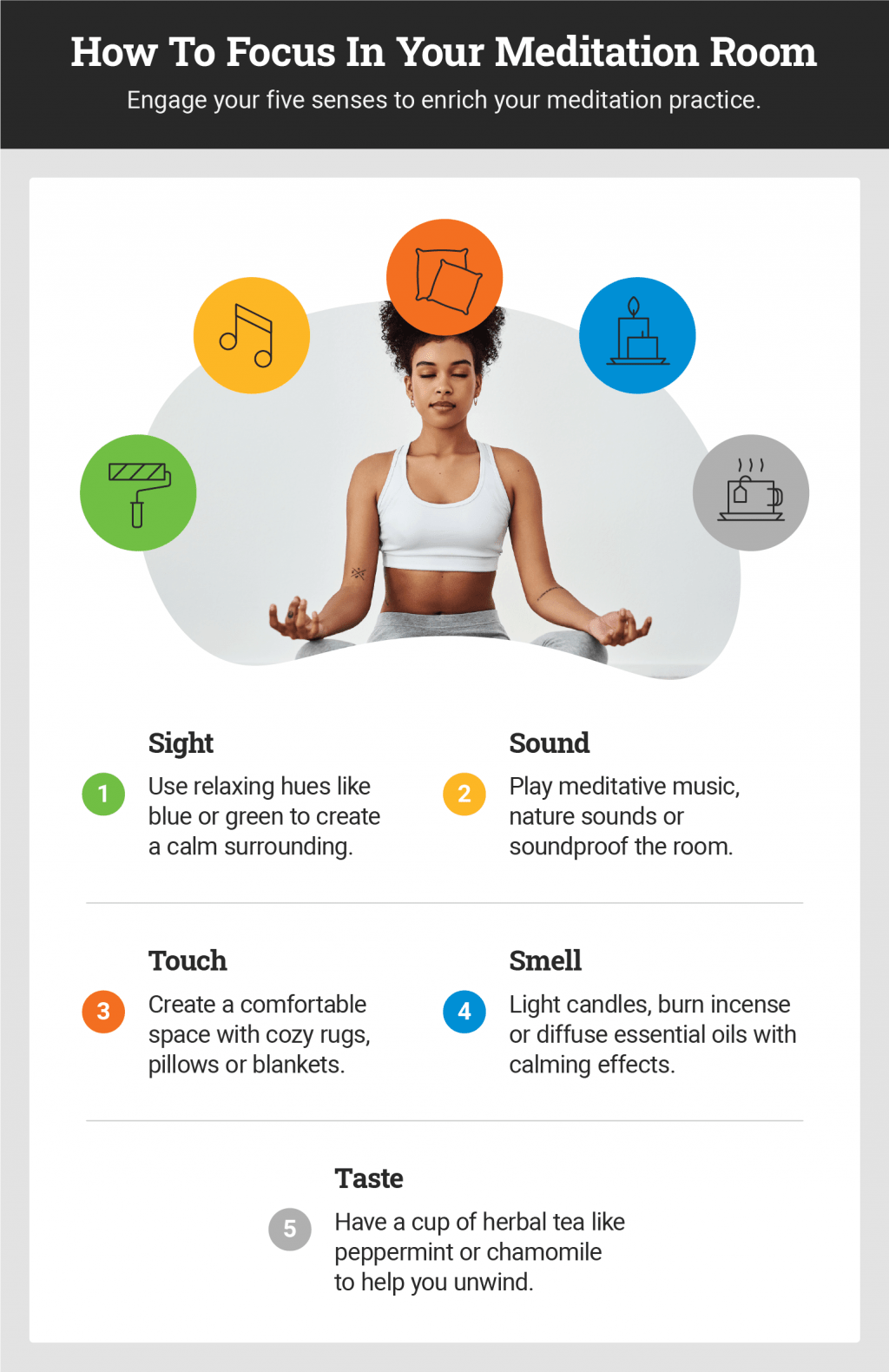
While everyone’s meditation room will look different, the general idea is to create a minimal and peaceful space that engages your senses and allows your mind to wander freely. Here are our favourite tips for creating a meditation room in your home.
1. Pick a Serene Colour Palette
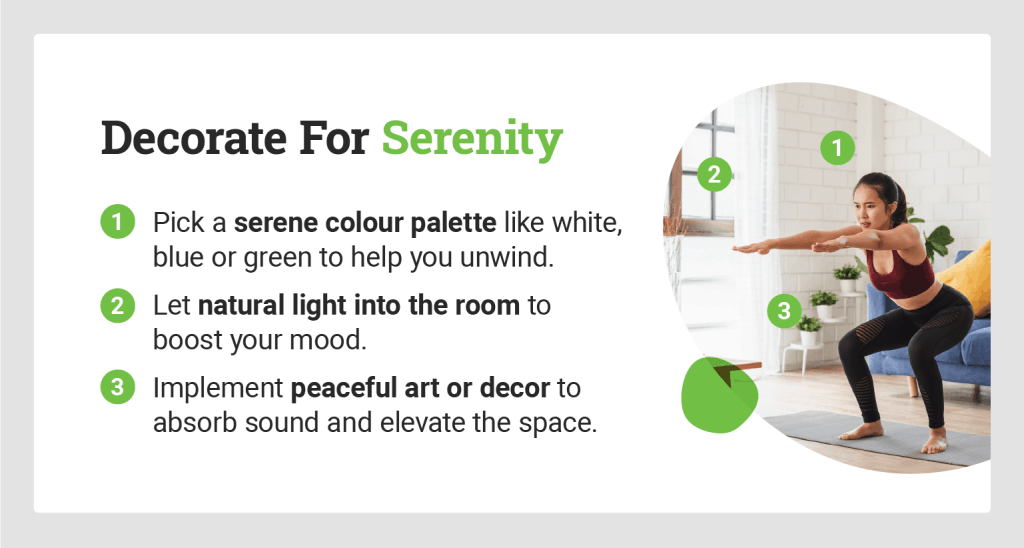
Implementing a serene colour palette will help you relax in your meditation room. Certain colours are known to have a calming effect on our minds, so incorporating them with a pretty accent wall, a rug, or a piece of furniture may help you feel at peace.
- White can feel serene and pure, but it can also look cold and sterile. You can mix in neutral colours like beige or a wood tone to create harmony.
- Blue is believed to help our minds feel tranquil, secure and orderly. Paint a light blue accent wall or decorate with a few blue pillows to add this colour to your meditation room.
- Green can be exciting or calming, depending on the shade. Dark green is often associated with health and peace. By adding different shades of green to your meditation room through curtains, rugs or plants, you can create a space that makes you feel connected to nature.
2. Let Natural Light Into Your Meditation Room
The benefits of natural light exposure are well-known: it can boost your vitamin D levels, ward off seasonal depression and improve your sleep. If possible, pick a room that gets plenty of natural light during the day for your meditation space. If the sun shines in during the time of day when you like to practise, consider hanging sheer curtains to soften the light a bit. In a darker room, decorate with mirrors to reflect some of the sun’s rays and install lights that mimic natural sunlight.
3. Implement Peaceful Art or Decor
To soundproof your meditation room and elevate the space with beautiful decor, consider hanging a few pieces of art with a peaceful aura. Try decorating with pieces that have meaning or purpose.
- Hang macrame wall art that can absorb some of the noise travelling around your home.
- Pick a few low maintenance plants to add life to your meditation room and keep the air fresh.
- Place a pretty mirror in a corner to reflect sunlight into the room.
- Decorate a shelf with crystals, statues or bowls that inspire and calm you.
Whatever decor or art you choose for your meditation room, remember that less is more.
4. Pick Minimal Furniture
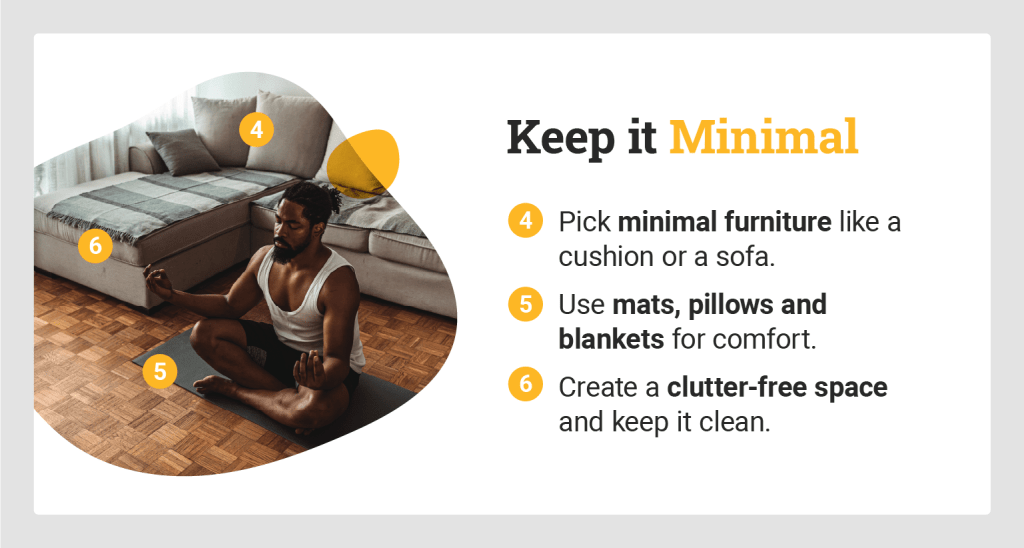
It’s a myth that in order to meditate you need to sit in a cross-legged position on a yoga mat and rest your hands on your knees with the thumb and index finger pressed together. If you want your mind to relax, you’ll have to find a comfortable position that works for your body.
If the pure thought of the position described above causes you back pain, think of ways that allow you to sit comfortably. Furnish the room with a cozy armchair or a couch, so you have a place to sit and meditate. Consider adding a small side table to the room or a shelf where you can place minimal decor or props (like yoga straps or blocks).
And don’t be afraid to try out new things! Instead of an armchair, maybe a hammock will allow you to fully relax your body and find peace of mind during your meditation practice.
5. Use Mats, Pillows and Blankets
Think of items that could be helpful to you when you’re in the meditation room. A soft blanket and a couple of pillows may help you find a better resting position for a guided body scan or can work as support during your sitting meditation or yoga practice.
If you have sensitive joints, adding a rug to the room that functions as a cushion under your yoga mat can help relieve some of the pressure during practice.
6. Keep It Clean and Clutter-Free
One of the reasons a designated room can be helpful in sticking to your regular practice is that the only purpose of it is to meditate. Keep the space as clutter-free as possible so you don’t have to worry about tidying anything up before or during your session.
If you keep pillows, blankets or candles in the room, make sure everything has its place. You can place a basket in a corner that stores your blankets or yoga mats and place your candles and lighters on a little tray to keep everything in order.
Creating a serene and minimal space will help your mind find tranquillity.
7. Incorporate Natural Elements
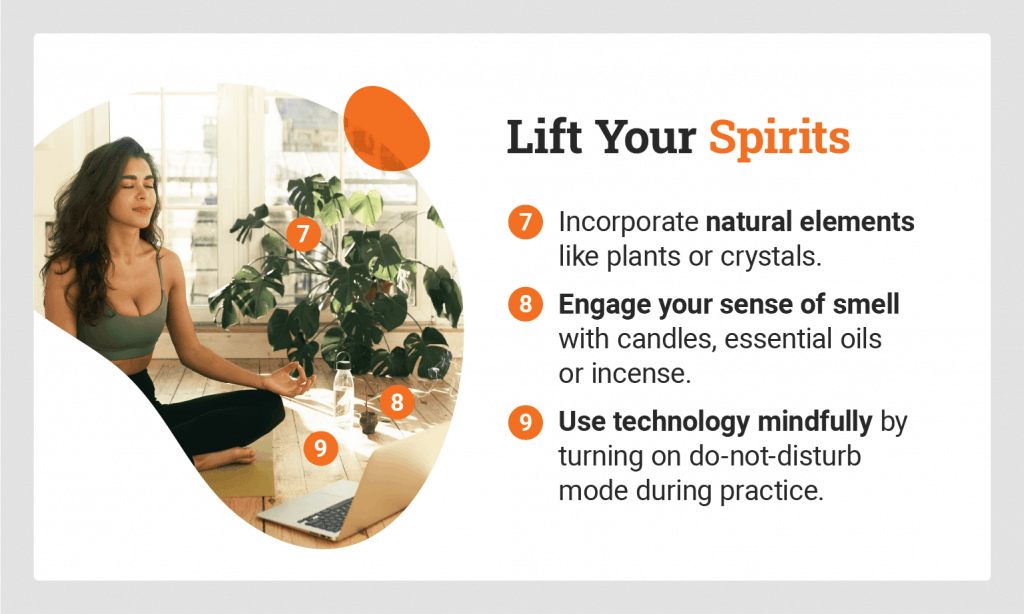
If you want to add a touch of decoration to your meditation room, use natural elements to create a soothing atmosphere. Decorate with crystals, plants or river rocks to feel more connected to nature and your true self.
8. Engage Your Sense of Smell
To enrich your meditation practice, engage your sense of smell. Burn incense, light scented candles or diffuse essential oils to make your meditation room smell amazing and help you relax.
Here are a few natural scents that can help your mind unwind:
- Lavender is often used to calm anxiety.
- Jatamansi may relieve depression.
- Ylang ylang can promote relaxation.
- Bergamot can improve your mood and relieve anxiety.
- Jasmine is said to calm your nerves without causing sleepiness.
If you can, open the windows before and after your meditation to let a fresh breeze into the room, so the air doesn’t feel stuffy or stale.
9. Use Technology Mindfully
Your meditation room should be a space where you can leave the stress of the day behind. If you use technology for a guided meditation, yoga lesson or background music, consider how you can minimize disturbances.
Try to close other tabs if you’re using a laptop or tablet. If you’re using your phone, you can download the sessions before you start practising. Then put your device in airplane mode so you don’t get disrupted by a phone call, text or email. This will also ensure that you don’t get disconnected half-way through your practice session because of a weak Wi-Fi connection.
10. Create a Space of Peace and Quiet
To help your mind relax, it’s important that you create a space of peace and quiet. To start things off, you can hang a “do not disturb” sign on the door so your roommates or family members can leave you alone when you’re practising.
Play meditative music or nature sounds to drown out any noises from outside and create a peaceful atmosphere inside your meditation room. Another neat way to create calming background noise is to add a water feature. You can purchase a small indoor waterfall for as little as $20.

For anyone who doesn’t have an empty space in their home that can serve as a meditation room, try to dedicate part of your home office, bedroom or living room to your practice. Any space that allows for some peace and quiet and has enough space for your yoga mat or a cushion will do just fine. And if that’s nowhere, Zolo is here to help you find a home that provides you with the space you need.