
Traditionally, a homestead is a piece of land with either a house, farm or ranch on it. The homeowner — and homesteader — lives in the property while using the land to grow food and raise livestock that is used to feed the homeowner and family. The guiding principle of a homestead is self-reliance. To be self-sufficient, homesteaders concentrate on growing, raising and using whatever is in their possession, using their own hard work. For any resource that a homesteader cannot produce on their own, they will either barter or work to earn and buy.
Over time, though, the homestead definition changed. Rather than focus on complete self-sufficiency, made possible by living isolated on your own plot of land, homesteading can now be practised even in urban environments. The focus of homesteading is to adopt the principles and practise of self-sufficiency while still living in a city or a suburb of a city.
So, if you’re ready to let go of relying on grocery stores and home deliveries and start your journey towards more self-sufficiency then it’s time to explore urban homestead basics.
Homesteading Guide 2020
Definition of an Urban Homestead
“How is homesteading in Canada possible, if I live in the city?”
Turns out you can homestead — become more self-reliant using the resources you have available to you and a bit of hard work — wherever you live. That includes in urban houses, city condo-apartments and even suburban homes.
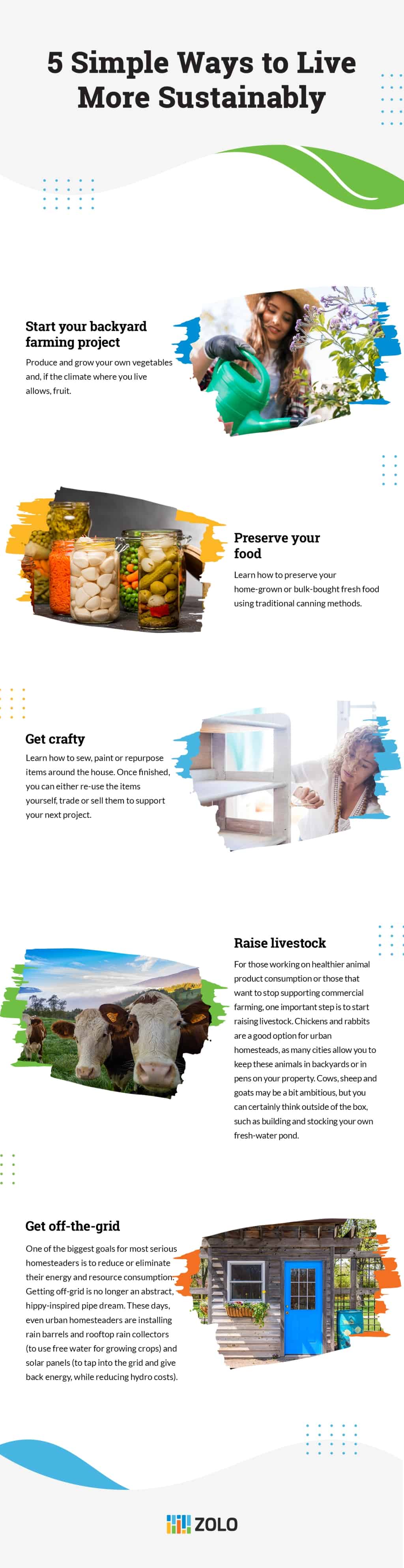
A few simple, basic ways to get started include:
- Start your backyard farming project. Produce and grow your own vegetables and, if the climate where you live allows, fruit.
- Start preserving your food. Want to make home-grown or bulk-bought fresh food last longer? Learn how to preserve this food through canning — the process of storing food in sterilised jars — and through fermentation. Another great advantage of doing this is you and your family will no longer be exposed to the preservatives and chemicals used in commercially canned products (used to improve the shelf-life of these products).
- Get crafty. Learn how to sew, paint or even spin your own wool (assuming you have sheep and sheers and loom, among other supplies). Regardless of what inspires you, there’s always a way to get artistic and crafty and either use these items yourself or sell or trade them to support your self-sufficiency goals.
- Raise livestock. For those working on healthier animal product consumption or those that want to stop supporting commercial farming, one important step is to start raising livestock. Chickens and rabbits are a good option for urban homesteads, as many cities allow you to keep these animals in backyards or in pens on your property. Cows, sheep and goats may be a bit ambitious, but you can certainly think outside of the box, such as building and stocking your own fresh-water pond.
- Get off-the-grid. One of the biggest goals for most serious homesteaders is to reduce or eliminate their energy and resource consumption. Getting off-grid is no longer an abstract, hippy-inspired pipe dream. These days, even urban homesteaders are installing rain barrels and rooftop rain collectors (to use free water for growing crops) and solar panels (to tap into the grid and give back energy, while reducing hydro costs).
Basics of the Urban Homestead

If you are a beginner, then all of this self-reliance talk may seem a bit overwhelming. Not to worry. To help, here are some basic rules to follow, regardless of the type of project you take on or how self-sufficient you aim to become.
- Before you start any project, consider how much space and time it will require to start, continue and grow the project. Starting a project is often the fun part; it’s new and exciting. Constant upkeep and maintenance, however, is where you’ll really see the fruit of your labour. Be sure to ask experts or other community members how long each type of homestead project requires when it comes to ongoing work.
- Be sure to check zoning and bylaw regulations. There’s no point in building a mini-barn in the backyard if municipal bylaws restrict you from raising chickens or keeping other barnyard-type animals.
- Make a plan. This can’t be stressed enough. If you’re planting a garden, consider where the sun shines and plan out where to plant each vegetable or fruit tree (or bush). Then write the entire plan. Be sure to reference this plan and make notes about your progress and the obstacles you face. The more you document, the easier it will be to assess, modify and tweak a plan for better results the next year.
- Finally, don’t forget the water. Whether you’re raising animals, taking care of a beehive or growing a garden, water or a water source is vital. Some beekeepers keep a pet dish of water, just in case their bees can’t find a natural source. For gardeners, learn to assess how wet your soil is and how much each plant requires. Then monitor it daily. For livestock, remember that animals can also become dehydrated and typically need a fresh source of water on a daily basis.