Moving is extremely stressful for everyone involved. A recent study found that Canadians identify moving as one of life’s most stressful experiences — 28% even said they consider it more stressful than planning a wedding! Figuring out how to move with kids adds additional stress and emotions to an already taxing situation.
The good news is that there are strategies to help you navigate moving with children, no matter their ages. When you navigate the challenges of moving in a productive and supportive way, you can help strengthen your family’s relationship.
To help you prepare before your next move, we’ve collected tips from experts in parenting and child psychology. Whether you’re moving across the country or just to a different neighbourhood, use these tactics to prepare your kids emotionally and make moving as smooth as possible for them.
The Impact of Moving on Your Child’s Mental Health
Studies find that frequent moves are tough on kids and disrupt important friendships. Kids who have moved five or more times during their childhood are three times more likely to experience mental health problems than those who stay in their hometowns.
Effects are most problematic for kids who are introverted and whose personalities trend toward anxiety and inflexibility. Specifically, adults who moved frequently as kids have fewer high-quality relationships and tend to score lower on wellbeing and life satisfaction.
Moving to a new house, neighbourhood or city can also serve as a positive change for you and your family, so we encourage you to try as many of these strategies as you can to equip your children for the transition.
What to Do Before Moving
Like with any big transition, preparation is key. In order to successfully move with kids, give yourself and your family enough time to come to terms with the decision and prepare for the move. Try one or more of these practices before moving to give your kids ample time to adjust.
Start an Open Conversation About Moving
The first step in preparing your kids for moving is having an open conversation with them. Before discussing important details, make sure you’re ready to answer the “why, where and when” questions your child will immediately ask — strive to be as direct as possible.
Many experts say that having a discussion before you have a plan or all the information can increase your child’s anxiety and prevent them from coping. Answer their questions truthfully, but don’t offer unnecessary details or facts.
Experts also agree that if you have an open discussion with your kids, it can increase their connection to the decision to move and help soothe anxiety.
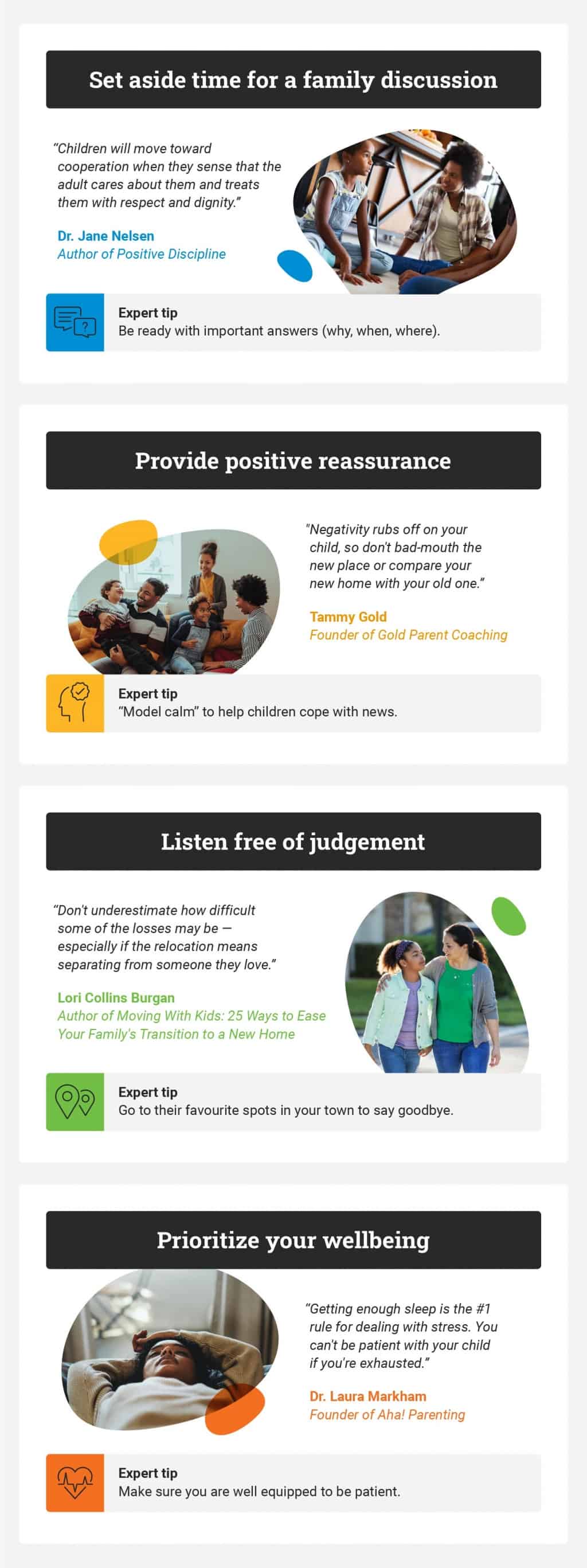
Dr. Jane Nelsen, author of Positive Discipline, expressed the importance of connection when she said “Children will move toward cooperation when they sense that the adult cares about them and treats them with respect and dignity.”
Nelsen also says “When children feel connected, they are more open to kind and firm correction — especially when they are involved in creating a solution that is respectful to everyone.”
Get On the Same Page
It’s important to be on the same page during a move, whether you are a married couple or divorced. If you’re unable to present a unified front about what to expect and the purpose of moving, it can negatively impact your children’s behaviour and increase their anxiety towards moving.
Experts say that when parents are in agreement, it creates a level of physical and emotional safety for the child. President of the Child Mind Institute, Dr. Harold S. Koplewicz, recommends co-parents to “model calm” to help children cope with distressing news. He said, “It’s okay to let your child know if you’re sad, but if you talk to your child about a traumatic experience in a highly emotional way, then he will likely absorb your emotion and very little else.”
Tammy Gold, founder of Gold Parent Coaching, confirms the notion that kids look to you for cues. “Negativity rubs off on your child, so don’t bad-mouth the new place or compare your new home with your old one. Try to highlight wonderful things about your brand-new town so your kids will look forward to it,” Gold says.
Listen and Honour Grief
When preparing to move, you might feel rushed to check off all the tasks. However, helping your child come to terms with the transition is critical and can take time.
Not all children will experience grief in the same way, and some may not be sad about the move at all. If they’re upset about leaving, listening and honouring their grief is vital to helping them talk through and resolve any emotions tied with the change.
As heartbreaking as they are to experience, crying and tantrums are normal reactions to the seismic shift you’ve just introduced into your child’s life. Lori Collins Burgan, author of Moving With Kids: 25 Ways to Ease Your Family’s Transition to a New Home, says, “Even if your children are excited about the move, don’t underestimate how difficult some of the losses may be — especially if the relocation means separating from someone they love and depend on, like a caregiver or a grandparent.”
Clinical psychologist Dr. Shefali Tsabary says, “If you honour the inner voice in yourself, you will hold it sacred in others.”
This means that you might feel compelled to try to hurry through the conversation and get to what’s next. However, properly listening to and preparing your kids for the upcoming changes will help your family in the long run.
The act of saying goodbye is a big way to honour grief, so try some of the following:
- Visit with their friends to take photos and exchange addresses
- Go to their favourite spots in your town
- Write goodbye and thank you letters
- Go around the table at dinner and share something you love that you will miss about your current life and something you’re looking forward to about your new life
- Once the house is empty, walk through it together, saying goodbye to each room
Take Care of Yourself First
Make sure you take care of yourself so you can properly support your children’s transition. Get enough sleep and prioritize your wellbeing whenever possible to make sure you are well equipped to be more patient during this time.
Tips for Helping Kids Cope With Moving

When it comes to comforting a child, a parent knows what’s best. But knowing when your child is stressed might not be as clear.
Dr. Michele Borba, Ed.D., a parents advisor and the author of The Big Book of Parenting Solutions, says “When stress mounts in our children, parents are often unaware of just how stressed our kids are.”
She says that “A big key to helping our children is learning to recognize their unique signs, which type of events or issues cause angst, and then teach healthy ways to manage stress.” Tuning into emotional or behavioural cues is important in identifying potential problems.
Key ways children show stress, anger and confusion are:
- Showing negative changes in behaviour
- Excessive stomach problems and headaches
- Pulling away from people and activities
- Complaining more than usual about school
- Negative interaction with other children
- Sleeping too much or too little
- Eating too much or too little
If you are unsure how to help an angry or confused child cope with the news of moving, try the strategies below.
Tour the Neighbourhood
One of the most important steps in helping your children cope with moving is helping them understand what to expect. Just like preparing your child for a new grade level or experience, visiting your new neighbourhood can ease concerns about unfamiliar territory. Psychologist Dr. Lori Rockmore suggests, “You can decrease kids’ anxiety about moving by exposing them to the new area.” She says, “They will find that kids everywhere are very similar.”
Don’t forget to remain calm during this transition, as young kids can pick up your nonverbal cues.
Dr. Kathryn Hoffses, a pediatric behavioural specialist, says that “While acknowledging this important step your child is taking and providing support, too much emphasis on the change could make any anxiety worse.”
The more calm and assured you are when touring your new neighbourhood, the more confident your child will be.
Places to visit:
- Visit your new home (if possible)
- If you can’t visit your new home or neighbourhood in person, look at pictures or videos together
- Take your kids to the playground and see their new school
- Visit the local library and look for activity boards or fliers you can plan activities around
Plan Activities for the New Home
The fun part of any new adventure is dreaming up all the new places you can explore as a family! Make notes of different parts of your new neighbourhood so you can plan activities to do together.
Don’t Change Too Many Things at Once
When moving with kids, consistency is key. Strive not to change too many things at once to maintain structure in their lives. Dr. Laura Markham from Aha! Parenting says, “The more predictability, the more quickly your child will adjust. And don’t add more changes. This isn’t the time, for instance, to transition him from the crib to the toddler bed.”
Keep Them Connected
It’s important to encourage your child to stay in touch with friends who they might fear losing contact with. Schedule Zoom calls or let them play computer games together to stay connected virtually. Over time, as they connect to new people, you’ll see that they don’t focus as much on their old friends, but they’ll cope better if it’s a gradual process and they can control the pace.
Things to Do During the Move

When the big day rolls around, try to make moving as fun and stress-free as possible for your children by trying the following tips.
Give Your Child Control
We know moving can be stressful, but to ensure little ones feel connected to your new home as soon as possible, involve kids in the moving process. Even if they can’t help around the house, try having them pack up their toys or artwork. The smallest task can make a difference in your child’s feelings towards their new home.
If your kids are older and they can help pack, suggest colour-coding their boxes to help keep them organized. Get colourful stickers or tape to mark each box for a fast and easy kid-approved organization method.
Plan Their Room
One way to help your child feel ownership over the new home is by letting them plan their room (if they are old enough). Allow your kids to design aspects of their bedrooms, even if it’s only the colour.
Make Moving Fun
From decorating moving boxes to creating a DIY camp out in an almost completely packed and empty home, find ways to make moving fun for your kids. Whether you create a moving book that you take on the way or have fun activities planned as soon as you arrive at your new place, make sure your child feels safe and a part of the journey. For more moving day inspiration, Shaunna Evans from Fantastic Fun and Learning compiled a list of ideas to make moving fun!
Things to Do After Moving

When you arrive, be sure to give your kids a tour of the new house. Make sure to point out any of the home’s unique features, such as old trees or places just for them.
Set Up Their Room First and Let Them Contribute to Home Decor
If possible, after the walkthrough, set up your kid’s room first to show them they have your full attention and support. Help them unpack their toys and find places to store their favourite belongings.
Encourage your child to help decorate other parts of the home as well. Set up a fun arts and crafts station so they can contribute works of art to their room, a stairway or the fridge. Let your child make decorative choices like showing them your paint samples and letting them pick one room’s colour.
Keep Routines Consistent
Once you’re all moved into your new home, it’s beneficial to stick to typical routines. Be cognizant of routines from your previous home, like eating breakfast together, watching a favourite television show or reading a book before going to bed.
This strategy works well for all ages. But, Dr. Hoffses says this is especially important for preschool to school-age children. When acclimating preschoolers to a new school or home, she says, “[They]…tend to respond well to predictability, and following a routine will help ease the move.”
While keeping your routines as consistent and normal as possible is best, don’t stress out if the routine isn’t perfect right upon move-in. Millennial personal finance expert and mom, Alyssa Davies, emphasizes that “It’s a new situation and kids will be anxious regardless.”
Make New Memories
Social interaction is key for a positive transition and can be as easy as walking around the neighbourhood!
Dr. Rockmore recommends finding your children a “same-age buddy” nearby to help ease the transition. If possible, host an outdoor or safely distanced get-together and invite a few local families. Your kids may feel more comfortable on their own turf, and you’ll have an opportunity to get to know some new friends and potential playmates.
Another tip is to help them practice meeting new people if they commonly clam up or fear making new friends.
Dr. Borba says “Younger kids make friends based on proximity, but school-age kids choose them based on similarities.”
She goes on to say that “We often expect our kids to make friends on their own, but we need to show them how.” Encourage kids to practice a conversation opener at home.
A good template is: “Hi, my name is [Name]. I just moved here from [location] because [reason].”
It also helps to pinpoint popular activities in the area and encourage your children to participate or sign up your child in programs they loved in your previous neighbourhood.
Don’t forget to give your children a pep talk before leaving for their first day of school or have their first play date with a new friend.
Child development and behaviour specialist Betsy Brown Braun, author of Just Tell Me What to Say: Sensible Tips and Scripts for Perplexed Parents, says to “Let your child know that wherever they go, they will make friends because they’re so friendly. Remind them how they made friends so easily at nursery school; reassure them that they’ll do the same in their new surroundings. Bolstering their confidence will limit anxiety and fear.”
Moving Tips by Age

A major consideration when preparing to move is the age of your kids. While older kids might feel more emotionally invested in friendships than younger children, every child has different needs when it comes to communication and coping with change.
In general, the best age to move a child is when they’re younger; however, every child is different. Follow the tips below on how to keep explanations age-appropriate, and how to help kids cope by age.
Toddlers (0–4)
Moving with babies or toddlers can be a challenge, as they require more attention and care. Consider coordinating childcare on moving day to help save your own sanity and ensure your child’s safety.
Another thing to keep in mind is to avoid packing up all of their belongings first. The last thing you want to do on move-in is trying to hunt down their favourite blanket or toys. When you do move in, allocate additional time to baby-proofing their room. In addition to eliminating window cords and setting up baby gates, you’ll need to cover all electrical outlets.
How to keep explanations age-appropriate
- Think clear and simple
- Use a story to explain the move, or use toy trucks and furniture to act it out
- For age-appropriate moving books, review our list below
How to help toddlers cope with moving
- When you pack your toddler’s toys in boxes, emphasize that you aren’t throwing them away
- Unpack a few toys and belongings in the new destination so they can understand where their things are going
- Avoid replacing their furniture until they have acclimated to the new home
- Arrange their furniture in a similar way in the new bedroom
Children (5–11)
When it comes to school-age children, two main concerns are keeping social relationships and academics feeling consistent. Reminding your child throughout the move that they can keep in contact with friends online will be important for helping them cope. Potentially increase their screen time to encourage them to be excited to connect virtually.
School-age children will also benefit from viewing photos of the home and knowing more about the academic details of a new school. Experts suggest parents visit the new school to contact a teacher, counsellor or principal. This way, parents, children, and staff will all understand the educational requirements your child needs to succeed at the new school. Having someone at the school already familiar to your child will help them feel less anxious about their first day.
If their school is practicing distance learning, request a call to make sure you and your child understand all guidelines and rules.
How to keep explanations age-appropriate
- This age group often is more vocal in asking questions
- They may need assistance separating reality from fear, so discuss the efforts you will make to help them acclimate to the new neighbourhood
How to help school-age children cope with moving
- Make an adventure out of moving
- At this age, one of their biggest concerns is associated with the new school they will move to
- Try to collect information, resources and documentation needed by the new school to avoid any stressful glitches
Teens (12+)
Teens tend to have the hardest time coping with moving. In a study of 50,000 children, researchers found that the impact of moving was worse for children over the age of five. This is because they have to leave behind friends and change schools during an important time of social development.
According to Dr. Rebecca Cowan, a licensed mental health professional counsellor, “Older children might experience a greater level of loss after a move, as they already have well-established friendship groups.”
These might include sports coaches, tutors and teachers they love.
They might also have formed romantic relationships they don’t want to leave, as well as a job or extracurriculars they enjoy. “This can make the adjustment to a new community more difficult for older children,” she says.
While the teenage years can be difficult regardless, it’s best to approach moving with your teen with a judgement-free attitude. This will help them feel supported, heard and loved.
How to keep explanations age-appropriate
- Discuss moving factors more in depth.
- Provide honest, accurate and factual information about why you are moving and the benefits for your family
- Explain to them that moving on is a part of life and that they too will experience making these decisions later in life, like moving to college, a new job and travelling
How to help teens cope with moving
- It’s particularly important to let teens know that you want to hear their concerns and that you respect them
- Include them in decision-making about packing plans, decorating and making new traditions
- Assure your teen that you will support their ability to stay in close contact with your friends and talk about when you may be able to return to visit them
Resources for Moving With Kids

You know your children best and how to help them cope with big transitions. To learn more about the best strategies for a successful move, explore our resources for moving with kids below.
Best Time to Move With Kids
If possible, the best time to move with kids is during the summer. For school-age children, making friends in a new school will be easier with the fresh start of the academic year, and more kids are available for relaxed “getting-to-know-you” time during the summer. For younger ages, take advantage of the nicer weather by heading to the playground, where you can meet other parents and their kids.
Kids Books + Resources About Moving
School-age children and toddlers do especially well with making sense of difficult news using a story or activity. Use our kids’ books by age group to help them adjust to the move.
Toddlers and Younger Kids
- The Berenstain Bears’ Moving Day by Stan and Jan Berenstain
- Louis + Bobo: We Are Moving by Christiane Engle
- The Good-Pie Party by Liz Garton Scanlon and Kady MacDonald Denton
- Moving Day! by Jess Stockham
- A New House by Jill Wenzel and Jan Westberg
- My Very Exciting, Sorta Scary, Big Move: A Workbook for Children Moving to a New Home by Lori Attanasio Woodring
- Little Critter: We Are Moving by Mercer Mayer
- Big Ernie’s New Home: A Story for Young Children Who Are Moving by Terese Martin
School-Age Children
- The Change Your Name Store by Leanne Shirtliffe
- Nana in the City by Lauren Castillo
- Maybe Yes, Maybe No, Maybe Maybe by Susan Patron
- When You Are Brave by Pat Zietlow Miller
- Where I Live by Eileen Spinelli
- Alexander, Who’s Not (Do You Hear Me? I Mean It!) Going to Move by Judith Viorst and Ray Cruz
- Lenny & Lucy by Philip C. Stead
- A Kiss Goodbye by Audrey Penn
- Tooter Pepperday by Jerry Spinelli
- Henry and Mudge and Annie’s Good Move by Cynthia Rylan
- Moving Day by Ralph Fletcher
Teens
- The Essential Moving Guided Journal for Teens: My Life and My Thoughts Before and After Moving Journal by Sara Elizabeth Boehm
- 10 DOs & Don’ts When You’re the New Kid: A Survival Guide for Teens Starting at a New School by J. C. Tilton
- The Year My Life Went Down the Loo by Katie Maxwell
- Then Again, Maybe I Won’t by Judy Blume
Moving Resources for Parents
Parents do everything they can to help support their children but commonly put their needs last. Don’t forget to take care of yourself first and incorporate time to prepare. Use our curated list of moving resources to find everything you’ll need for a successful move.
Moving Guides
- The Dos and Don’ts of Moving with a Baby or Toddler
- Moving? 10 Tips to Help Your Child Adjust
- Moving With Kids: How to Prepare Them for the Big Day
- Preparing Your Child for a Move
- Every Task a First-time Homeowner Needs on Their Possession Day Checklist
- Moving With Kids Checklist
Moving long distance
- 3 Best Long Distance Moving Companies in Canada
- Preparing Your Kids for a Long Distance Move
- Q&A: Preparing Your Kids for a Long-Distance Move
Organization and Decluttering
- How to Pack With Kids
- How to Declutter Your Home
- Best Home Organizing Tips for 2019 From a Professional Organizer
Renovation and Home Decor
- Top 10 Interior Designers in Canada
- 6 Design Trends to Look Out For
- Avoid Making These 7 Home Renovation Mistakes
- Your Next Renovation Project According to Your Province
- Should You DIY or Hire a Professional for Your Next Home Renovation Project?
- 9 DIY Renovation Projects Any Homeowner Can Do
Wellness and Health
- 11 Tips to Cope With the Stress of Moving
- 7 Steps to De-Stress Before Moving
- 11 Things to Help De-Stress During the Moving Process
- Saying Goodbye: How to Deal With the Ups and Downs of Moving
Moving Resources for Single Parents
Moving is often a complicated process for everyone involved, but it can really get tough as a single parent. We’ve collected the following resources to help you navigate moving with children as a single parent.
Moving During COVID-19

For many, a moving date is not flexible. This year, over 1.5 million Canadians moved back in with their parents, and another 2.9 million saw their living situation change as a result of COVID-19. If you do have flexibility in your moving date, consider waiting — especially if you’re in a high-risk group. If you can’t postpone your move, use the following resources to become well-versed in safety guidelines and best practices.
Safety Tips by Moving Phase
Here are a few tips to help you and your family move safely during the COVID-19 pandemic.
Before the move
- Purchase extra packing supplies to avoid coordinating last-minute curbside pickup
- Research pandemic procedures in your current and new neighbourhood
- Ask movers for their safety protocol
- Complete paperwork virtually
- Give yourself extra time and compassion
- Coordinate childcare during your move
During the move
- Wear a mask and make sure your movers do as well
- Try to stay far away from your movers and avoid handshakes
- Provide disinfectant wipes for doorknobs and light switches
- Ask your movers to load and unload your belongings while practicing social distancing
- Encourage movers to wash their hands
- Delegate bathrooms for movers to use
After the move
- Thoroughly disinfect your new home before you unpack and settle in
- Consider unpacking boxes yourself
- Request to tip via a credit card
Resources for moving during COVID-19
- Provincial and Territorial Resources for COVID-19
- Guidance on Essential Services and Functions in Canada During the COVID-19 Pandemic
- Coronavirus Disease (COVID-19): Guidance Documents
- Moving During the Coronavirus Pandemic (COVID-19): What to Know
- Can I Move During the COVID-19 Outbreak?
- Safety Tips When Moving During COVID-19
- Cleaning and Disinfection for Households
COVID-19 housing resources
- COVID-19: Eviction bans and suspensions to support renters
- COVID-19 (Coronavirus): rental housing and renter protection
- COVID-19: Resources for workers and renters
Moving your family can be an exciting new chapter, but also stressful when it comes down to learning how to move with kids. We hope our advice helps you prepare your children while also bringing your family closer together.
If you’re looking to relocate, explore some of our houses for sale in the best neighbourhoods for families. From Edmonton to Ottawa, let us show you homes for sale that will make moving a must!