Every once in a while, a foreclosure property appears on the market and sparks a real estate agent’s or potential homeowner’s interest. Who doesn’t like swooping in and picking up a property deal at a fraction of the price? However, buying a foreclosure property can provide some benefits and risks to homebuyers.
Once a property has gone into default, a lender will try to recoup any money lost. They do this by selling or auctioning off the property. In the U.S., this often means selling a home for less than market value. In Canada, it’s a bit different. Lenders know each home’s market value well and often price a distressed-sale home competitively. Plus, there’s usually quite a bit of legal red tape when buying a foreclosure.
Despite the infrequency of distressed-sale properties, if you’re even remotely interested, it’s essential to understand the pros and cons of buying a foreclosure property.
What Is a Foreclosed Property?
A foreclosed property is a house that a bank or lender reclaimed because the owner stopped making mortgage payments. The bank or mortgage lender then sells the property to recoup the money owed.
The lender will start the foreclosure process after a string of missed mortgage payments.
Many foreclosed homes sell at foreclosure auctions where buyers can place bids on such a property. However, those homes not sold at auction are sold with the help of a real estate agent. There are two main types of properties:
- Real estate-owned (REO) properties – Owned by the bank or lender after the borrower defaults
- Government-owned properties – Result from defaulting on a government-insured mortgage
Power of Sale vs Judicial Sale
In Canada, foreclosure sales are not that common. Still, property foreclosure happens in Canada, and the sale process depends on the property’s location. Typically, foreclosure homes are sold using one of two standard methods: a judicial sale or a power of sale. Buying a foreclosure property for each of those circumstances includes different guidelines.
In Alberta, British Columbia, Nova Scotia, Saskatchewan, and Quebec, foreclosed homes are sold via a lengthy process called a judicial sale. Judicial sales involve the lender appealing or petitioning the court to sell the property that has gone into default.
Meanwhile, New Brunswick, Newfoundland, Ontario, and Prince Edward Island use the power of sale process, which is typically shorter. A power of sale means the lender no longer requires court approval to sell the property legally.
Pros of Purchasing a Foreclosed Property
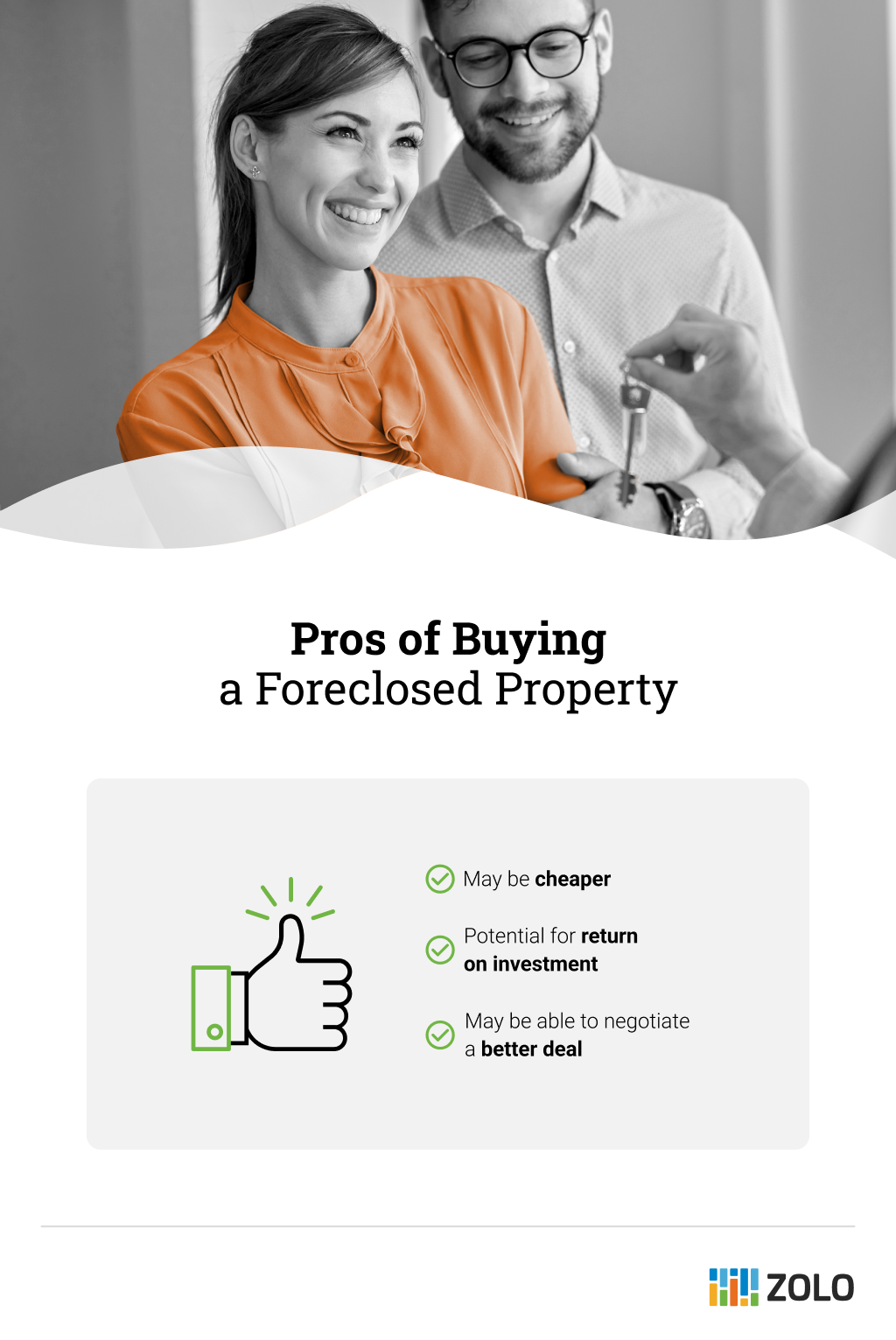
The most obvious benefit of buying a foreclosed property is the potentially lower purchase price, however the potential return on investment and bargaining power are two additional factors to consider.
Potential Savings
While every property purchase in Canada comes with some risk, distressed sale properties offer a unique opportunity to purchase a home for slightly below (or well below) market value. This deal naturally makes them tempting for potential buyers.
Still, Canadian foreclosures don’t sell for the dirt-cheap prices displayed on American home renovation shows. For the most part, a power-of-sale home in Canada means a buyer will purchase a home in a more expensive neighbourhood or on a more significant piece of land for a slightly lower price.
Another benefit of buying a foreclosure property is that any past liens, back taxes, or mortgage loans from previous owners are likely removed. Why? Lenders who own property want to sell quickly, and liens and back-dated taxes hinder a quick sale.
Potential Return on Investment
Since foreclosed homes are typically sold for below market value, the potential for return on your investment is high. Foreclosed homes are popular with house flippers because they can make the necessary repairs and sell for a profit.
If you plan to flip a house, it’s essential to get a thorough home inspection, obtain contractor estimates, and consult with a real estate professional to ensure the renovation costs don’t outweigh the future selling price.
In addition, buying a foreclosed property may be a more affordable way to buy a rental property.
Bargaining Power
While sometimes there is plenty of competition for foreclosed homes, not everyone is willing to take on the necessary repairs and complicated legal process. Since the lender is typically in a hurry to sell the property, you may be able to negotiate a better deal, especially if the property has been sitting on the market for a while.
Cons of Purchasing a Foreclosed Property
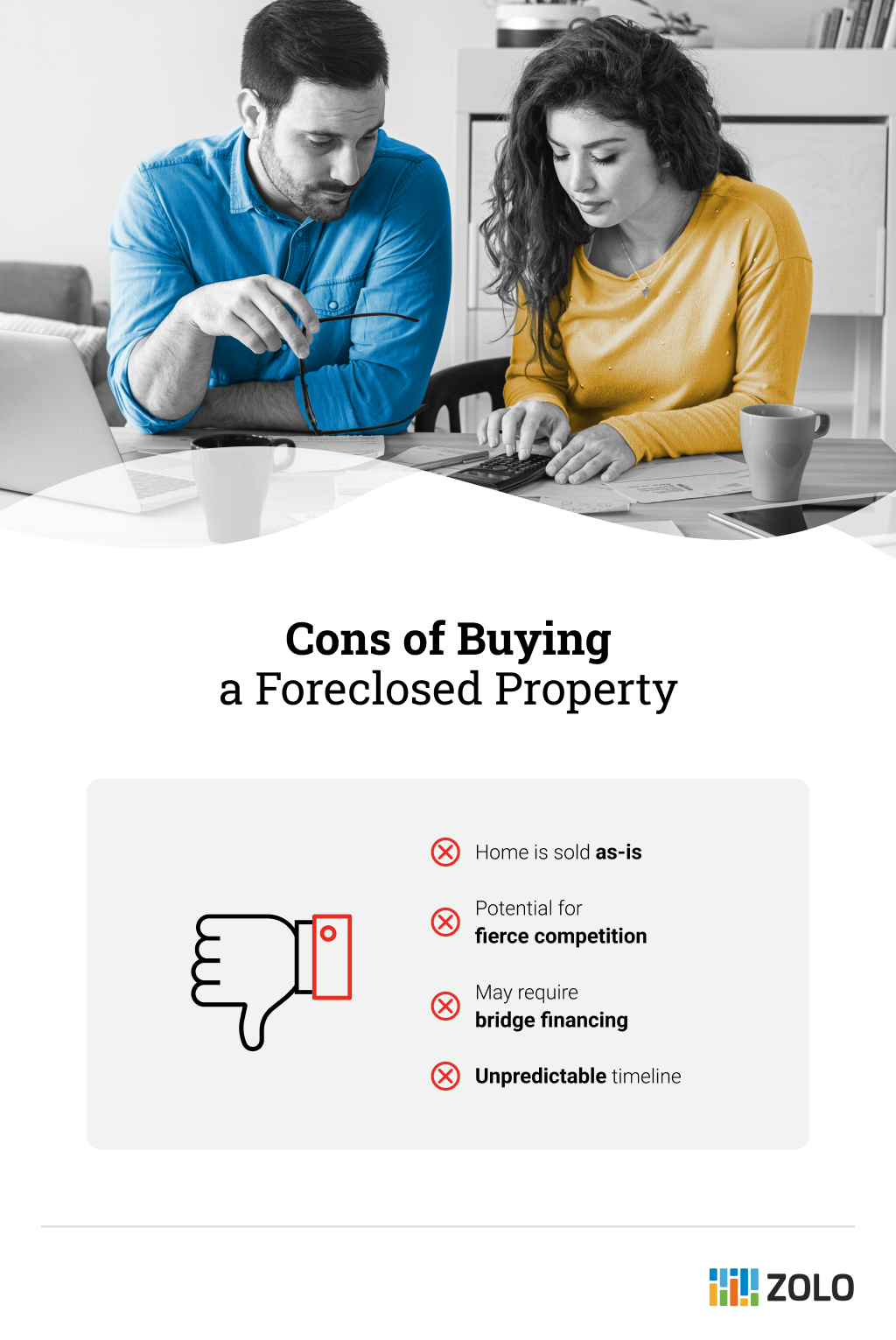
Unfortunately, purchasing a foreclosed property has multiple downsides. These include a general lack of cleanliness, the potential for property neglect or vandalism, and the potential for additional legal red tape and a longer transaction period.
State of the House
Foreclosed homes may be in a state of disrepair, especially if the house has been vacant. Remember, foreclosure homes are often sold as-is, which means the place will not be cleaned, all items will remain in place and will not be removed, and the overall care and maintenance of the property is debatable.
You may experience unexpected costs related to clean-up, especially if there are any health hazards. If the home has been sitting vacant, there is the potential for water damage or broken windows.
In addition, some of the risks associated with buying a foreclosure property come from the terms and conditions set forth by lenders. The terms indemnify and absolve them from any future liability of the property. For example, if there are foundation, electrical, or zoning issues, the buyer cannot return to the lender and seek recourse.
Competition
Even with all the risks, the competition for foreclosure properties can be fierce. It is important to do your homework before putting in an offer on a foreclosed home. For instance, you should know the local real estate market and your maximum purchase price.
Having a real estate agent who is well-versed in the foreclosure process is an asset, as not all transactions use the typical real estate contract procedure. Instead, some distressed sales are sold using an auction, which can end in hand-wringing and tears.
Foreclosure auctions come with additional rules and requirements if you win the bid. For example, there are same-day minimum deposits and a short deadline for the total purchase price paid. If successful, you can expect the deal to close within 30 days following a title search.
Anyone still interested in a foreclosed auction should also remember that lenders may not offer a conventional mortgage loan on the property. If that’s the case, you will be responsible for securing funding or coming up with the total purchase price yourself.
Buying Through a Lender
If you are financing the purchase of a foreclosed property through a mortgage, you may require bridge financing before getting a standard or more conventional loan through a mortgage lender.
Almost all lenders require a home appraisal before finalizing a mortgage loan. However, obtaining an appraisal on a home with an eviction can be difficult. This often means waiting until the new buyer legally possesses the home, requiring temporary financing to cover the period between closing (when all money is due) and mortgage finalization.
Unpredictable Timeline
The timeline for closing on a foreclosure home can be unpredictable. First, foreclosure properties usually offer restricted viewing access. Some are only accessible during daylight hours — since the lights don’t work as the hydro is turned off — while others are only accessible when the listing agent is present. The restricted access can make completing a home inspection difficult.
Second, complicated legal and financial procedures make purchasing a foreclosed home time-consuming, especially compared to a conventional home sale.
Lastly, the type of sale process can affect the purchase timeline. For example, the judicial sale process can last months, while the power of sale process can be much shorter.
Things to Know Before Buying a Foreclosure Property

If you do decide to buy a foreclosed home, here are five questions you first need to answer:
- Is your closing and renovation timeline flexible?
- Do you have somewhere else to live if the property isn’t move-in ready?
- Are you financially stable?
- Do you have professionals who can help with real estate transactions?
- Do you have real-world quotes for the required renovations?
Remember, with a foreclosure home, the transaction can be hampered for several reasons. That means a sale may not close immediately; the prior homeowner may damage the home, or the property isn’t habitable. However, a buyer’s down payment and total purchase price are still due on each legally binding date, even with these delays.
Even if a buyer is financially capable of withstanding these setbacks, the most stressful part of buying a foreclosure home is not knowing when the closing day will occur. The courts will tell the buyer when the final possession day will happen, and this uncertainty can create a very stressful transaction.
While the benefits of buying a foreclosure property can be substantial, buying and flipping a foreclosure is not a “get-rich-quick” scheme. Instead, it takes thorough research and planning, in addition to excellent access to solid cash flow. Neglect to do your due diligence, and that great property deal could become less-than-ideal.