
Every city has its rules — and when to turn the volume up and down is always one that needs a specific guide for what noise levels are appropriate and when. Calgary’s noise bylaw covers permissible noise levels, specific time restrictions, and what activities are okay. We’ll also go over how to file a noise complaint.
This major city is a great place to attend significant events, like the Calgary Stampede or the Folk Festival, during which these noise bylaws garner a lot of attention. If you live in Calgary or plan to move to Alberta, here are the noise regulations regarding this diverse Canadian city.
Key Takeaways
- Bylaws restrict noise in Calgary between 10 pm and 7 am Monday through Saturday, and 10 pm and 9 am Sunday and holidays
- To file a noise complaint, Contact Calgary Community Standards by dialling 311 or 403-268-CITY, or connecting online
- Fines for noise violations typically start at $250, increasing to $500 for violations like outdoor concerts exceeding noise limits
What are Calgary’s Noise Bylaws?
In Calgary, all residents have the right to live without disturbance caused by noise. In addition, residents are responsible for ensuring that their activities do not cause excessive noise and comply with all noise bylaws. So, living in any community requires being a good neighbour — and one of the best ways to be a good neighbour is to be mindful of noise.
Noise Restrictions During Specific Hours
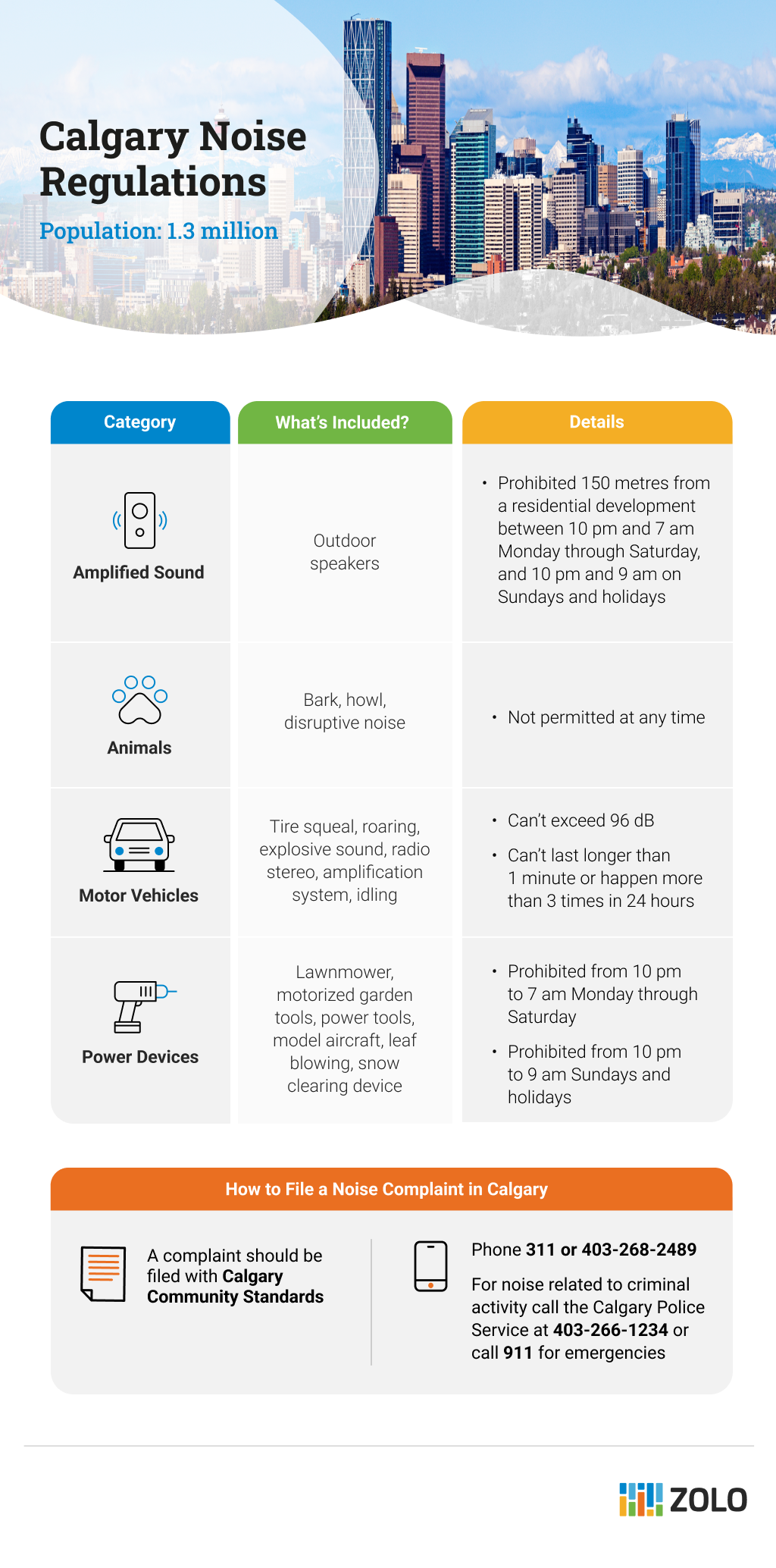
As far as timing, from Monday to Saturday, between 10 pm and 7 am, and on Sundays and holidays, between 10 pm and 9 am, specific restrictions on noise levels apply. The prohibited activities during these hours include operating hand lawnmowers, motorized garden tools, power tools outside of buildings, model aircraft with internal combustion engines, snow-clearing devices powered by engines (except within 48 hours of a snowfall), leaf-blowing devices, and sport ramps.
However, you can do any of these activities without restriction on noise levels between 7 am and 10 pm Monday through Saturday and between 9 am and 10 pm Sundays and holidays.
In addition, here are some other, more specific, noise restrictions in Calgary.
Outdoor Speaker System Limitations
Operating an outdoor speaker system within 150 meters of residential development is prohibited between 10 pm and 7 am, Monday to Saturday, and between 10 pm and 9 am on Sundays and holidays. However, restrictions are in effect during the Calgary Stampede between midnight and 7 am.
Construction Activities
The city does allow construction activities like framing and interior work, but using power tools outside during nighttime is prohibited.
Animal Noise
In Calgary, pet owners must supervise their pets to prevent nuisance behaviour, including excessive barking. These noise restrictions are under the Responsible Pet Ownership Bylaw.
Vehicle Noise
In Calgary, bylaws prohibit anyone from making or allowing noise that would disturb or annoy a reasonable person. Therefore, it also restricts the emission of noise from vehicles on premises, such as excessive engine revving or loud music.
Any vehicle emitting noise at 96 dB or more on public property is “objectionable” and violates the Traffic Bylaw. Objectionable noise includes tire squealing, engine revving, the sound of a diesel engine bus idling for longer than three minutes and the sound of a vehicle security system for a period longer than one minute or more than three times in 24 hours.
On private property, vehicle noise falls under the jurisdiction of the Community Standards Bylaw.
Continuous Sounds in Residential or Downtown Neighbourhoods
Calgary noise bylaws limit continuous sound in residential developments and the downtown area. In residential developments, the sound level should not exceed 65 decibels (dB) over one hour during the daytime and 50 dB at night over the same period. For those downtown, the daytime limit for continuous sound is 75 dB over one hour, and the nighttime limit is 60 dB over the same period.
Exceptions may apply if the ambient sound level in the area is already at or above the maximum allowable levels.
Non-Continuous Sounds in Residential or Downtown Neighbourhoods
It’s against the bylaw for non-continuous sounds to exceed 85 dB over 15 minutes during the daytime. Similarly, during the nighttime, the non-continuous sound should not exceed 75 dB over the same duration. These limits aim to minimize disturbances caused by intermittent or sporadic noise sources.
What are the Noise Exemptions in Calgary?
Eligible applicants can obtain Noise Exemption Permits, which allow temporary exceptions to the Community Standards Bylaw for specific activities.
A noise exemption permit is a temporary permit allowing exemptions during particular periods. These are between 10 pm and 7 am from Monday to Saturday and between 10 pm and 9 am on Sundays and statutory holidays. Please note that private functions like wedding receptions and backyard barbecues do not qualify for an exemption.
To request a noise exemption permit, any person or group planning an activity or event should apply if the noise levels are expected to exceed the permitted limits or if the action will occur outside of the allowed time frames. For instance, movie production, outdoor filming, construction or landscaping, concrete finishing, and significant public events or music festivals.
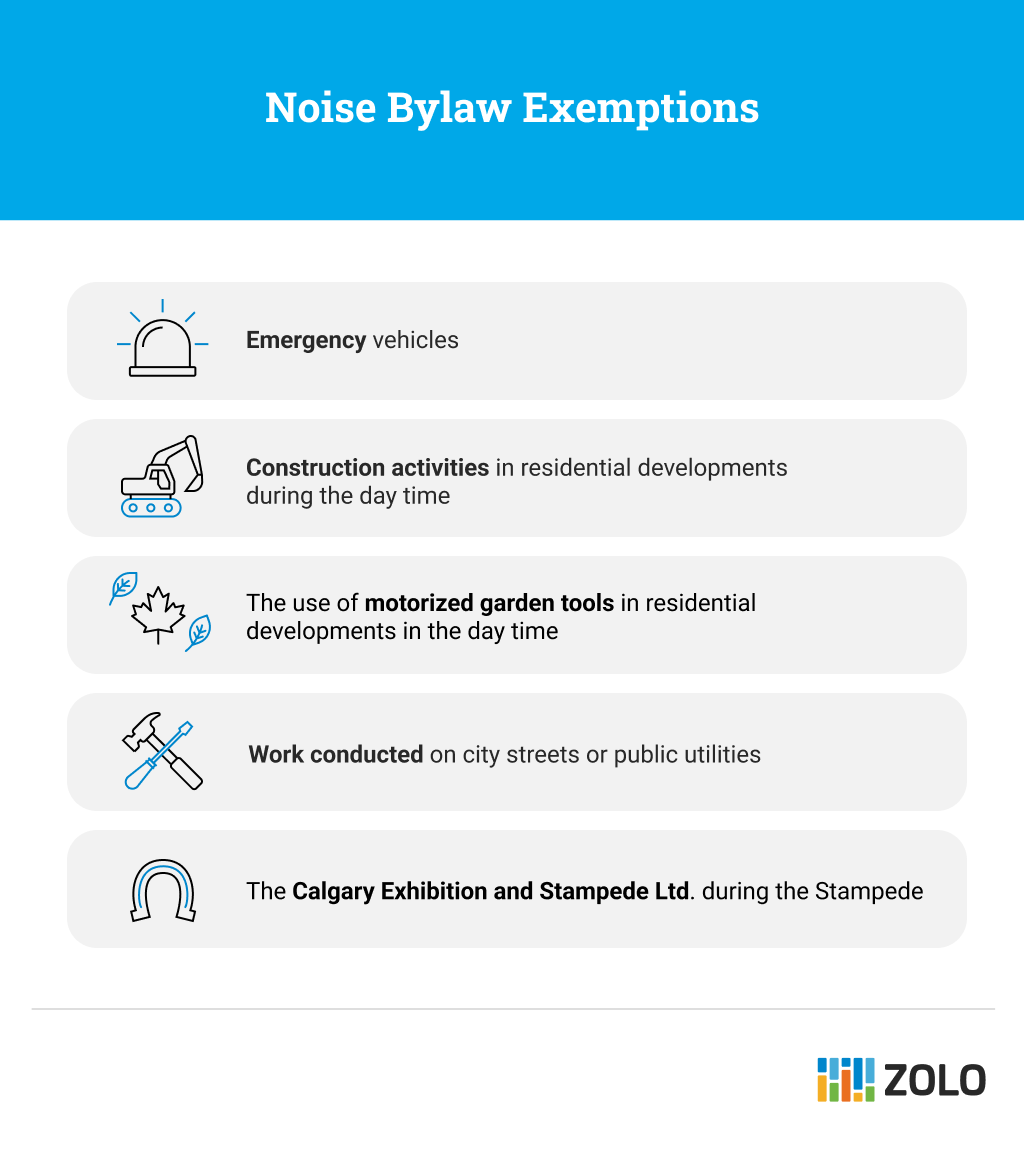
Keep in mind, there are exceptions for certain circumstances, including:
- Emergency vehicles
- Construction activities in residential developments during the daytime, regardless of whether City permits are required
- The use of motorized garden tools in residential developments, as long as the sound level does not exceed 75 dB over one hour, using the device during the daytime, and the usage is limited to less than 3 hours per day
- Work conducted on City streets or public utilities by the owner or operator of the public utility or its contractors
- The activities of The Calgary Exhibition and Stampede Ltd. during the Stampede period
- And any activity falling under the exclusive jurisdiction of the Government of Canada or the Province of Alberta
How Do They Measure Noise Limits?
When considering noise bylaws, most regulations revolve around sound decibels (dB). Sound decibels measure how intense or loud a sound is, and each has a different noise level.
Here is a list of each sound and an example:
Prolonged exposure to high decibel levels can lead to hearing damage or loss, which is why restrictions and regulations are essential. Therefore, acceptable noise levels help us live in a comfortable environment.
How to File a Noise Complaint in Calgary
You can take a few steps if you encounter a situation requiring attention or would like to file a complaint.
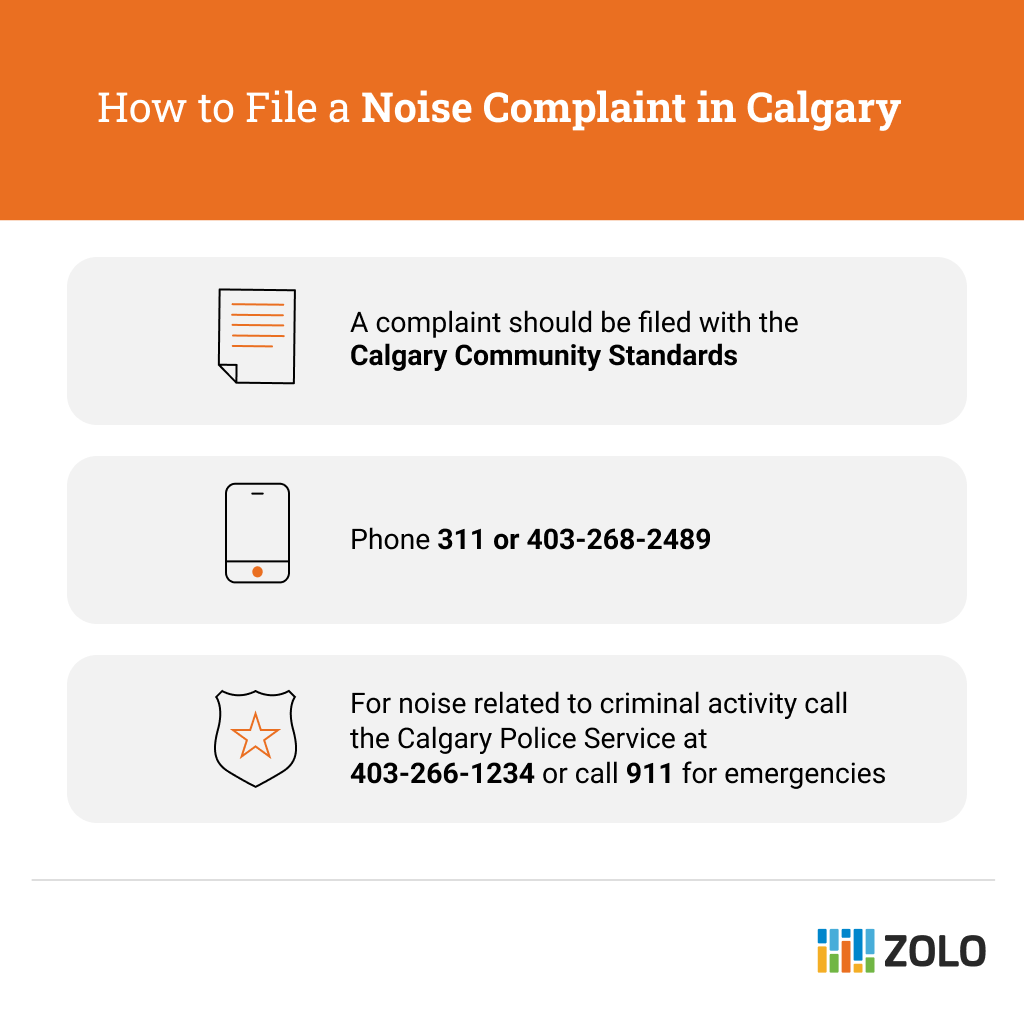
Step 1: Contact Calgary Community Standards
To reach this department, dial 311 or phone 403-268-CITY — or connect with them online.
Step 2: Prepare the Proper Information
When filing a complaint, you will need the following information on hand:
- Your name and address
- Your phone number
- The complaint location
- A concise description of the complaint
The Calgary Community Standards maintain confidentiality, so anonymous complaints are not accepted.
Step 3: Be Patient
Once your complaint is registered with 311, it will be assigned a file number and forwarded to a peace officer for investigation. Due to the volume of noise complaints received and limited resources, initial visits may take several days. However, complaints are prioritized, with precedence given to those with serious public safety implications.
The following investigations are prioritized:
- Public safety hazards
- Private property infractions
- Animal infractions
Step 4: Keep a Record of Recurring Issues
Suppose a situation is continual and recurring, whether with neighbours or within your Calgary neighbourhood or community. It is essential to keep a record of the problem. Therefore, ensure you can clearly describe the issue, keep records of the dates and the issues, provide specific information about where exactly the incident occurs, and any other helpful details.
Consequences of Noise Violations
Typically, a fine of $250 is imposed for exceeding the allowable noise limit. However, these offences depend on the type of violation. For example, outdoor concerts or speakers that surpass the permissible noise limit face a fine of $500.
Bottom Line
Ultimately, living in an enjoyable environment is the goal of Calgary’s noise bylaw. Being mindful of those around us and trying to schedule noise-intensive activities during permitted hours is critical.
Typically, it’s always worth communicating or cooperating with your neighbours to address these noise-related issues and find reasonable solutions before filing a complaint. After all, the goal is to keep Calgary one of the best places to live in Canada!
Calgary Noise Bylaws FAQ
What is the loud music law in Calgary?
An outdoor speaker system is allowed within 150 metres of a residential development between 7 am and 10 pm Monday through Saturday, and between 9 am and 10 pm on Sundays and holidays. However, the sound cannot exceed 65 decibels during one hour in the day, or 50 decibels during the night.
Can I call local police for a noise complaint?
In Calgary, you should call 311 to file a noise complaint. However, if you believe the noise is caused by criminal activity, call the Calgary Police Service at 403-266-1234, or if it is related to an emergency, call 911.
What are the quiet hours in Calgary?
Quiet hours in Calgary are between 10 pm and 7 am Monday through Saturday and between 10 pm and 9 am on Sundays and holidays. During these hours, you should avoid using a lawn mower, power tools, snow clearing devices (except during the 48-hour period following a snowfall event), or an outdoor speaker system.