
Do you have a household budget in place? After all, knowing what comes in and what goes out each month is essential for homeowners. Not only does it help you keep on top of your bills and ensure you’re living within your means, but a household budget template can help you plan how you expect to spend your money now and in the future.
We’ve put together some tidbits on creating a budget and why a monthly household budget is important (hint: it’s not to restrict your spending). Best of all? You’ll also learn how to keep track of your expenses using our interactive household budget template.
What are the Benefits of Having a Household Budget?
You may be wondering why you even need a budget in the first place. After all, as long as you don’t spend more than you make, then what does it matter, right? Wrong! Even those who create a plan tend to make these seven budget mistakes.
It doesn’t take a degree in finance to learn how to create a budget. However, it does take a bit of number crunching to do it right. But, once you get the knack of it, there are many benefits to having a budget.
Why You Need to Budget for Your Household Expenses
It’s easy to overlook tracking your spending or failing to work as a team. But, at the same time, not having any budget at all is the biggest personal finance snafu.
It’s easy to lose sight of your bank account, especially in a tech-driven era where we no longer rely on writing checks and balancing chequebooks. Instead, we use debit for everyday spending, from paying utility bills to grabbing coffee. But, unfortunately, without a budget, you risk overspending.
If you get in the habit of spending more than you make or have at your disposal, then you might find yourself in a bind. Perhaps the balance you thought you’d have at the end of the month has somehow disappeared. In situations like this, you might use your credit cards or take out a loan, which puts you further in debt.
Even if you manage to catch up financially, your spending habits might remain unchanged. Plus, now you have to make a payment to knock down that credit card bill or loan balance. Next thing you know, you’re living paycheck to paycheck.
But you’re not alone. This is an ongoing struggle for many Canadians. Having a household budget can help you avoid this type of financial pitfall. If you want financial freedom or to plan the life you always dream of, a housing budget can help you reach your goals.
How Our Budget Works
The best way to keep on top of your entire list of expenses is by using a simple, easy-to-use budget tracking tool like our housing budgeting template. It doesn’t matter what you use to track spending so long as you remain consistent.
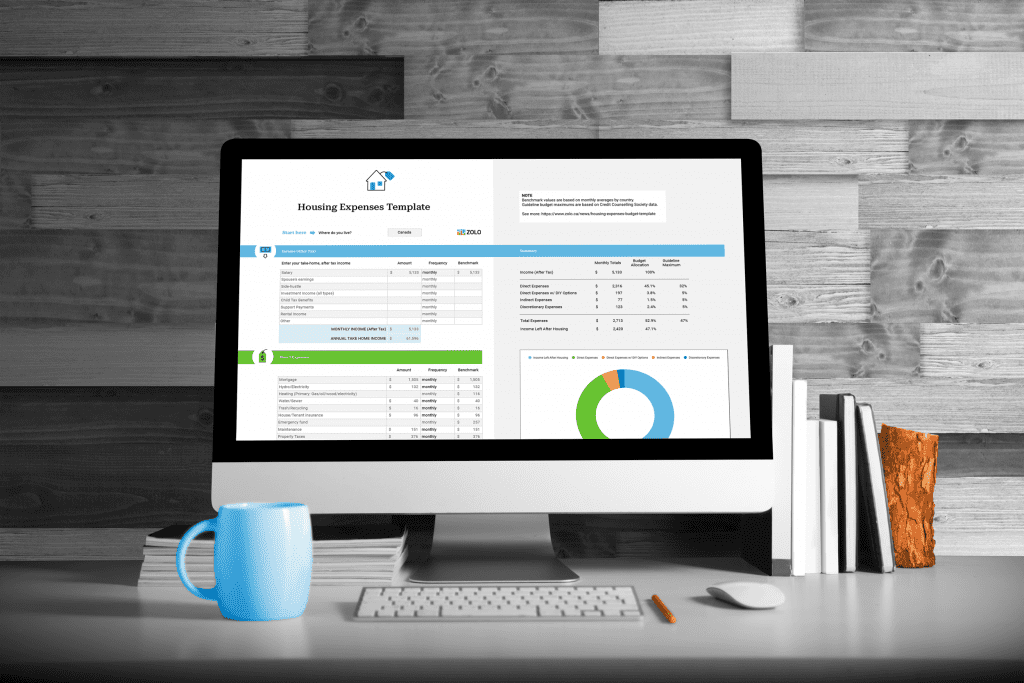
The Zolo Housing Expenses Template is an interactive Excel and Google spreadsheet that lets you enter and track your living expenses. The household budget template includes benchmark figures for each housing-related expense. Benchmarks help you assess whether you earn and spend more or less than the average Canadian or American.
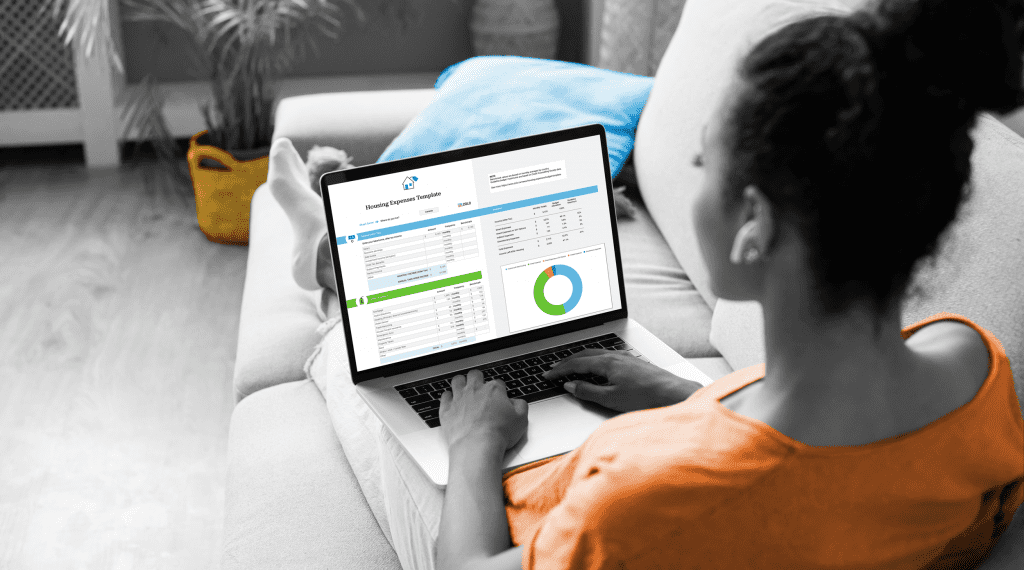
Using our budget template, you can customize the level of expense detail right down to the number of light bulbs you’ll need to buy in a year. Need to know what a realistic home maintenance cost is? Use the built-in benchmark costs to help you build your household budget.
What Expenses to Consider
Now that you know why having a budget and how a budgeting template can be invaluable, you’re probably wondering what expenses should be included. This list will vary from household to household, but homeowners should consider breaking their costs into one of three categories: direct, maintenance, and discretionary expenses.
Direct expenses

These costs are fixed and variable expenses considered a mandatory part of homeownership. Paying these bills keep your household secure and the lights on. Examples of the most common direct expenses include monthly mortgage payments, property taxes, home insurance payments, and heat and hydro costs.
- Monthly mortgage payments
- Hydro/electricity costs
- Heating bills
- Water & sewer
- Trash & recycling bills
- Home Insurance
- Emergency fund
- property taxes
- condo fees (if applicable)
Maintenance Expenses

Maintenance costs include all expenses that are part of the ongoing, annual home maintenance. The most common costs in this category are monthly snow removal, lawn care, and gutter cleaning.
- Sump pump inspection
- Lawn & garden maintenance
- Snow removal
- Gutter & eaves cleaning
- Chimney & firebox cleaning
- Furnace filters
- Furnace & hot water tank inspection
- Heat pump/HRV or A/C inspection
- Septic or well tests
- Maintenance costs
Discretionary Expenses

The discretionary category captures all household expenses that aren’t mandatory but makes your home more pleasant to spend time in. These costs commonly include monthly cable and internet bills and subscriptions for streaming services such as Netflix and Spotify.
- Home phone
- Internet
- Cable TV or satellite fees
- Cleaning service
- Home security or alarm fees
- Propane BBQ tank costs
- Firewood
- Pool heater and pump and filter inspections
- Streaming services subscriptions such as Netflix, Spotify, Apple TV, and various gaming options
How We Made the Household Budget Template
We created the housing budget Excel and Google spreadsheet using the following methodology:
To find the average costs of owning a home, for this report, we separated housing costs into three distinct categories:
- Direct Expenses
- Maintenance Expenses
- Discretionary Expenses
Direct Expenses Costs Methodology
To help with our regional comparison, we only factored in five Direct Expense costs we believed all homeowners would pay regardless of where they live and what type of property they own. These were: monthly mortgage payments, hydro, heat, property taxes, and home insurance payments.
Sources for the monthly averages included: Statistics Canada Income Statistics by Economic Family Type and Income Source, official provincial and territorial government websites, Thinkinsure.ca, Insureye.com, Energyhub.org, ValueofWater.ca, Taxtips.ca, CRTC.gc.ca, CREA HPI Map, Karl’s Mortgage Calculator, as well as official municipality websites.
If a monthly average was unavailable, we found annual costs and then amortized these costs over 12 months.
Maintenance Expenses Costs Methodology
To help with our regional comparison, we only factored in three Maintenance Costs we believed all homeowners would pay regardless of where they live and what type of property they own. These were: snow removal, lawn & garden maintenance and gutter & eaves-trough cleaning.
Discretionary Expenses Costs Methodology
To help with our regional comparison, we only factored in four Discretionary Expenses we believed all homeowners would pay regardless of where they lived and what type of property they owned. These were home phone, Internet, Cable TV, and one streaming service (at $14 per month).
Final Thoughts
Like most things, there are many benefits to having a plan for your money is no different. Setting a budget puts you in the driver’s seat, preventing your finances from getting out of control (or helping you regain control). Changing your mindset is the first step. We’ve already provided a housing budget template to get you going with tracking your spending. Now the rest is up to you.