

Buying your first home is an exciting time in your life. However, it’s more complicated than finding a home and making an offer. As a first-time homebuyer, before you set foot in an open house or receive your keys on closing day, there are several steps to take.
The good news is that there are many real estate professionals out there who can guide you through the process from start to finish. If you’re a first-time homebuyer in Canada, here are the steps you need to take to become a homeowner.
What is a First-Time Homebuyer?
Generally, a first-time homebuyer is someone who has not owned a home or occupied a home that their current spouse or common-law partner owns in the last four years. However, different assistance programs may define first-time homebuyers differently, so it’s always best to check with the provider directly.
Determine Budget
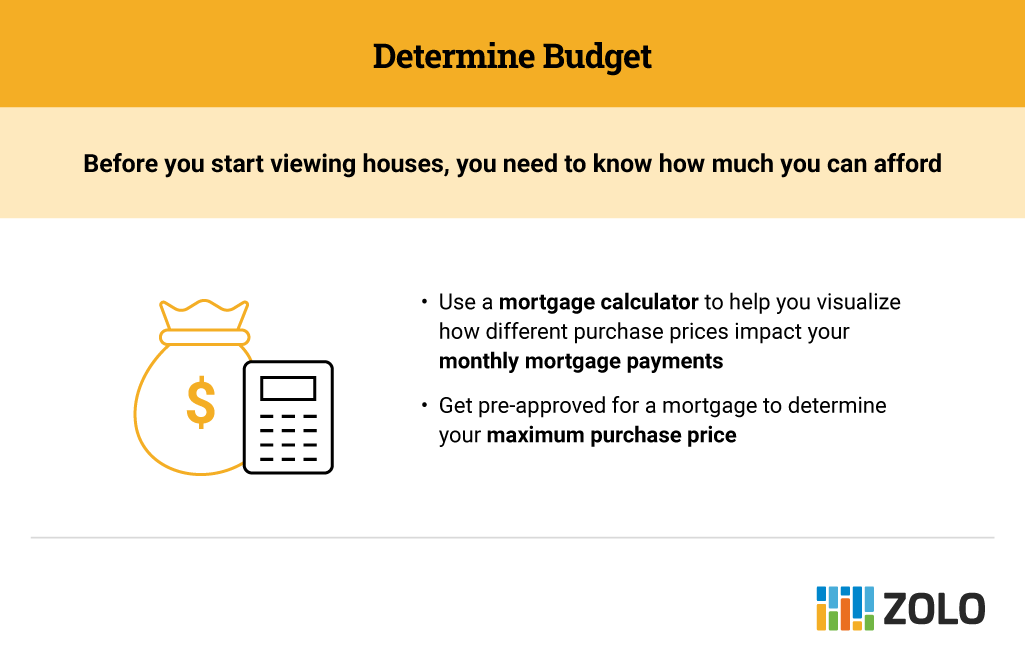
Determining your budget is an essential step before you start viewing houses. By figuring out how much you can afford, you can narrow down your list of potential homes and neighbourhoods.
How much house you can afford depends on your down payment and the size of the mortgage your lender approves. Fortunately, there are tools to help you figure out how much you can spend.
Use a Mortgage Calculator
A mortgage calculator can help you determine your monthly mortgage payment, how much cash you’ll need to close, and how much interest you’ll pay over the life of your mortgage.
Using a mortgage calculator, you can visualize how different purchase prices will impact your monthly mortgage payments.
Get Pre-approved for a Mortgage
While getting pre-approved for a mortgage is not a requirement, it can make the home-buying process easier. To get pre-approved for a mortgage, you’ll sit down with a lender or mortgage broker to determine how much you can afford.
To apply for pre-approval, you’ll need to provide personal and financial details, including:
- Identification – For example, a photo ID, driver’s license, or passport.
- Income – Usually recent pay stubs; however, they may request a letter from your employer or income tax returns.
- Assets – Bank statements verifying the amount of your downpayment.
- Debt – A complete account of any debt, including credit card balances, lines of credit, student loans, and car loans. You’ll also need to disclose any financial obligations like spousal or child support.
- Consent for a credit check – A hard credit check helps determine the types of lenders and interest rates you qualify for.
Estimate Upfront Costs
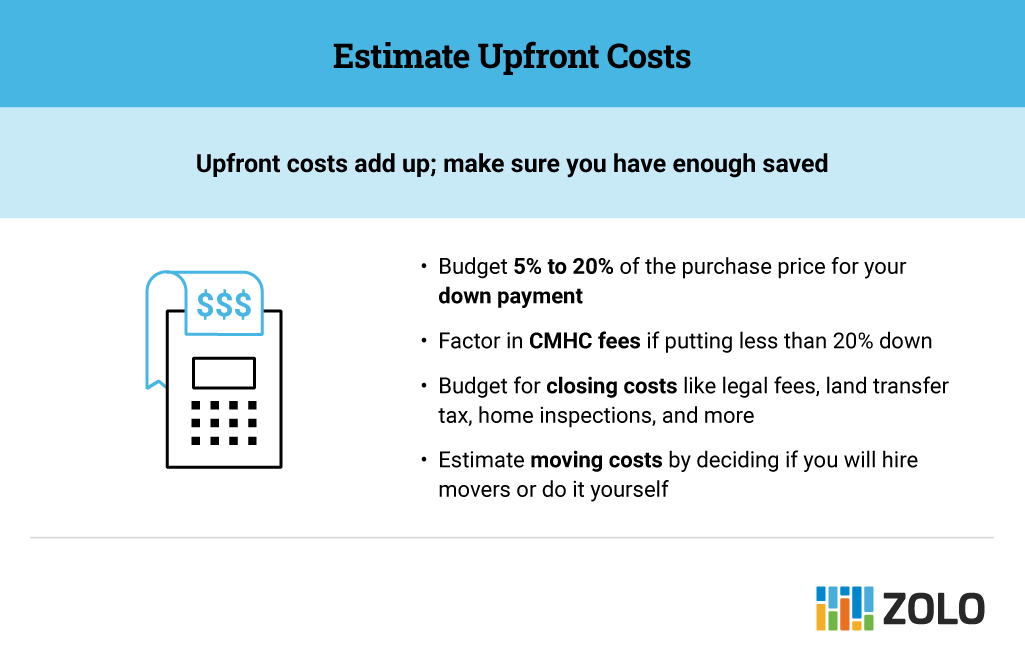
Upfront costs like your down payment, closing costs, and moving costs can certainly add up. Estimating these costs before you purchase a home can help you be better prepared for closing day as a first-time homebuyer.
Down Payment
Typically, you’ll need to budget 5 to 20% of the purchase price of a home for the down payment. The minimum down payment in Canada depends on the type of home you are buying and the purchase price.
When you buy a house with less than a 20% down payment, you will need to pay mortgage default insurance, also known as CMHC insurance. This insurance protects the lender in case you default on your payments.
If you need help saving for a down payment, multiple down payment assistance programs are available in Canada.
CMHC Fees
CMHC mortgage insurance is mandatory if you buy a home with a down payment of less than 20%. The cost of mortgage insurance changes depending on the down payment amount, and it can add thousands of dollars over the life of your mortgage.
You do not need to pay CMHC fees upon closing. You can add them to your monthly mortgage payments. However, if you live in Manitoba, Quebec, Ontario, or Saskatchewan, provincial sales tax is applied to the mortgage loan insurance premium, and the taxes are paid as a lump sum upon closing.
Closing Costs
Closing costs are a general term for the fees due on the closing date. Besides your down payment, closing costs are typically the largest upfront sum. The general rule of thumb is to budget 2% to 4% of the purchase price for closing costs.
Here are some examples of various closing costs:
Legal Costs
A real estate lawyer takes care of all the paperwork, including the agreement of purchase and sale, as well as the mortgage. Real estate lawyers also ensure there are no claims listed against the property, calculate the land transfer tax, and arrange for title insurance, among other tasks. These legal fees can range from $900 to $2,000 plus tax, depending on where you live.
Land Transfer Tax
Land transfer tax is applied when you purchase a house, condo, or land in Canada, except Alberta and Saskatchewan. The amount of land transfer tax you pay depends on where you live, and it is calculated as a percentage of the home’s purchase price.
For example, in Ontario, the marginal land transfer tax rate is:
If you purchase a home in Ontario (outside of Toronto) for $750,000, you will pay $11,475 in land transfer tax. However, if you are buying a house in Toronto, they charge an additional municipal land transfer tax, doubling the amount you pay.
Land transfer tax rebates are available in some provinces to help first-time homebuyers purchase a home.
Property Tax
Property taxes are a recurring expense when you own a home. In addition, when you buy a home, you are responsible for paying the property tax for the portion of the year you own the home. If the sellers have prepaid the property tax for the year, you will pay a pro-rated portion of the property tax at closing. The amount you pay will depend on the date of the home purchase, the assessed value of the home, and the municipal tax rates.
Homeowners Insurance
In Canada, you must have home insurance if you purchase a home with a mortgage. Before you can close on the home you are buying, you will need to provide proof of insurance to your real estate lawyer. However, you can pay your policy upfront or in monthly installments.
The cost of home insurance depends on where you live, as well as the type, age, and safety features of the property. For example, Ontario’s annual average cost of homeowners insurance varies from $1,000 to $2,500.
Home Inspection
While not a requirement, having a home inspection is a wise decision for a first-time homebuyer. Home inspectors can help identify potential issues or systems in need of repair. A home inspection typically takes two to three hours, and the inspector will provide a detailed written report on their findings.
Unlike other closing costs, the fee for a home inspection is typically paid directly to the home inspector.
Other Closing Costs
In addition to the above closing costs, there are other variable costs associated with closing on a home:
- Title insurance – This one-time cost protects your lender in case there are outstanding claims on the property. The typical cost in Canada for title insurance is $250.
- Home appraisal – A home appraisal is an unbiased opinion of the fair market value of a property. Your lender may require an appraisal to be conducted by a professional, which could cost between $300 and $500.
- Property survey – Your lender may require a property survey. If the sellers provide an out-of-date survey, you may have to pay for a new one. The cost could range from $1,500 to $6,000, depending on the size of the property.
- GST/HST – If you purchase a newly built home, you are subject to GST or HST. Your builder may include this in the total purchase price. In that case, it is rolled into your mortgage. On the other hand, if they didn’t include it, the tax becomes part of your closing costs.
- Well and septic tests – If you are purchasing a rural property with a well and septic system, your lender may require these systems to be tested to ensure they are in good working order. The fee for a septic inspection can range from $350 to $500.
Moving Costs
The cost of moving can vary widely depending on how far you are moving, the amount of household items, and if you are hiring movers or renting a truck. No matter what option you choose, you need to factor moving costs into your budget.
If you are planning a long-distance interprovincial move using a moving company, costs can range from under $1,000 to over $6,000. By contrast, if you rent a U-Haul truck for an in-town move, rates start at $19.95 per day, plus per-mile fees.
Begin the House Hunting Process
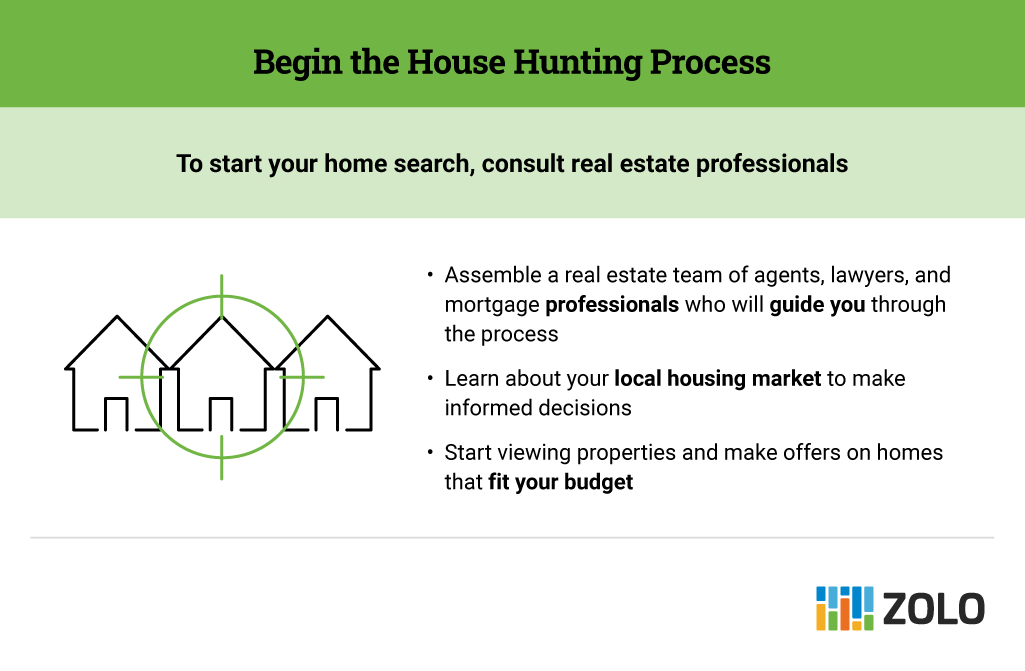
Once you know how much you can comfortably afford, the fun part begins! You can find a local real estate agent and start your home search.
Find a Real Estate Team
Assembling your real estate team is a great first step. This team will help guide you through the entire process, from viewing homes to putting in an offer and receiving your keys on closing day. Generally, this team comprises real estate professionals like agents, lawyers, and mortgage providers.
A real estate agent or broker helps you find a home and make an offer. Often, they are a wealth of knowledge for every step of the home-buying process. To find the right real estate agent for you, ask your network for recommendations, contact potential agents, and ensure they are knowledgeable about the area in which you wish to buy a home.
You likely have already found a mortgage broker or provider if you’ve gotten pre-approved for a mortgage. Mortgage brokers shop around different lenders to find the best mortgage option for your situation. On the other hand, you can choose to contact individual lenders on your own.
Finally, real estate lawyers are another key part of your real estate team, as they handle the paperwork associated with buying a home.
Understand the Local Housing Market
When you’re searching for a home, it’s essential to understand the local housing market. For example, is it a buyer’s or seller’s market? Are houses selling quickly for over the asking price, or can you take your time making a decision? An experienced real estate agent can answer these questions.
View Properties and Make Offers
Once you’ve secured a real estate agent and know your maximum purchase price, it’s time to start viewing houses! Consider heading to open houses in your area or browsing real estate websites. Your agent may also provide suggestions for homes that fit your wish list.
When you make an offer on a home, your real estate agent will negotiate on your behalf. Deciding how much to offer depends on comparable properties, the home’s condition, and the seller’s situation.
Identify Incentives and Tools for First-Time Homebuyers
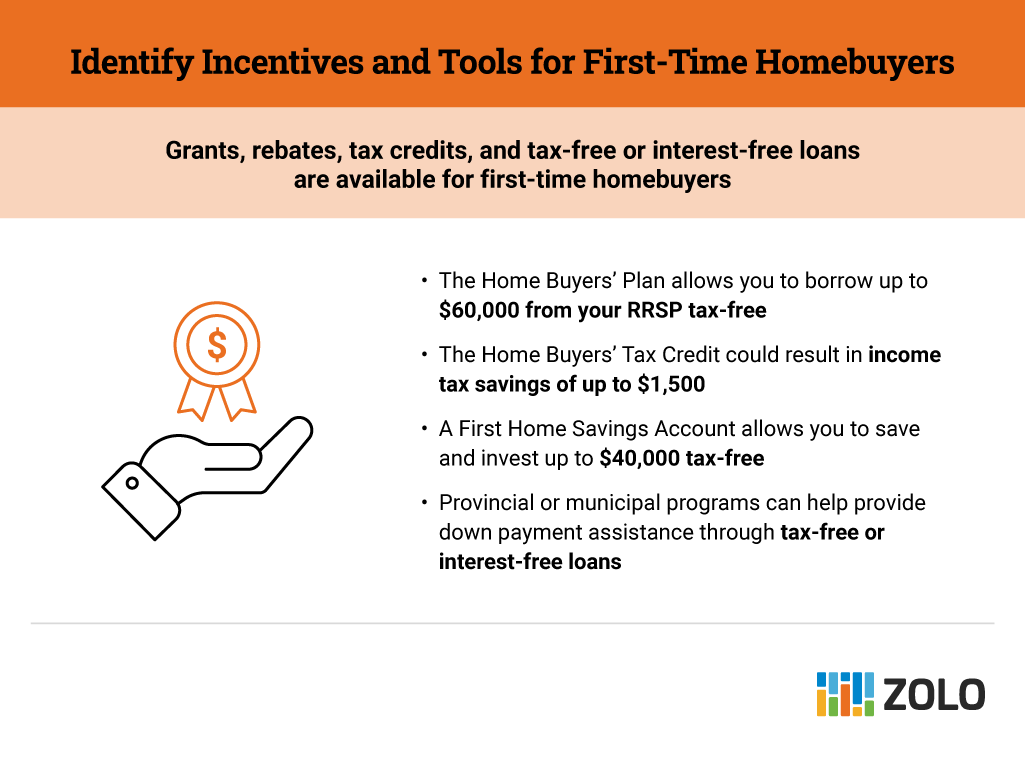
The good news is that there are plenty of provincial and federal programs to help you become a homeowner. Grants, rebates, tax-free or interest-free loans, and tax credits are just some incentives available to first-time homebuyers.
RRSP Home Buyers Plan
The Home Buyers’ Plan (HBP) is a government program that allows you, as a first-time homebuyer, to borrow up to $60,000 tax-free from your RRSP (Registered Retirement Savings Plan) for a down payment. Funds withdrawn from your RRSP under the HBP are treated as an interest-free loan, which you must pay back to your RRSP account within 15 years.
Home Buyers Tax Credit
Officially called the First-Time Home Buyers’ Tax Credit, this federal tax credit could result in income tax savings of up to $1,500. Specifically, this income tax savings could help offset the costs of inspection, legal fees, and other closing costs.
First Home Savings Account
The Tax-Free First Home Savings Account allows you to save up to $40,000 tax-free towards the cost of your first home. You can contribute $8,000 annually, up to a lifetime maximum of $40,000. However, if you cannot contribute the total $8,000 in one year, you can carry over the unused contribution room forward the following year.
Open your First Home Savings Account with Questrade online and start saving for your first home!
Provincial Programs for First-Time Homebuyers
Depending on where you live, your province may offer a down payment assistance program. Typically, these programs offer interest-free or forgivable loans for a down payment. For example, many counties in Ontario offer a loan of 5% to 10% of the purchase price for eligible home buyers who have lived in the region for at least six months to one year.
First-Time Homebuyer FAQs
How much do first-time homebuyers have to put down in Canada?
For a first-time homebuyer in Canada, the minimum down payment depends on the home’s total purchase price.
For homes under $500,000, the minimum down payment is 5%. Homes priced between $500,000 and $1,499,999, the minimum down payment is 5% on the first $500,000 of the purchase price, and 10% on the portion of the purchase price above $500,000. For homes priced above $1,500,000, the minimum down payment is 20%.
Should I rent or buy my first home?
Deciding whether to buy or rent a home is a personal decision. Renting a home could be cheaper than buying one, depending on where you live. Renting allows you more flexibility but less control over the home’s features. On the other hand, you are responsible for all maintenance when you purchase a house, but you can build equity.
What assistance is available for first-time homebuyers?
The federal government offers multiple financial assistance options for a first-time homebuyer. For example, the First-Time Home Buyers’ Tax Credit, Land Transfer Tax Rebate, and GST/HST New Housing Rebate. In addition, your provincial government may also provide assistance in the form of forgivable or interest-free loans.
