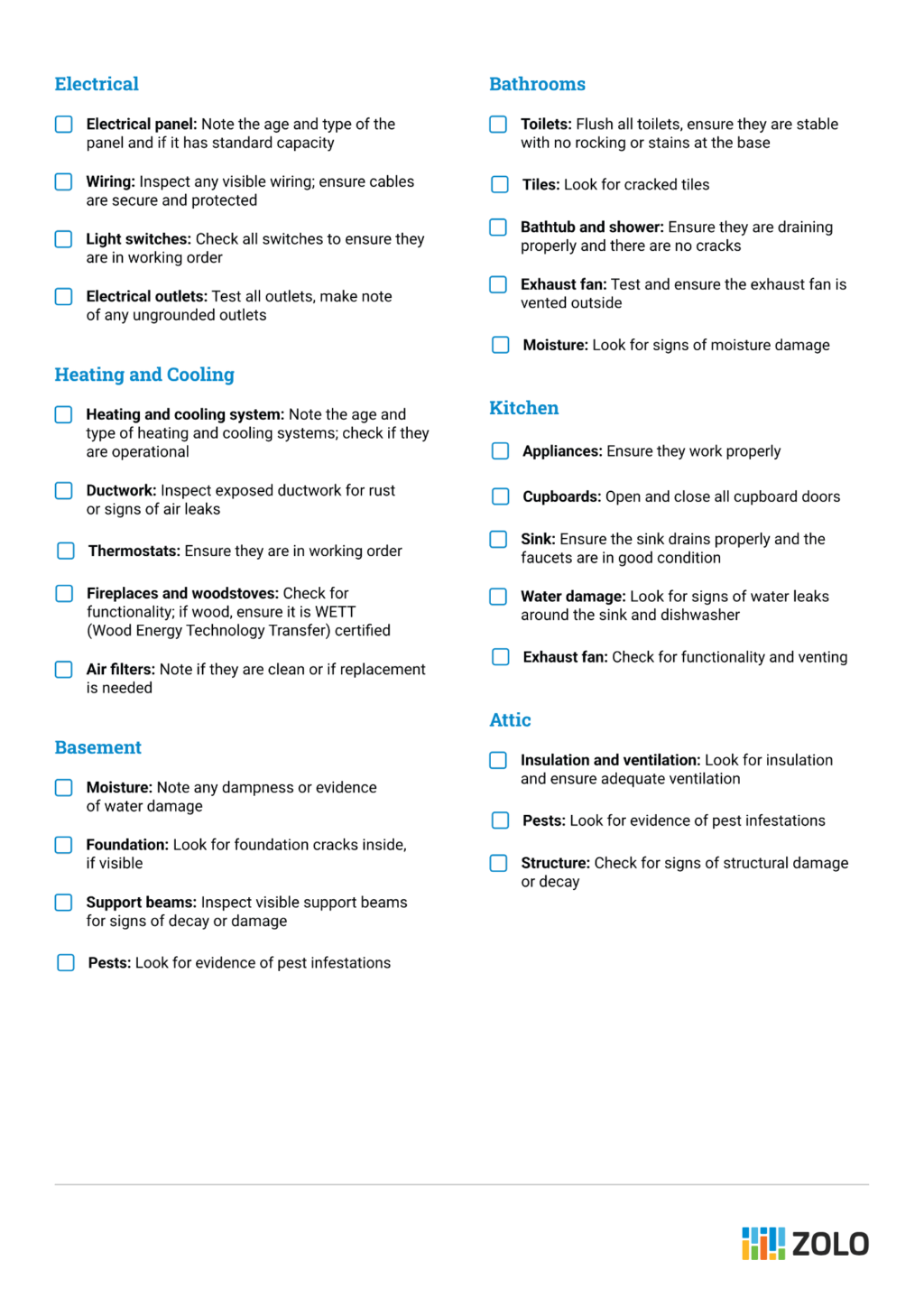
Buying a home is costly, and a home inspection can seem like an unnecessary expense. Additionally, in hot markets, you may feel pressured to skip a home inspection to make your offer more appealing. Armed with a home inspection checklist, you may be tempted to do it yourself.
However, a thorough inspection by a professional home inspector is a valuable investment. For instance, forgoing a home inspection could leave you with a property in need of significant and costly repairs. So, what do home inspectors look for? Download our home inspection checklist below.
Key Takeaways
- A home inspection is a limited, non-invasive, visual examination of the current condition of a property
- Common issues found during a home inspection are structural defects, unsafe handrails, electrical issues, poor grading or drainage, and inadequate insulation
- Consider including a clause in your purchase agreement making the purchase conditional on a successful home inspection
What is a Home Inspection
A home inspection is a thorough walkthrough of a house and property performed by a licensed professional. The home inspector will review the home’s systems and structural components to look for areas that need repair or replacement. After the walkthrough, your home inspector will provide a written report with their findings. It’s important to read the inspection report carefully and ask about anything you don’t understand.
A home inspection typically takes place after you’ve made an accepted offer on a home and before the final closing date. However, if you are a seller, you may want to consider getting a pre-listing home inspection to identify any issues and reduce the risk of a delayed closing or price reductions.
Home Inspection Checklist
You can use this home inspection checklist while viewing homes to spot potential problems before you make an offer. Then, use it again as you walk through the house with your home inspector. A professional home inspector will use their own inspection checklist while examining the home. However, by understanding what certified home inspectors look for, you can ask informed questions about the home’s condition.
Keep in mind that this home inspection checklist is not a replacement for a professional inspection.
Exterior
- Foundation: Look for cracks or signs of rot
- Drainage: Check for standing water; ensure drainage is away from the house
- Exterior walls: Make sure the walls are level with no sagging or bulging
- Siding: Take note of the siding type and condition
- Roof: Look for missing or damaged shingles; take note of the approximate age
- Eaves, fascias, and soffits: Ensure they are in good condition
- Gutters and downspouts: Attached securely and drain properly
- Chimneys: Ensure they appear straight and in good condition
- Deck and handrails: Look for rotten boards and inspect general condition
- Garage: Test the garage door, check the general structure
- Yard and trees: Look for dead or damaged trees, check landscaping is in good condition
Interior
- Windows and doors: Ensure they open, close and lock properly; look for cracks or gaps, broken seals, or broken glass
- Signs of mould: Look for dark patches or stains
- Floors, walls, and ceilings: Take note if floors, walls, and ceilings are level or warped/sagging
- Smoke and carbon monoxide detectors: Ensure adequate detectors and test
- Stairways: Make sure treads, risers, and handrails are solid
Plumbing
- Water pressure: Ensure water pressure is acceptable
- Water colour: Check for discolouration or smells
- Visible plumbing: Look under the sinks and at other exposed pipes for signs of leaks
- Water heater: Note the age and condition of the water heater and check for rust
- Water temperature: Ensure the hot water is within an acceptable range
- Sump pump: If applicable, make sure it’s functioning properly
- Well and septic system: Note if the home has a well and septic system; if so, additional inspections may be required
Electrical Systems
- Electrical panel: Note the age and type of the panel and if it has standard capacity
- Wiring: Inspect any visible wiring; ensure cables are secure and protected
- Light switches: Check all switches to ensure they are in working order
- Electrical outlets: Test all outlets, make note of any ungrounded outlets
Heating and Cooling (HVAC)
- Heating and cooling system: Note the age and type of heating and cooling systems; check if they are operational
- Ductwork: Inspect exposed ductwork for rust or signs of air leaks
- Thermostats: Ensure they are in working order
- Fireplaces and woodstoves: Check for functionality; if wood, ensure it is WETT (Wood Energy Technology Transfer) certified
- Air filters: Note if they are clean or if replacement is needed
Basement
- Moisture: Note any dampness or evidence of water damage
- Foundation: Look for foundation cracks inside, if visible
- Support beams: Inspect visible support beams for signs of decay or damage
- Pests: Look for evidence of pest infestations
Bathrooms
- Toilets: Flush all toilets, and ensure they are stable with no rocking or stains at the base
- Tiles: Look for cracked tiles
- Bathtub and shower: Ensure they are draining properly and there are no cracks
- Exhaust fan: Test and ensure the exhaust fan is vented outside
- Moisture: Look for signs of moisture damage
Kitchen
- Appliances: Ensure they work properly
- Cupboards: Open and close all cupboard doors
- Sink: Ensure the sink drains properly and the faucets are in good condition
- Water damage: Look for signs of water leaks around the sink and dishwasher
- Exhaust fan: Check for functionality and venting
Attic
- Insulation and ventilation: Look for insulation and ensure adequate ventilation
- Pests: Look for evidence of pest infestations
- Structure: Check for signs of structural damage or decay
What’s Not Included in a Home Inspection?
There are a few things not typically included on a home inspection checklist, for example:
- Hidden elements, such as electrical wiring, plumbing, and pest infestations behind walls
- Asbestos
- Radon, methane, and radiation
- Well and septic tests
- Swimming pools
- Outbuildings
- Fireplaces may need an additional WETT-certified inspector
Key Questions to Ask a Home Inspector
You should ask questions before, during, and after your home inspection. Here are some example questions:
How long have you been a home inspector?
Not all provinces and territories regulate home inspectors. Therefore, it is essential to find an experienced inspector in your area.
Before hiring a home inspector, review their credentials and find out if they are members of a professional association, such as the Canadian Association of Home & Property Inspectors (CAHPI) or the Canadian National Association of Certified Home Inspectors, Inc. (CanNACHI).
What will you inspect?
Generally speaking, home inspectors use similar home inspection checklists. However, some home inspectors may offer add-ons to home inspections. For example, they may provide indoor air quality assessments, thermal imaging, radon testing, or other specialized tests.
Are there any health and safety hazards?
Health and safety hazards, such as knob and tube wiring, electrical code violations, structural issues, pest infestations, and ventilation problems, can be expensive to address. Therefore, it’s essential to remedy these issues quickly.
What are your biggest concerns?
Asking your home inspector to list their top concerns can help you determine whether to continue purchasing the home. Additionally, it can help you prioritize what to repair as quickly as possible after buying the house.
Should I call in another expert for additional inspections?
After your home inspection, your home inspector may recommend additional tests by an expert in that field. For example, if the home inspector notices an issue with the home’s heating system, they may recommend hiring an HVAC inspector for their opinion. You may consider additional tests for asbestos, lead paint, swimming pools, and other elements not covered in a traditional home inspection.
What Happens After the Home Inspection
After the home inspection, your inspector will provide you with their report. Typically, several minor repairs are needed. However, the inspection may reveal significant issues. Then, you can use the findings in the report to decide on the home you wish to purchase. You have a few options:
- Negotiate with the seller – If the inspection reveals significant problems, you can negotiate with the seller to have the issues fixed or for a price reduction
- Walk away – If the damages are extensive, you can walk away from the deal, provided the closing is conditional on the home inspection
- Fix it yourself – You can complete the purchase and manage the repairs yourself
It’s important to note that a home inspection is not a pass-or-fail assessment. The report provides information for you to consider before proceeding with the purchase. Before closing, conduct a final walkthrough of the property to ensure negotiated repairs have been completed and that the home is in the same, or better, condition than it was during the inspection.
Bottom Line
A home is a massive investment, and you want to ensure it’s in good condition before you commit to buying it. A thorough home inspection conducted by a qualified home inspector can help uncover any potential issues that may lead to expensive repairs down the line.
Use our ultimate home inspection checklist to conduct a DIY home inspection while viewing homes, allowing you to ask informed questions about the home’s condition.
Home Inspection FAQs
What is the biggest red flag in a home inspection?
According to Mike Holmes, some of the biggest red flags during a home inspection include structural or foundation issues, pest problems, a lack of permits for renovated houses, water stains, roof problems, visible mould, and electrical issues. While these issues may not be deal-breakers, it’s important to note any significant problems and how much they would cost to fix.
How much does a home inspection cost in Canada?
According to MoneySense, the price for a home inspection typically ranges between $500 and $600. However, the actual cost will vary depending on where you live, the property size, the age of the home, and the length of time it takes to complete the report.
What is not included in a home inspection?
A home inspection examines elements that are immediately visible. For example, a home inspector cannot open walls to look for insulation. Additionally, if any area of the house is inaccessible, such as a locked door or snow-covered roof, the inspector will not be able to report on its condition.
What is the most common issue to arise in a home inspection?
The most common issues identified during a home inspection include structural defects, missing or unsafe handrails, faulty electrical systems, grading and drainage problems, and inadequate insulation. All of these common problems should be addressed to avoid safety hazards or costly repairs.
Download the Home Inspection Checklist
Click below to download a PDF version of the Zolo home inspection checklist.