When getting a mortgage on your home, one of the most significant decisions you must make is whether you would like to go with a fixed or variable mortgage rate. Of course, you will find advocates for both, but those who push variable interest rates will quickly tell you that, historically, you can save more money this way. But, remember, they are also a higher risk, which tends to turn many people away.
Typically, the number of Canadian homeowners on a variable-rate mortgage hovers around 30%. However, during the pandemic, we saw a surge in Canadians choosing this type of mortgage. In August 2022, variable-rate mortgages accounted for 44% of new mortgages and renewals. Now, with so much economic uncertainty, people are questioning more than ever what to choose.
If you need help deciding, read on to learn more in this guide on variable interest rates in Canada.
What is a Variable Rate Mortgage?
A variable-rate mortgage, sometimes called an adjustable-rate mortgage (ARM), is a type of home loan where the interest rate can change over time. Unlike a fixed-rate mortgage, where the interest rate remains constant for the loan term, a variable-rate mortgage can adjust periodically based on Canada’s prime rate.
This means your monthly mortgage payments can go up or down, making it potentially more affordable initially but riskier if interest rates rise significantly during adjustment periods.
How Does a Variable Rate Mortgage Work?

With this mortgage type, your regular payments will stay the same, but the interest you pay on those payments will fluctuate depending on the current interest rates. In comparison, if you have a fixed rate, any adjustments won’t matter. You’ll still be paying the same amount of interest on every payment.
Depending on your variable-rate mortgage type, you could see an increase in your monthly mortgage payment. Most Canadian lenders offer variable-rate mortgages with either variable or fixed payments.
Variable Rate Mortgages with Fixed Payments
If you have a variable-rate mortgage with fixed payments, your monthly amount owing will stay the same. You aren’t suddenly required to pay more money one month than the next. The difference is how much of the amount goes towards interest compared to the principal balance of your mortgage loan. So, when interest rates increase, you are paying less toward the actual cost of your home. Likewise, when the interest rates decrease, you get to put more of that payment money toward your home and pay less in interest.
But, should the mortgage interest rate increase so much that your regular payments are no longer covering the interest, then this is a problem. In this case, you have reached your ‘trigger rate,’ and your mortgage payments will have to increase. This has been a problem for many variable interest rate holders who signed on during the pandemic at extremely low rates. As the Bank of Canada continually raises its rates, so do the lenders. As of November 2022, the Bank of Canada estimated that half of all variable-rate mortgages had hit their trigger rate.
Variable Rate Mortgages with Variable Payments
For Canadians, three-quarters of variable-rate mortgages have fixed payments. However, you will see fluctuation for the remaining homeowners with variable payments as the Bank of Canada and lenders’ prime interest rate changes. Therefore, your mortgage payment will increase if rates go up to cover the interest. Conversely, if rates go down, the opposite will happen.
Variable rates can be more uncertain than fixed rates. So, depending on your risk tolerance, you may prefer something else to this style of mortgage. So, when shopping around, you will notice that variable rates are often cheaper because they don’t have that same security blanket. But, variable-rate mortgages tend to be much more flexible than fixed-rate mortgages when breaking your contract.
How are Mortgage Rates Linked to Interest Rates?
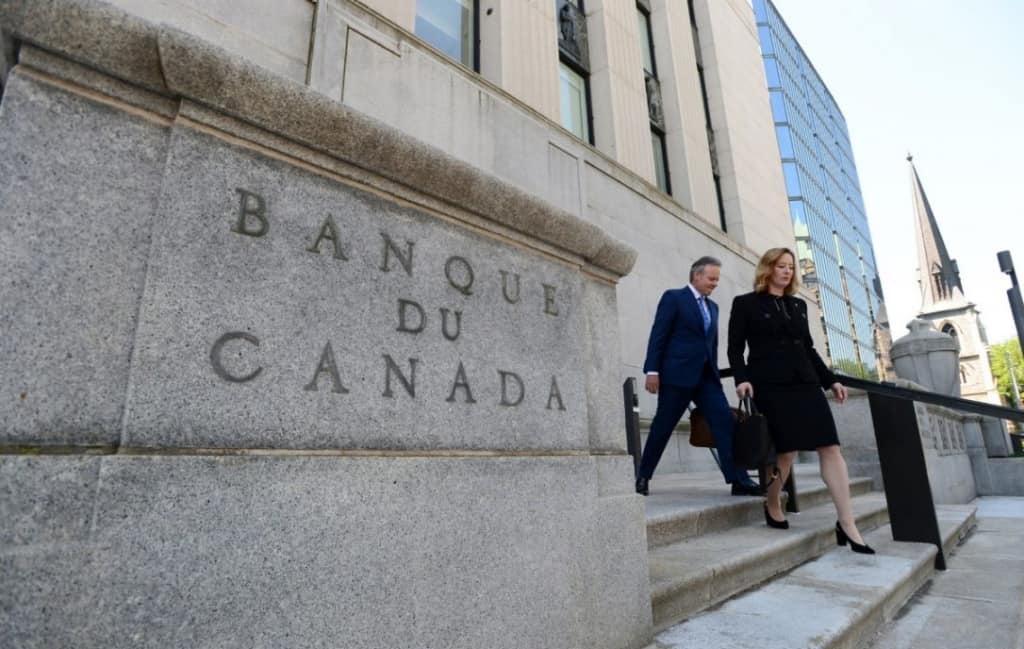
To better understand how variable interest rates can fluctuate so much, you need to know how they are determined. Canadian lenders borrow their money from depositors and investors both within Canada and abroad. So, the influence on interest rates in Canada comes from domestic economic factors and interest rates abroad (especially within the USA). A strong economy leads to higher interest rates because more people want to borrow. Conversely, a weak economy means more people are looking to save, so interest rates drop to entice people to borrow.
The Bank of Canada will set the overnight rate based on the current economic situation. If they want to keep inflation low, they increase the rate. If they’re going to get people to spend, they lower the rates. The lenders will then use this overnight rate as their base for setting the prime rate.
Once the bank or lender has set their prime rate, they will consider your current financial position and history. They want to know your risk when considering lending you such a large sum. If you have a lot of debt or bad credit, lenders see you as a higher risk, and your rates will be higher than someone with a good credit score and minimal or no debt.
Should You Opt for a Variable-Rate Mortgage?
How do you know whether or not you should choose a variable-rate mortgage? Firstly, you must determine if you are comfortable with this type of mortgage. Sure, the idea of paying less over time is excellent. But what happens if interest rates increase? Will this cause financial stress? Did the mention of trigger rates concern you? Can you financially take this on? These are all personal factors you will want to consider when deciding if a variable-rate mortgage is right for you.
It would help if you also considered the current economy and kept in the loop on current interest rates. The more you know, the better equipped you’ll be to handle this financial decision. For example, when rates were meagre during the pandemic, it made sense to get a variable rate. However, it’s a more complicated decision as the Bank of Canada continually increases rates. After all, fixed rates are increasing as well.
Pros and Cons of a Variable-Rate Mortgage

Like any financial product, variable-rate mortgages have both their pros and cons. Here are some key points to consider:
Pros
- Historically, variable-rate mortgages in Canada outperform fixed-rate mortgages and can save you thousands of dollars over time
- Variable-rate mortgages tend to be more flexible if you opt to break your contract early
- Should you need, you can convert your variable-rate mortgage to a fixed-rate mortgage at any time during the period of your term
Cons
- Lack of stability, which can be stressful on some people when it comes to budgeting and affordability
- We all hope for stable or lower interest rates, but they could just as quickly increase
- If you do hit your trigger rate, then you will have to increase your payments
When choosing a variable or fixed-rate mortgage, it all comes down to your financial situation, risk tolerance, comfort level, and current economic situation. So, take the time to think about it and weigh the pros and cons. Whatever you decide, remember to shop around as well. Not all lenders offer the same rates and terms, and it’s in your best interest to put in the time to find the best mortgage rate available to you.
Fixed-Rate vs. Variable-Rate Mortgage
When deciding between a fixed-rate and variable-rate mortgage, your monthly mortgage payment remains constant, but the allocation between paying down the principal (the borrowed amount) and the interest (the cost of borrowing) differs.
In a fixed-rate mortgage, the interest portion of your payment remains steady over the entire loan term, as agreed upon in the contract. Conversely, in variable-rate mortgages, the portion allocated to interest can fluctuate based on changes in the prime rate, which Canadian lenders use to set interest rates for various loans, including variable-rate mortgages.
If the prime rate rises, more of your payment goes to interest, while a rate decrease means more goes towards paying down the principal, saving you on interest costs.
Fixed-rate mortgages are considered safer but often have slightly higher interest rates due to their stability. They are less flexible to break early. Variable-rate mortgages typically offer lower initial rates due to their variability and offer more flexibility. Lenders calculate these rates differently, with variable rates tied to the prime lending rate and fixed rates linked to bonds. This means that banks can adjust variable rates more quickly in response to market changes, while bond yield movements influence fixed rates.
Final Thoughts
Neither decision is wrong. But both require consideration. It’s key to assess the current market conditions. You could opt for a fixed-rate mortgage if rates are low and expected to rise soon, while a variable-rate mortgage is preferable if rates are high and anticipated to decrease.
Secondly, compare the actual rate difference between the two options; if variable rates are substantially lower, paying the premium for a fixed rate may not be worthwhile, but if they are close, the stability of a fixed rate could be valuable. Seeking advice from a mortgage broker can provide valuable insights and rate options.
Lastly, consider your personal comfort with risk and affordability; variable rates have historically been cheaper over time but come with uncertainty, while fixed rates offer stability and peace of mind. Your choice should align with your financial situation and risk tolerance.