
Making money off that spare room or that basement suite sounds easy, right? All it takes is snapping a few pictures, setting up a short-term rental account and watching the bookings and money roll in. Right? Not quite.
While making money off short-term rentals isn’t rocket science, it requires time and effort, particularly if you don’t want to host a group of rude and destructive guests. So, how do you set up your short-term rental so you can make the most money for the least effort?
To help, we’ve put together a mini-guide on how to make the most money off your short-term rental business. Use these assessments, checklists and tools to your advantage.
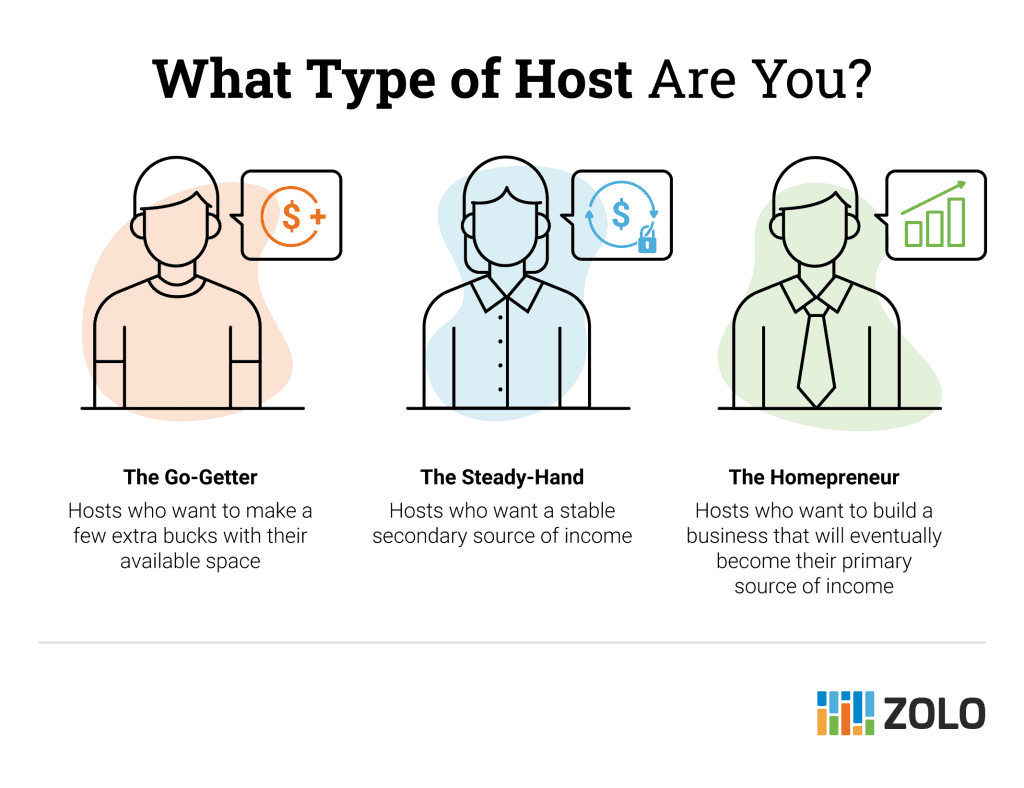
What Type of Host Are You?
There are three main types of short-term rental hosts:
- The Go-Getter: Hosts who want to make a few extra bucks with their available space
- The Steady-Hand: Hosts who want a stable secondary source of income
- The Homepreneur: Hosts who want to build a serious Airbnb or short-term business that will eventually become their primary source of income
The higher the desire for potential income, the more planning, capital, work, and risk you will need to take on.
To find out what type of short-term host you are, try our quiz: What type of Airbnb host are you?
Best Practices for Running a Short-Term Rental
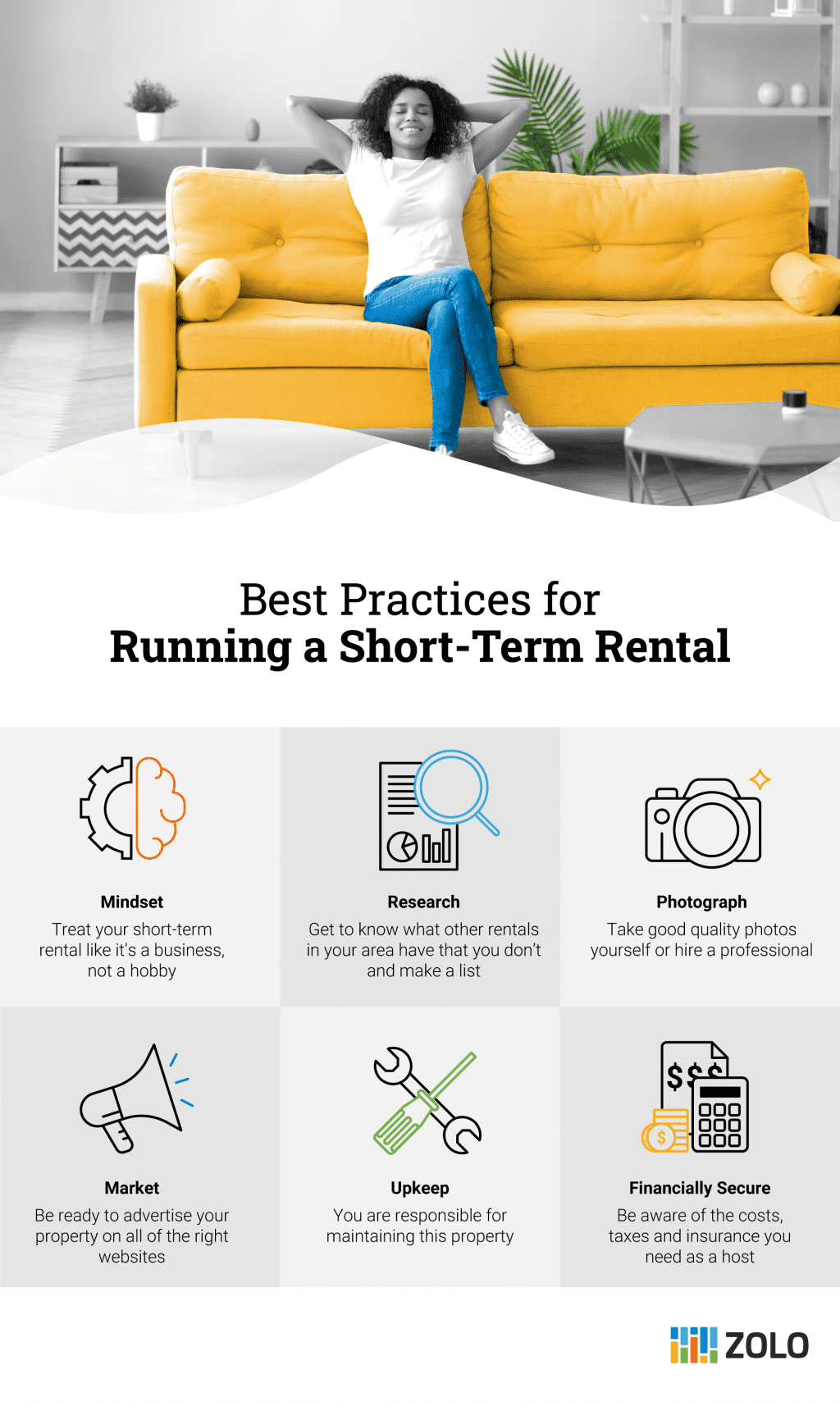
Whether you’re a go-getter or a homepreneur, there are five fundamental keys to maximizing your earnings from short-term rentals. Address all six facets, and you’ll be well on your way to earning the most from your Airbnb business.
#1. Mindset
While it seems obvious, the first and most important key to making the most of your short-term rentals is treating it like a business.
Start by ensuring you’re legally allowed to run an Airbnb or short-term rental business. That means checking with your strata board, homeowners association, or landlord before listing your place. Then check to ensure the city has no rules or regulations around short-term rental listings. For example, some cities, such as the City of Vancouver, require short-term landlords to obtain a license before listing units for rent.
Next, you’ll need to consider protecting your most significant asset — your home — from any potentially devastating damage or catastrophic loss.
The first step is to add a home-based business rider to your home insurance policy. A rider is “extra coverage” that you add, for a cost, to your insurance coverage.
What Type of Coverage Do You Need?
Airbnb offers Host Guarantee coverage, where hosts pay nothing extra for up to USD$1-million in range for any damage or destruction to belongings or property caused by a guest booking. But, there are several scenarios where this coverage won’t be adequate, explains Adam Mitchell, president of Whitby, Ont.-based Mitchell & Whale Insurance Brokers.
“It’s a great perk, but there are gaps in coverage,” says Mitchell. For instance, many personal belongings such as furniture, electronics, artwork, antiques and collectibles aren’t covered. These coverage exclusions are stated plainly on the website, but many hosts miss this information.
There’s also the danger of booking a guest through a short-term rental service that doesn’t offer this Host Guarantee coverage. While advertising your unit or spare room on more than one short-term rental site is brilliant, from a business perspective, this strategy could leave you without coverage should damage or destruction occur to you, your belongings or your property.
“Most insurance providers are very aware and comfortable with short-term rentals, explains Mitchell. It just takes a quick call to your provider or insurance broker to add the home-based business coverage, and the extra coverage rates start at $120 per year and go up. This peace of mind is worth the cost of one night’s stay.
You could opt for month-to-month coverage for Go-Getter hosts or hosts just dipping their toes into the short-term accommodation market. For example, Square One Insurance offers no-contract, no-obligation coverage starting at $40 per month, which covers personal liability and accidental damage to your home and property. But, of course, it’s more expensive than adding annual coverage to your base homeowner policy. Still, it makes sense if you’re starting and testing the waters or know that you’ll only be renting out your extra bedroom during specific months.
Pay Attention to Local Laws
Next, investigate local laws. Some cities require short-term landlords to apply for a license and comply with municipal bylaws. For example, the City of Vancouver requires up-to-date licenses and that any bookings last no more than 30 days, plus rentals are restricted to only units located in a primary residence where the resident-owner lives for more than 180 days of the year.
If you opt to ignore licensing, be prepared for fines and lost business, as some guests will go as far as to ask you for your license number (typically through private message correspondence) to verify that you’re legit.
#2. Research
Want your listing to be effective and make you money? Then you’ll need to do market research.
Start with checking out the competition. Go online to Airbnb, Vrbo and other short-term rental sites and search for rentals close to your address. Then, using a spreadsheet or other way to capture information, start listing all this information:
- Type of units and prices that are geographically close to you
- What’s included (WiFi, parking, satellite T.V., Apple T.V., etc.)
- Complimentary guest perks (pool or gym in the building)
- Operating hours
- Cleaning costs (typically, hosts that clean themselves will charge $50, while hosts that pay for this service will charge $100 or more)
- Deposits requested
- Minimum number of nights
- Discounts for longer stays
After you compile all this research, take a good, honest look at the data. How does your rental differ from the competition? Examine how it relates to all the other rentals in the market. The goal is to determine the best marketing tactic for your short-term rental. Are you going to compete on price? Can you compete by offering a better product? Or perhaps you can add an experience, such as a luxurious setting, a pool or hot tub, or a garden oasis. Use your unit’s advantage as a focal point and price it accordingly.
What’s great is that this research also helps you narrow down the type of guest your rental will attract, and this helps you set up your unit and write your ad. For instance, if plenty of units in your area are marketed as “family-friendly,” set your suite up as a family unit. Buy some toys, books, and crayons; add a highchair or fold-out crib — whatever makes it easy for a family to come in and bunk down.
#3. Take Quality Photos

Even in a side-hustle, like renting out that spare bedroom, you need to invest in a bit of marketing. Thankfully, for short-term rentals, most of this investment focuses on taking great photos — emphasizing “great.”
Remember, these images are integral to “selling” your short-term rental to potential guests. The Airbnb website offers some essential photography tips:
- Use natural light and avoid using flash.
- Shoot in landscape from the corners of rooms for perspective.
- Get internal and external shots. People want to be able to imagine themselves in the place.
- If possible, shoot photos of the property during all seasons, daytime hours and night.
- Include pictures of local hot spots, attractions, and scenery.
Owners with limited time can hire a real estate photographer, so all they need to do is upload. The average cost for daylight and twilight photos starts at $300 CDN and goes up, although you can find cheaper options. Just be sure to review the services offered and to read the reviews from other customers. Another option is to get a 3-D tour of your home. Again, check out costs and read reviews.
#4. Advertise
Should you list and advertise your short-term rental on more than one site? Short answer: Yes. But be judicious.
Here are a few guidelines on how to make advertising your vacation rental on multiple sites work for you:
- Provide accurate and detailed information about what your vacation rental has to offer. Include the type — shared room, entire apartment, suite in a house, etc. — where it’s located (is it on a busy street? Near transit? Close to cafes?) and what potential customers can expect when they rent the unit. Skip these details, and you may prompt negative ratings from clients. The key here is to set up and manage expectations accurately.
- Depending on their needs, renters go to different websites. For example, vacationers and other short-term renters typically go to Airbnb, VRBO, and HomeAway to find rental properties. Meanwhile, those needing a place to rent for longer usually head to Craigslist, Apartment.com, and Realtor.com. To maximize your marketing efforts, list your property on websites where your vacation rental meets the needs of your target audience.
- If you’re advertising a shared room for short stays, keeping that property listed on Airbnb is ideal because that’s where short-term renters go. In addition, Airbnb’s Verified ID policy makes renters feel better about sharing a room with strangers.
- If your property is an entire apartment, you can list it on Airbnb, VRBO, HomeAway, and other sites favoured by your target audience.
- Use rental site reviews. Read about the potential client and focus on getting 5-star reviews for your unit (and services as a host).
However, keep in mind that advertising on multiple sites has drawbacks. You may end up paying more fees. For example, Airbnb charges hosts a fee of 3% of the booking rate, covering the cost of payment processing. HomeAway, the parent company of VRBO and VacationRentals.com, charges listing prices ranging from 4% to 10% of the booking rate across all of its websites.
Beware of the Cons
Another drawback is that you’ll have to monitor or set up a way to not allow for double-booking. You can do this manually, set up a system using an app (for lower fees), or pay a third-party manager. Either way, you need to plan how to deal with multiple bookings through multiple short-term rental sites.
Here’s a list of sites that accept short-term rental postings.
- Wimdu – commission-based short-term rental properties located all over the world. Prices are displayed in U.S. dollars.
- TripAdvisor – commission-based rentals and private rooms for every kind of trip. Extra fees for hosts using this site.
- Airbnb – commission-based short-term rental site with an international reach
- HomeAway – paid subscription for a minimum stay of two to three nights for leisure travellers with pets
- Perfect Places – paid subscription for vacation rentals in 103 countries
- TravelStaytion – a free subscription for quality holiday homes around the world
- Domingos – a free subscription to lists of holiday homes
- Welcome Worldwide – a free subscription to a list of exotic bungalows and country cottages to luxury beach villas and stylish city apartments
- Vacation Rentals By Owner (VRBO) – vacation rental and pet-friendly site with a focus on the USA
- OneFineStay – luxurious twist on the short-term rental business model
#5. Upkeep
Don’t forget to factor in the cost of cleaning and maintenance supplies. As a host, you need a budget for expenses such as toiletries, cleaning fees, and additional furniture and decor. You might also need replacement fire extinguishers to comply with local fire safety regulations.
#6. Financial Considerations
Finally, don’t forget the tax implications of renting out a portion of your home or secondary property. You are legally responsible for filing applicable tax forms with the Canada Revenue Agency regarding the profit generated through your short-term rentals. The good news is you can offset the income generated with expenses from running this short-term rental business. For instance, Canadians who rent out part of their home can deduct a percentage of mortgage interest paid on their principal residence mortgage and a portion of utilities, cable or satellite costs and other shared amenities. Plus, the extra insurance coverage costs are a deduction, as well as supplies you purchase for the rental, such as toilet paper, dish soap and pantry supplies.
How to List Your Place on Airbnb or Any Short-Term Rental Site

Now that you have a game plan for making the most of your short-term rental, it’s time to list your property.
Here are the seven basic steps:
- Fill out the information about your space, its amenities and the number of guests it can accommodate.
- Upload clear photos of your room.
- Create a title and description of the highlights.
- Set house rules for pets, smoking, events, and cancellations.
- Add in extra costs, such as deposits and cleaning fees.
- Set up your calendar.
- Calculate your rates (on Airbnb, you can use the built-in Smart Pricing tool, plus refer to your research).
Final Thoughts
Remember, money won’t just roll in if you slap up a photo and a price tag. It takes time to research, market and list your short-term rental unit, chat online with potential and current guests, and prepare the unit for each incoming guest. However, given that the average price for an Airbnb nightly rental is $160.47 USD (that’s $214.92 CDN), this bit of effort can undoubtedly pay off.