
If you’ve decided to sell your home, your priority should be to attract the right buyer to maximize your sale price and get the highest possible selling price. To ensure your home sells for the highest possible price, you’ll need to market it. Unfortunately, marketing your home isn’t as simple as listing a few photos online with a description.
What Should You Keep In Mind When Marketing Your Home?

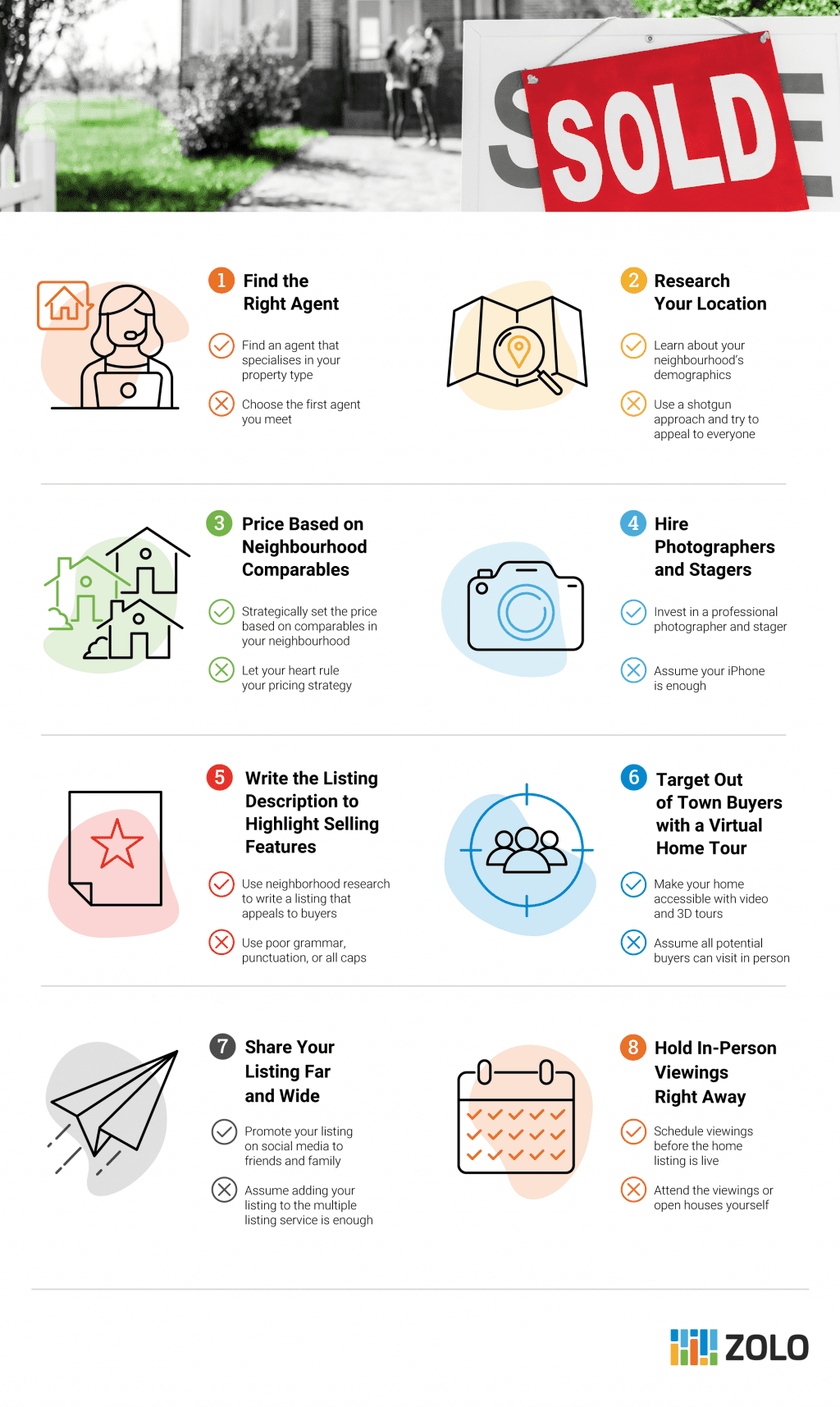
To properly market your home, you must use a few strategies and avoid others. Here are the dos and don’ts of how to market your home for sale.
1. Find the Right Agent
- Do: Find an agent that specializes in your neighbourhood and type of home
- Don’t: Choose the first agent you meet
Finding the right agent could be the difference between a flawless, positive home selling experience and one that is frustrating and negative. At the beginning of the home selling process, people who don’t have a real estate agent in mind usually ask friends and family for recommendations. While this can be an excellent place to start, remember that the agents your friends or family use may not be familiar with your type of home or neighbourhood. This unfamiliarity could mean a disconnect between how you think your agent should market your home for sale and how they do.
Suppose you live in a unique type of property or neighbourhood (for example, an historic or waterfront neighbourhood). In that case, it’s vital to find an agent with experience in that property type of neighbourhood so that they can accentuate your home’s selling features. To do this, ask neighbours or post in your online neighbourhood group for suggestions.
2. Research Your Location
- Do: Find out as much as you can about your neighbours and use that to your advantage
- Don’t: Use a shotgun approach and try to appeal to everyone
While there are many steps to prepare your home for sale, knowing your potential buyer is essential. Knowing your neighbourhood’s average age of property, income, and family structure will help you decide how to market your home. For example, if you live in a community with many young families, you’ll want to accentuate the family-friendly features of your home. If you live in a neighbourhood with many restaurants and younger residents, mention how close your home is to nearby dining and entertainment.
3. Price Based on Neighbourhood Comparables

- Do: Strategically set the price based on comparables in your neighbourhood
- Don’t: Let your heart rule your pricing strategy
Setting the right price for your home is tricky, especially in many markets in Canada, where it’s common to underprice your home to start a bidding war. Setting pricing is where your real estate agent will demonstrate their expertise in your neighbourhood and type of home. Your real estate agent will be able to show you homes that have recently sold and compare them to the initial listing price.
Your real estate agent will use recent sales data to advise on an initial listing price and set your expectations for a final selling price. You must use current data and leave your emotions out of the pricing process. Pricing too high because you believe your home is worth it might result in low initial interest, leading your home to sit on the market, which can signal to potential buyers that something might be wrong.
#4. Hire Photographers and Stagers
- Do: Invest in a professional photographer and stager
- Don’t: Assume your iPhone is enough
Preparing to market your home for sale involves helping prospective buyers see it in the best possible light. High on your priority list should be decluttering, making minor repairs, touching up paint and cleaning everything — even the walls! Once you’ve done the necessary legwork to get your home in the best shape of its life, it’s time to show it off. Hiring a professional photographer will help highlight your home’s benefits and unique features and minimize less desirable areas.
If you’ve moved out of your home, pay a professional to add stylish furniture to rooms (staging). Staging can help define your home. For example, a stage can break into family and dining spaces if your living space is large and undefined. This definition of living spaces will help prospective buyers imagine what life will be like in your home.
#5. Write the Listing Description to Highlight Selling Features
- Do: Use your neighbourhood research to write a listing that appeals to buyers
- Don’t: Use poor grammar, punctuation, or all caps
We recommend that you research your neighbourhood’s demographics to give yourself a better idea of what homebuyers are looking for, and the listing description is where this research can shine. Help your real estate agent write a listing description highlighting the home and neighbourhood features that appeal to buyers. Make your description appealing to homebuyers by avoiding grammatical errors and including punctuation. Avoid capitalizing full words or using title case — as tempting as it may be.
#6. Target Out of Town Buyers with a Virtual Home Tour

- Do: Make your home accessible to out-of-town buyers
- Don’t: Assume buyers can visit in person
Living in a post-pandemic era has changed how Canadians buy homes. Instead of visiting a home in person and meeting with an agent to sign an offer by hand, more and more buyers view properties online and make offers without ever stepping foot into the home. As a result, inter-provincial purchases are becoming more common, and it’s essential to make your home accessible to those buyers who can’t view the property in person.
A virtual home tour is a great way to help buyers visualize the property. Your real estate agent can prepare this tour as a video or a 3D model. Unlike traditional real estate photos, which are designed to catch a buyer’s eye and invite them to book an in-person viewing, virtual tours show the buyer exactly what your home is like not just the best features.
#7. Share Your Listing Far and Wide on Social Media
- Do: Promote your listing with friends and family
- Don’t: Add your listing to the multiple listing service and forget about it
We used to advertise real estate listings in magazines, newspapers, and local bulletin boards. Things have changed a lot since then, and social media is a great way to get the word out about your listing. Your real estate agent should have a comprehensive social media marketing strategy, but you can help the process by sharing your listing with your social circle via social media.
#8. Hold In-Person Viewings Right Away
- Do: Schedule viewings before the home listing is live
- Don’t: Attend the viewings or open houses yourself
In today’s hot (though cooling) housing market, it’s common to have viewings for your home before your listing is officially live. These pre-listing viewings could happen if potential buyers hear that your home is on the market and hope to be the early bird that gets the worm. You should welcome these viewings but know they’ll likely happen on very short notice. You might also find yourself wanting to attend a showing or open house.
After all, you’ve put so much effort into prepping your home for sale you’ll want to make sure homebuyers understand just how great your home could be! We advise you to resist this urge! Instead, let homebuyers experience the space themselves and fall in love with your home independently.
Final Thoughts on How to Market Your Home for Sale
When selling your home, it’s natural to want the most bang for your buck. The best way to achieve a high selling price is to advertise your home and find a buyer willing to pay top dollar. The strategies above will help you show your home in the best possible light and attract enough buyers to find the one who will fall in love with it and pay a premium to own it.