

When searching for a home, checking to see if a property is a leasehold or freehold property is likely the furthest thing from your mind. However, it’s essential that you understand the difference between freehold vs. leasehold, as this will determine your ownership rights, additional fees, your mortgage application, and even the potential resale value.
So, before you sign on the dotted line, learn more about the pros and cons and the difference between freehold and leasehold properties.
Key Takeaways
- There are two types of ownership in Canada: freehold and leasehold ownership, with freehold ownership being the most common
- Freehold ownership is typically more expensive; however, the property tends to appreciate in value
- Leasehold ownership may have a lower upfront cost; however, you must factor ground rent into your budget
What Is a Freehold Property?
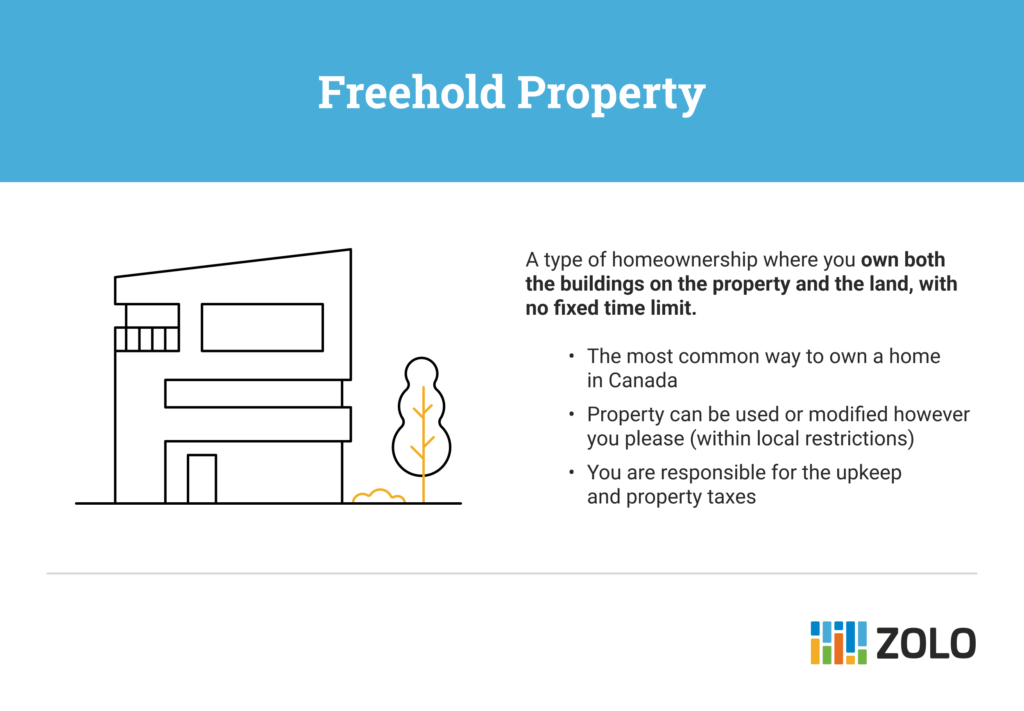
A freehold property means you own the buildings on the property and the land outright. There is no fixed-time limit on the ownership of the property, and it can be used or modified however you please (within local restrictions).
When you own a freehold property, you are responsible for the upkeep, maintenance, and property taxes.
How to Buy a Freehold Property
There are several steps to purchasing a freehold property in Canada:
- Save for a down payment and closing costs – The minimum down payment in Canada ranges from 5% to 20%, depending on the purchase price. In addition, you’ll need to budget 2% to 4% of the purchase price for closing costs
- Decide on your budget – Getting pre-approved for a mortgage is an excellent way to determine how much house you can afford
- Find a property – Work with a real estate professional to find a home that meets your needs
- Make an offer and secure funding – Once the seller has accepted your offer, you should proceed with securing financing. A mortgage broker can help you get the best possible interest rate
- Closing – Work with a real estate lawyer to finalize the transaction
- Get your keys – On closing day, you’ll complete the purchase and receive the keys to your new home
Freehold Property Pros
- Freedom – Since you own the property, you have complete control over renovations and changes, subject to local regulations
- Property value – Potential for property value appreciation
- Easier mortgage application – Since freehold is the most common ownership type in Canada, finding a mortgage lender is easy
- No ground rent fees – You own the property; therefore, there are no ground rent fees to pay
Freehold Property Cons
- Higher purchase price – Freehold properties are typically more expensive than leasehold properties
What Is a Leasehold Property?
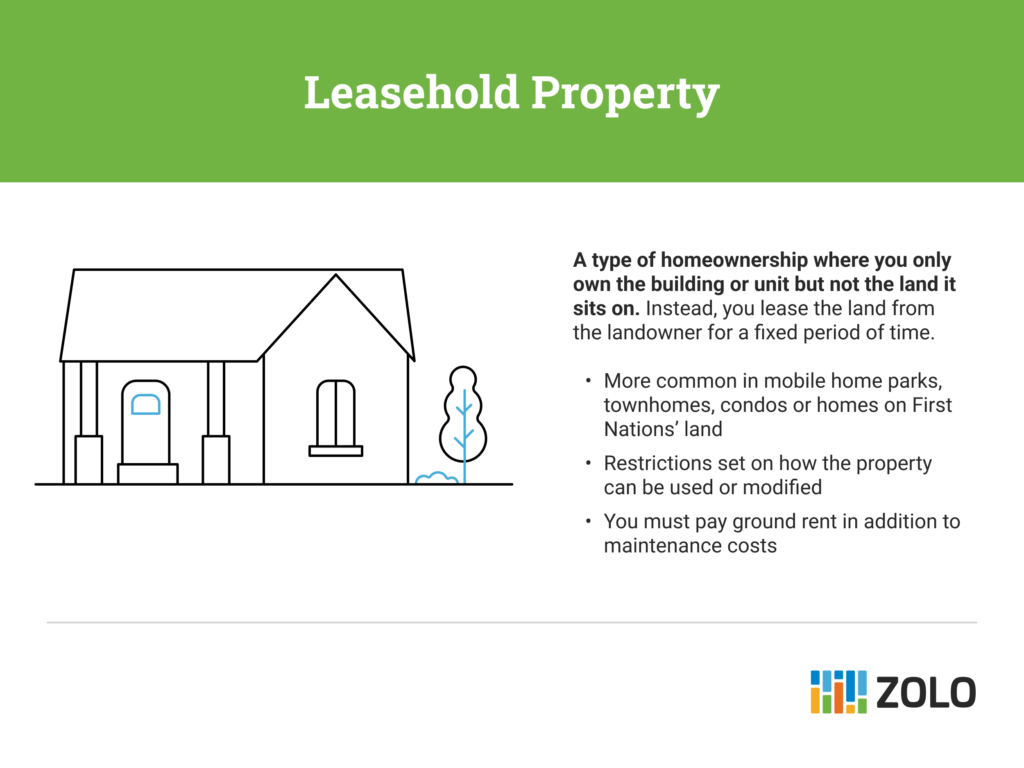
By contrast, a leasehold property means you own the home, but not the land it sits on. Instead, the land is rented from the landowner for a fixed period of time. This type of homeownership is more common in mobile home parks, condos, or homes on First Nations’ land.
The landowner may restrict how you use the property and whether or not you can modify the home. In addition, you must pay ground rent to have the right to use the land.
The most common lease length is 99 years. However, it can range from 40 to 999 years.
Purchasing a Leasehold House
Purchasing a leasehold property is similar to buying a freehold property. Pay close attention to the lease contract, including the expiration date, ground rent amount, additional fees, and the procedures for selling the property.
Charges for Leasehold Properties
The type of leasehold agreement determines how you pay ground rent to lease the land:
- Prepaid leasehold – A one-time upfront fee covers the entire lease term. There are no monthly or annual payments due
- Non-prepaid leasehold – Ground rent is paid to the land owner monthly or annually
Extending a Lease
The leasehold contract will clearly state the date the lease expires and the renewal or termination terms. When the lease ends, the landowner can renew it, renegotiate the terms, or choose not to renew. Some agreements may include a surrender clause stating that the building is surrendered to the landowner when the lease expires.
Conversely, you may be able to buy the land from the landowner and convert a leasehold into a freehold property.
Leasehold Property Pros
- Potentially lower purchase price – Leasehold homes may be cheaper than a freehold property of similar size
- Less maintenance – Depending on your contract, property maintenance may be taken care of by the landowner
- Location opportunities – Leasehold homes may be available in areas like historic neighbourhoods where freeholds may not be available
Leasehold Property Cons
- Less freedom – Leasehold contracts may dictate whether or not you can make changes to the home, add structures to the land, or have pets
- May be more difficult to sell – It may be more challenging to find a buyer for a leasehold property, particularly near the end of the lease
- Fees – Maintenance fees or ground rent may add to your monthly expenses, depending on your contract
- Mortgage – It may be more difficult to find a mortgage lender for a leasehold property
- Property value – Leasehold properties typically do not appreciate in value in the same way as a freehold property
Comparison Between Freehold vs. Leasehold
For easy comparison, explore the major differences between freehold and leasehold property:
Understanding Condo Ownership and Strata Titles
When you purchase a condo or house with a strata title, you own your unit and have an ownership interest in common areas or assets through the strata corporation. Additionally, you will pay strata fees (also called condo fees) to cover the cost of maintaining the amenities and common areas.
Strata housing can be either leasehold or freehold.
Freehold vs. Leasehold FAQ
Are most houses freehold or leasehold?
Most houses in Canada are freehold properties. Many leasehold properties are found in mobile home parks, condos, and townhomes or on land owned by municipalities, universities, or First Nations.
Is freehold property a good investment?
Freehold properties are generally considered a better investment than leasehold properties. Freehold properties tend to appreciate in value over time, while leasehold properties do not appreciate in the same way. In addition, leasehold properties may lose value at the end of the lease.
