
Going away for a vacation or an extended business trip always leaves us with those worrisome feelings about the safety of our home. And these worries aren’t unjustified. Thinking of how you should be protecting your home while on vacation is just one of the many things to check off our list of things to do before hopping on an airplane.
In Canada, a residential break-in happens every 90 seconds, and more than 80% of these break-ins occur during daylight. In the United States, a burglar strikes every 25.7 seconds. These statistics alone are enough to tell you that your home could be a target at any given time. This calls for more vigilance, especially when you leave your house for a vacation.
On average, each burglary can cost someone $2,661. Not only is the monetary loss from a home invasion something to consider, but the emotional toll is also another factor. Most times, they cart away items with sentimental value and erode people’s feeling of safety completely.
5 Keys to Protecting Your Home While on Vacation
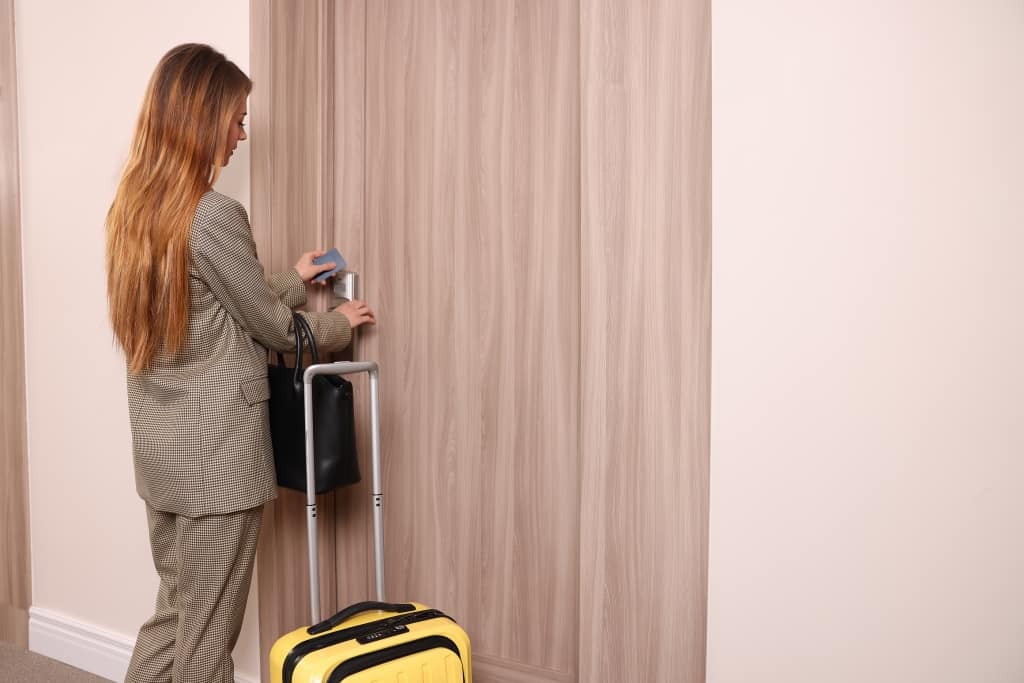
When a house is left empty, it automatically becomes very attractive to burglars. So, taking calculated steps to protect your home before going on vacation is needed. After all, it’s always worth the time and effort to ensure peace of mind while travelling.
#1. Secure the Most Vulnerable Areas
You have to start by securing the more vulnerable areas of your property. According to ADT, these are the areas most burglars choose as their entry-points:
- 34% of burglars use the front door
- 23% of burglars enter through first-floor windows
- 22% of break-ins happen via the back door
- 9% of home invasions happen through the garage
- 4% of invasions occur through the basement
- and finally, 2% of invasions happen through the second floor
Burglars always search for the most accessible places to break in. So, ensure that the doors and windows are correctly locked whenever you are out. If the locks are compromised in any way, you should change them before you leave. If the locks are easy to pick, or their keys are in the hands of dangerous people, update them and ensure that your exterior doors all have ANSI Grade 1 or 2 deadbolts. You should secure each door’s strike plate with long screws of not less than 2.5 cm.
Check the hardware of your doors as well, because the locks are not the only culprit here. If the hardware of a door or window is flimsy enough that a strong kick or slam will open it — consider fixing this. All entry points, especially on the ground floor, should be reinforced. Make use of security bars or barricades on the front and back doors.
For sliding doors, you can use an auxiliary foot-lock or even a dowel to prevent them from sliding open forcibly. For the windows, add bars and locks.
Another way to ensure your doors are not tampered with is by not hiding the keys in open places like the flowerpot or doormat, where burglars can easily find them. Instead, you need to find a hiding place that no one expects, leave the key with a trusted friend, or travel with your key.
Also, do not leave your remote control garage keys in your car parked at the parkway, as this is a recipe for disaster. Instead, it’s better to carry them on you.
#2. Install a Security Camera
The fact remains that one of the most cost-effective ways to reduce crime and deter criminals is the use of cameras. With camera footage from the homes, additional leads can also aid investigations.
When choosing the type of cameras to mount on the exterior and interior parts of the house before travelling, consider what features are most valuable. Check for cameras that include motion activation, live monitoring, two-way communications, smartphone app monitoring, plus tilting, zooming, and night vision. Then, when you buy them, install them at the most strategic places in your house.
#3. Designate a Neighbour to Be On the Lookout
One way to protect your home while on vacation is to ask a neighbour to carry out activities around the house to make it look like someone is home. Hand them your spare keys if you trust them. If they keep picking up your packages and mail, it may seem as if you are around, and that may also deter some burglars. By having an eye on the house, they detect impending danger before it happens.
#4. Use Timers to Liven the Place
While your neighbours may help you ensure some level of activities around the house, they won’t be there all the time. That is why you can make the place lively with timers — for example, having timers turn on specific lights in the home during the evenings. You can also set your television and radio to come on at a set time and go off at the designated time to give the impression that you are still around. The best among them would be the motion detection lights that become brighter when a burglar comes around.
#5. Set Up Outdoor Lights
Another reasonable security precaution to take is to get the outdoor of the house adequately lit. Burglars operate more freely in the dark. That is why you should light up the outdoors of the house properly. Consider the types of lights to go for and the best places to place them. Led lights, solar security lights, outdoor flood lights and motion detector lights are the types to consider. When you have chosen, consider where to place them. They should be mounted 20 feet apart on the house’s outside walls, fence, and yard poles.
Don’t Forget to Inform Your Insurance Company
Lastly, one crucial thing to consider before going on an extended vacation is to inform your insurance company that you’ll be away from your residence. If you don’t do this, you’re at risk of forfeiting your coverage should something go wrong.
Depending on the length of time you’ll be away from your home, you will likely have to hire someone you trust to check in on the property. You can call your insurance company to confirm what’s required of you as a homeowner or tenant. Either way, doing all that you can to protect your home from a potential burglary is essential.