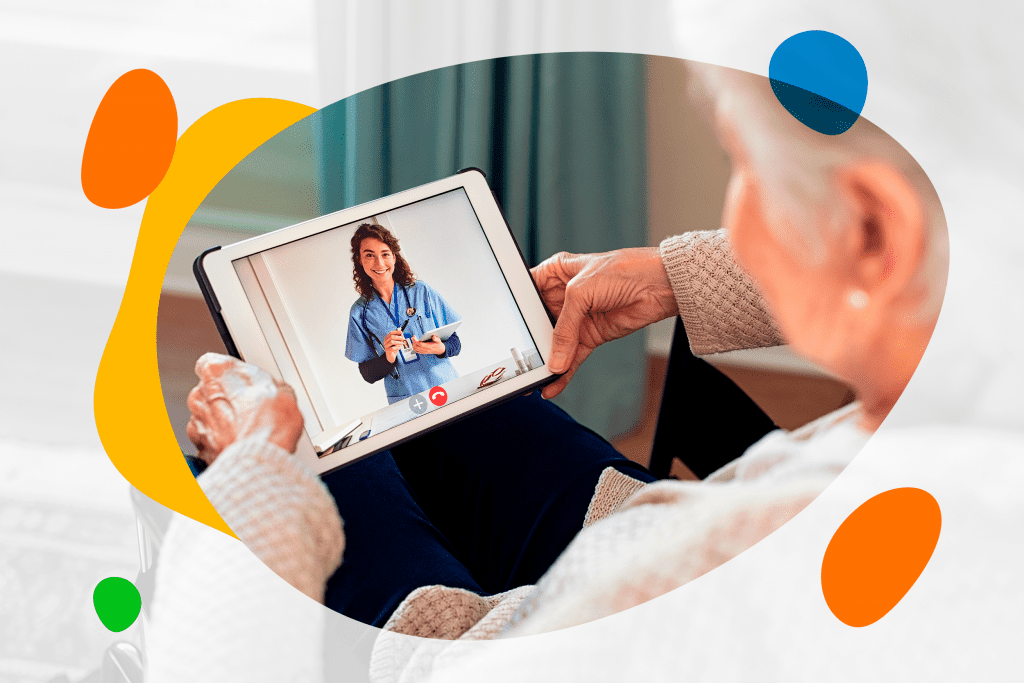
People who are elderly or have a disability often need a support system—caregivers, family members, friends and more—to assist them with day-to-day living. But what happens when that system is not available, or the cost of in-person care is simply too high to afford? The good news is that smart home automation is increasingly improving access to the at-home support that people need to live independently—even when their support system cannot be physically present.
Put simply, smart home automation is an umbrella term for devices that allow you to automate and control virtually any aspect of your home. Moreover, many devices are straightforward to set up and use, requiring only your smartphone. Indeed, often with just the touch of an app, smart home devices can enhance people’s safety and comfort, take over challenging physical tasks, and dramatically elevate independent living and quality of life.
This article provides a non-exhaustive list of a few smart devices that are helping ease daily life at home for seniors who wish to “age in place,” as well as for people living with mobility, physical or cognitive disabilities.
Enhance Security
Living at home alone can be intimidating for anyone, especially for seniors and people with disabilities. However, the following smart devices can help alleviate some fears and concerns beyond what traditional home security systems currently provide.
Smart Doorbells
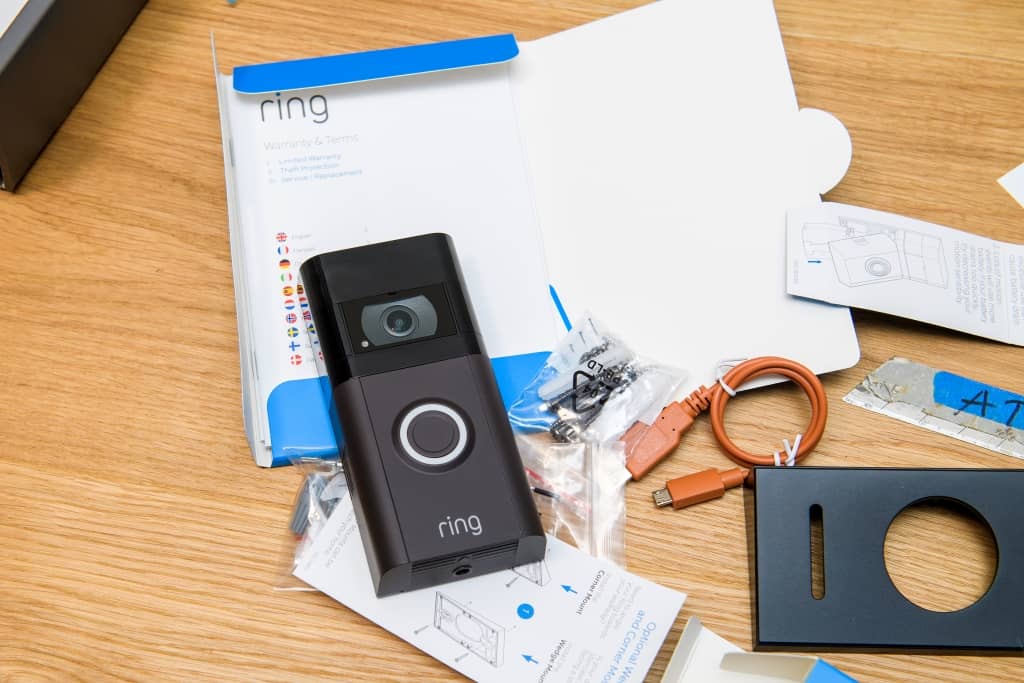
Smart doorbells with video capability—like the popular Ring Doorbell—often integrate with a smartphone or hub to alert you when someone is at the door. Many offer two-way communication, enabling you to see, talk to—and even record—the guest from the outside. Even better, you can set up your device so family members or friends receive notifications and communicate remotely with the person at the door on your behalf.
There are also intelligent doorbells that use audio frequency waves, emitting a sound that people with hearing challenges can detect. Some will even blink an alert light on your smartphone or cause it to vibrate when someone rings the doorbell.
Smart Locks
Smart locks essentially replace traditional door locks—and add a great deal of convenience if you have memory challenges (for finding keys), have limited use of your hands, or wish to grant keyless entry to loved ones easily. A smart lock can be opened and closed any number of ways—by moving your smartphone in front of it, touching it with your finger, tapping an app, approaching your door, or using voice commands.
Even better, some smart locks, like the Schlage Encode Smart WiFi Deadbolt, can be programmed to automatically bolt behind you as you enter or leave your home.
Occupancy Sensors
These monitoring devices detect when an area in your home is occupied—and can automatically switch lights, heating and other devices on while the person remains in that room (and switch them off as the person leaves). So, in addition to helping with energy efficiency, these sensors can also alert you to unwanted visitors.
This field is continuously evolving, and experts say that by 2022, occupancy sensors will be able to detect movement patterns and distinguish between different occupants.
Increase Energy Efficiency
Smart devices help reduce energy costs. Given that many seniors and people with disabilities are on limited incomes, it’s a worthwhile investment to consider installing some of the following tech—thereby helping you save on energy bills.
Smart Thermostats
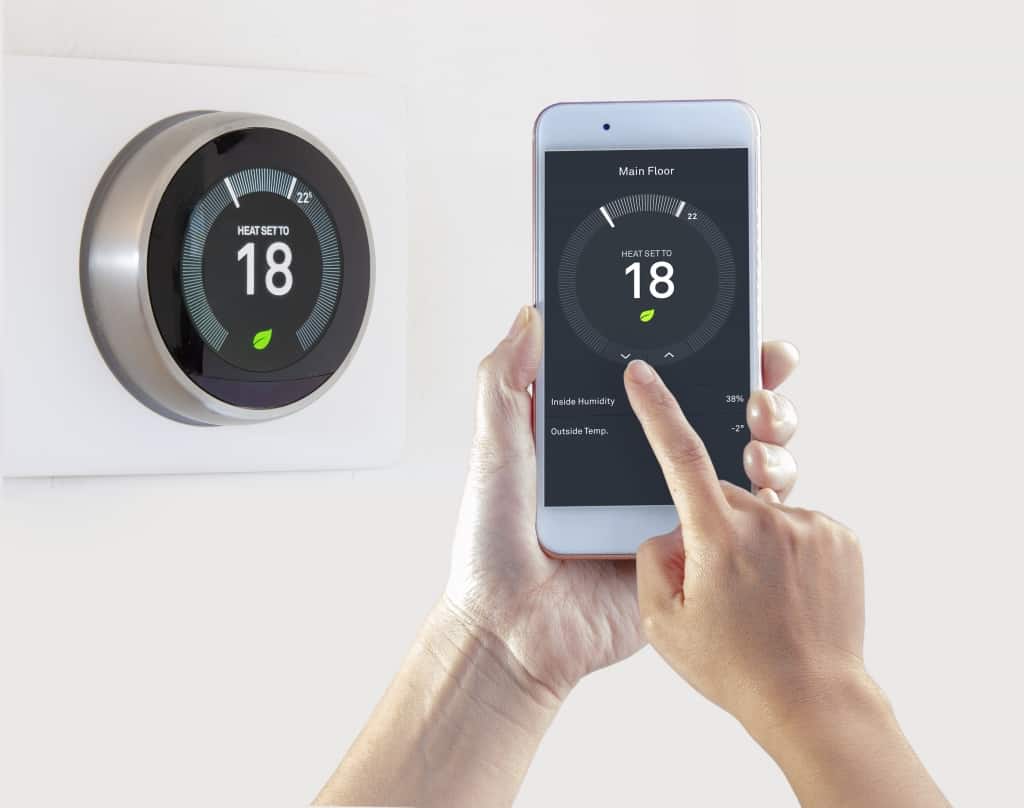
Cost-effective and energy-efficient, smart thermostats are a great alternative to traditional thermostats because you can control them from a smartphone, no matter where you are. As such, they are handy for people with mobility issues or people with health conditions that may require keeping a room at a consistent, specific temperature.
No need to get out of bed at night to adjust the heat. Depending on the smart device you choose, you can control your thermostat using your app or voice while staying under the covers. (This can also help reduce the likelihood of a dangerous fall in the middle of the night.)
Some smart thermostats will even send you energy reports to show your usage patterns. This data enables you to see your progress and identify ways you can become more economical with your heating.
Smart Curtains and Blinds
Manually opening and closing blinds can challenge people with physical disabilities. Automated curtains and blinds enable you to control them remotely through your smartphone or hub. Remote operation eliminates the need for (and potential dangers of) reaching to open or close curtains. Automated curtains can also be paired with a smart home hub and programmed to open and close automatically at sunrise and sunset.
Simplify Everyday Activities and Stay in Touch
Home automation devices are beneficial for simplifying e chores and activities that many of us take for granted. From cleaning to remembering appointments, here are a few examples of smart tech helping make living easier for seniors and people with physical and cognitive challenges.
Robot Vacuums
Robotic vacuum cleaners are pretty common today. They are especially beneficial for people who are physically unable to push around a vacuum easily. They are generally hassle-free and operate autonomously with the push of a button on your smartphone or via voice command. Meanwhile, some are sophisticated enough to map out your home layout, ensuring that every nook and cranny of your floors are covered.
Interestingly, some experts predict an increase in the home use of “robotic assistants” in 2022—saying they may soon be doing far more than picking up dust but actually cooking and even babysitting for us!
Reminder Systems
Home automation systems may include automatic reminders for people with memory challenges. These systems deliver reminders through your phone or over smart speakers. Smart home assistants can remind you about an upcoming doctor’s appointment, take your medication, drink more water, and more. If you have a large home with multiple rooms, you can even purchase and connect multiple smart speakers; so no matter where you are in your home, the alarm will go off for your reminders.
Monitoring Devices
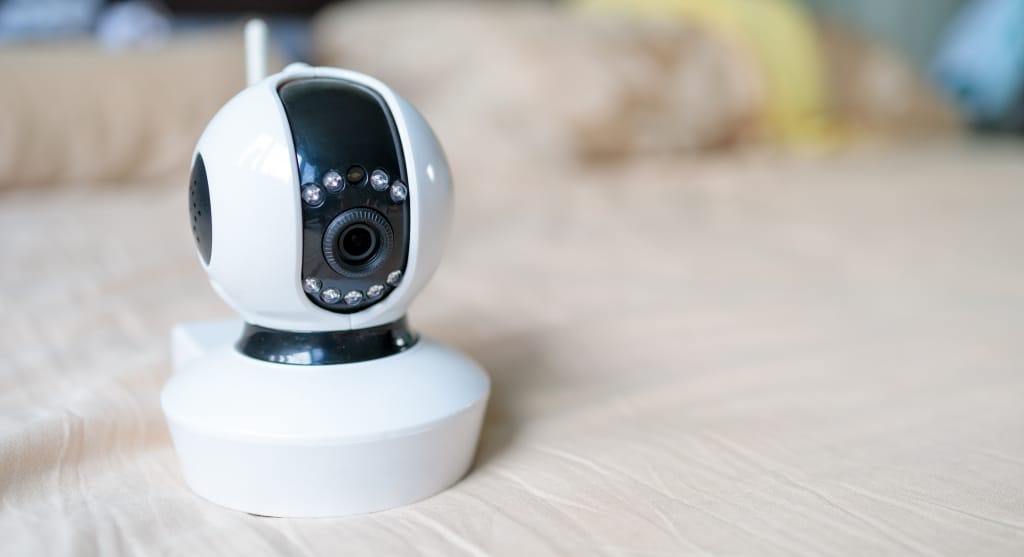
Professional caretakers have used smart home technology to monitor older adults for some time—but it is becoming more common among friends and family members for checking in on loved ones. Such devices can include cameras (like the doorbell mentioned above) and sensors, remote monitoring for temperature controls, and more. In particular, this tech provides one extra layer of protection for someone prone to falls or anyone experiencing cognitive decline.
By providing a convenient way to check-in remotely, home automation systems help ease the caregiver-patient relationship. The easing of this burden leaves more time for forging genuine connections.
Which Home Automation Devices Should You Choose?
The short answer to the question above is, it depends. While all of the above smart technology may sound amazing, you will want to ensure you’re making the best investment. As such, before you make any purchases, consider the following:
Your Needs
Consider what you want to accomplish or make simpler in your home using smart home tech. For example, what is your top priority—security, energy efficiency, cleaner floors, or something else?
Your Level of Tech-Savviness
There’s no sense in purchasing the fanciest tech if it’s also the most complex to figure out. That said, home automation devices have become more user-friendly recently, and learning to use a smart device is relatively straightforward. Regardless, do your due diligence by researching products and checking out online customer reviews.
Your Budget
Depending on the device you select, there is a wide range of prices, bells and whistles to choose from. You’ll find that not all smart tech is cheap, nor does one device enable you to control every aspect of your home.
However, you are investing in the quality of your life—so prioritizing your needs helps you decipher must-have and nice-to-have features. Moreover, as mentioned above, some smart home tech can ultimately help you save money, such as energy efficiency devices. If you’re trying to keep costs low, start with a device that provides a literal return on investment. In the meantime, keep your eye out for sales! And remember—you can build your smart home incrementally, so no need to buy everything outright.
Ease of Installation
Since many smart home devices are wireless, “installing” them requires Wi-fi, a power source, and an app on your smartphone. However, some tech—such as lighting systems and smart locks—may be hard-wired into and require more in-depth installation expertise.
As such, make your first smart device purchase a simple one you can set up on your own. For example, a smart plug is straightforward to install and enables you to control almost any wired appliance.
Imagine the Possibilities

It’s incredible to see how smart home technology is making living at home comfortably safer and more convenient for people. As home automation evolves, more devices offering new ways to empower independent living will enter the market. To the future!