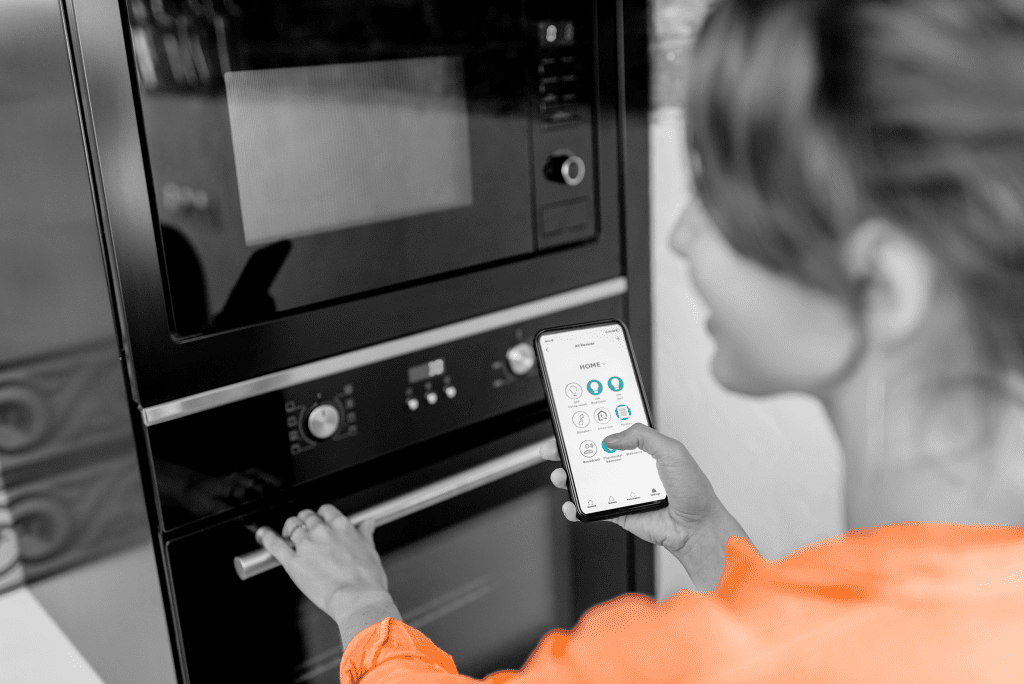
Did you know that Canada and the US were responsible for almost half of all global smart home spending in 2020?
With so many of our family members, friends and neighbours investing in home automation, it makes sense. Not only are smart home devices practical, fun and in some cases even life-saving—they can also ultimately help you save some of your hard-earned money.
Even better? If you’re considering selling your home, having smart tech already installed can increase buyer interest—and maybe even resale value!
This article provides a rundown of expert insights on how smart devices can help you slash those pesky monthly bills, as well as the specific features that potential homebuyers find most desirable.
Smart Tech Savings—Cut Down Those Monthly Bills
Whether you’re adopting smart home devices for added convenience, enhanced security, to make a less damaging environmental footprint, or another reason—you can add cost savings to the list of benefits!
However, it can be difficult to quantify your return on investment precisely because of so many variables. You’ll need to consider the type of device, brand, overall cost (including installment costs), subscription fees, and more.
That said, here are some potential monthly savings you can reap when you invest in smart devices for your home:

The Experts Agree—Smart Devices Can Increase Your Home’s Desirability
As you very likely know, one key factor that helps determine a home’s market value is its features and amenities.
Many high-profile real estate experts agree that a property with smart home devices already installed can help attract the interest of potential homebuyers – and possibly increase your home’s sale price.
- The Forbes Real Estate Council has identified smart home technology as one of the most desirable qualities in a home on the market.
- In a 2020 report by Realtor.com and YouGov, a large share of consumers would be willing to pay more for a home—whether renting or buying—if it featured additional technology devices or systems.
- A joint survey by CNET and Coldwell Banker says 81% of buyers are more likely to buy a home if smart home products are already installed.
- According to this Remax Canada blog, installing at least three high-tech features in your home has the potential to increase your sale price.
What Smart Home Features are Most Desirable to Potential Homebuyers?

In the same Realtor.com/YouGov report mentioned above, respondents were asked to rank the type of smart tech that would most motivate them to make a home purchase.
Overall, their most desirable items included solar roof tiles and home battery packs (to store extra energy), as well as connected climate control systems. Security devices, including doorbells and high-tech systems, were also on the list.
Interestingly, but perhaps not surprisingly, responses varied when broken out by demographics. For example:
- Men listed home theatres, solar panels, and smart speakers higher than other smart devices in every room.
- Women stated they would rather pay extra for a home with smart doorbells, touchless faucets, and a connected kitchen.
Age also appeared to play a significant factor in respondents’ preferences:
- Those 18-34 said they would pay more for a house with a home theatre, smart speakers in every room. Connected kitchens (including items like automated cocktail makers) also ranked highly.
- People between 35 and 54 would pay more for solar roof tiles and home battery packs.
- Those over age 55 preferred to pay more for a home with a solar roof and smart security features.
Meanwhile, a report by the National Association of Home Builders tells a similar story, but with overall respondents’ interests in energy efficiency and security somewhat inversed:
- Nearly half (46%) of prospective home buyers named security cameras as their top technology item. Video doorbells ranked second at 45%.
- The following three most wanted devices included a smart thermostat, wireless home security system, and multi-zone HVAC system.
“How Much More Will People Pay for My Home?”
You may now be wondering, “just how much more will people pay for my home if it has smart devices—and which devices could yield the highest profits for me?”
Unfortunately, there does not seem to be a concrete answer, nor much research to be found. Some older studies state that:
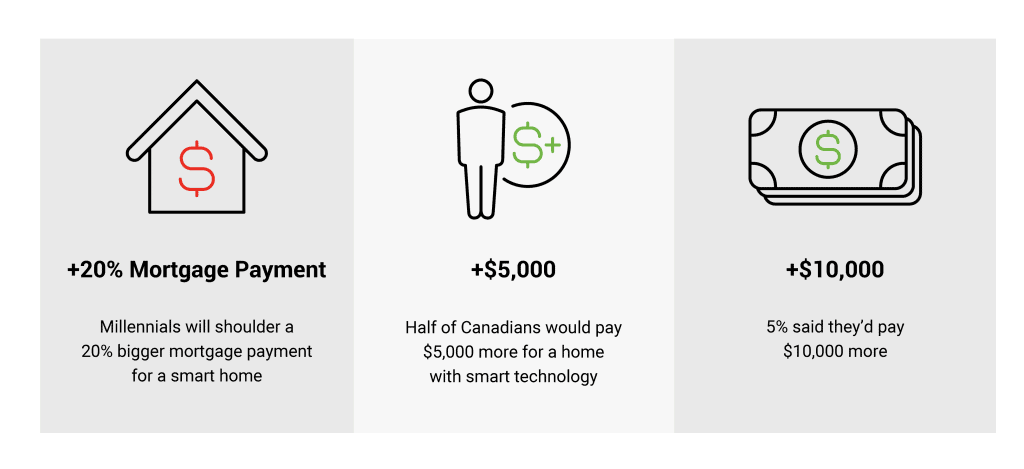
- Millennials are willing to pay an average of 20% more a month for a home with smart technology, including electronic access, keyless locks, interconnected doorbells, mobile-controlled security systems, and voice-activated assistants.
- Half of Canadians would pay at least $5,000 more for a home featuring the latest smart home technology. 5% would pay $10,000 or more.
Granted, people’s preferences, needs and interests in smart home tech can vary across gender, age, and other demographics. As a result, it may be difficult to pinpoint which smart devices offer the best “bang for your buck.”
The good news is that interest in and adoption of smart home technology continues to grow—especially in light of the COVID-19 pandemic, which has required more people to work from and stay closer to home, not to mention the growing sophistication of smart devices.
Smart Devices for the Win!
Indeed, smart homes that save money are steadily becoming the norm. As such, homeowners who wish to add more appeal to their houses should integrate smart home technologies. They offer convenience, efficiency, and cost savings while you’re living there—you’ll have a better return on investment when you decide to sell.
1American Council for an Energy-Efficient Economy
2National Renewable Energy Laboratory
3Environmental Protection Agency
4Enercare
5American Council for an Energy-Efficient Economy