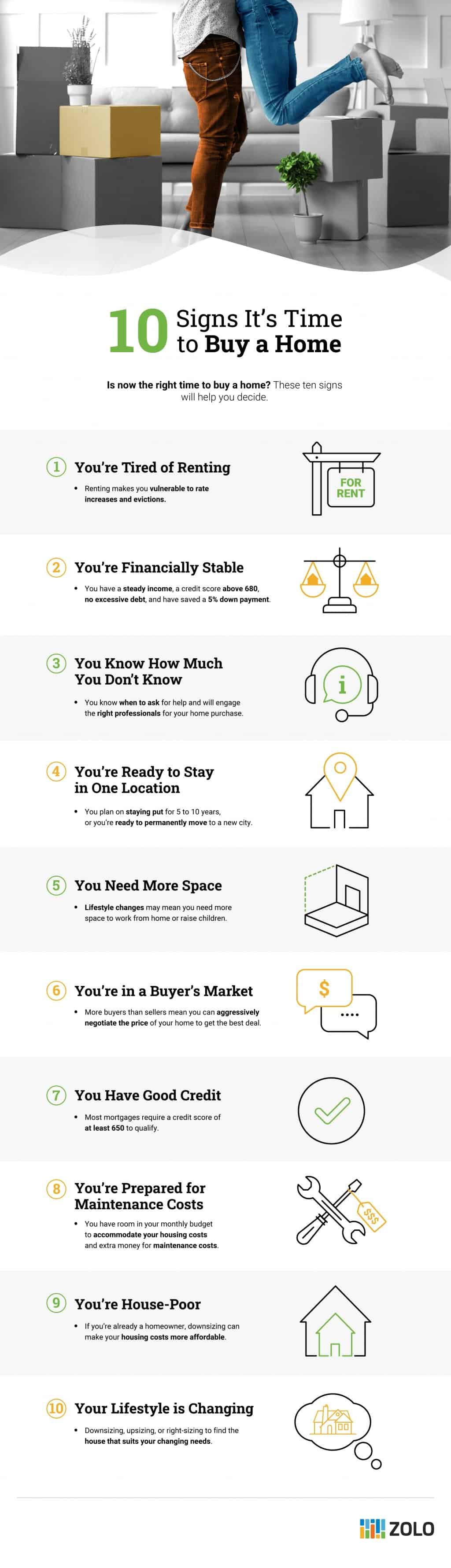
If you’re on the fence about buying a new house, you’ll know there are lots of factors to consider. Factors like how much you can afford, the size of your down payment, and where to buy will all impact whether it’s the right time to buy a home.
That being said, there are also plenty of good reasons to make the jump and start the homebuying process. If any of these resonate with you, it might be time to take the plunge into homeownership.
1. You’re Tired of Renting
Renting has many benefits. It allows you the flexibility to change cities, you don’t have to worry about upkeep and maintenance, and, depending on where you live in Canada, it can be cheaper than homeownership.
That said, renting has its downsides. If you live in a province without rent control, you are vulnerable to increasing rental rates. Even in areas with rent control, your landlord could evict you for owner-occupancy or renovations. This instability and uncertainty can be exhausting for renters and make the prospect of homeownership appealing.
2. You’re Financially Stable
If you’re financially stable and have a steady job, then homeownership could be a good option. The biggest hurdle will be qualifying for a mortgage. Meeting the following criteria is a good start:
- A steady income
- A credit score above 680
- No excessive debt
In addition, you’ll need at least a 5% down payment on your home to qualify for a mortgage. That sum of money can be challenging to accumulate if you aren’t financially stable. In fact, according to a 2022 study by Policy Me, 56% of Canadians find their down payment to be the biggest obstacle to homeownership. However, by budgeting and setting aside money each month, you’ll be able to save enough for a down payment. That financial discipline will go a long way toward learning to handle the unexpected costs that come with homeownership.
3. You Know How Much You Don’t Know
Like homeownership itself, knowing when to ask for help is a sign of maturity. Buying a house can be a long and complex process. You’ll need dedicated professionals who’ll keep you in the loop throughout the process.
A real estate agent will look out for your interests and guide you every step of the way. They’re busy people, but the good ones are responsive to email and some have a toll-free number to call whenever you have questions.
Other professionals like mortgage brokers, real estate lawyers, and home inspectors are valuable sources of information. These professionals can help you gain the knowledge you need to make an intelligent and thoughtful decision on whether it’s the right time to buy a home.
4. You’re Ready to Stay in One Location
Are you happy with where you live? In the era of remote work, it’s a question many people are asking.
If you plan on staying put for five to ten years, it may be smart to consider putting down roots. A home is a long-term investment of time, effort, and money, but it’s also a fulfilling purchase.
Alternatively, maybe you’re looking to return to somewhere in particular. Luckily, agents have adapted to virtual home sales and give tours of properties with their own “virtual tour” setup or Zoom alternative.
Buying a house is an investment. But if you end up selling within five years or less, the costs of selling will diminish any equity you’ve built up in your home. To avoid this scenario make sure you’re willing to stay in one place for the foreseeable future.
5. You Need More Space
Over the past two years, many of us have been thrust into remote work. Many Canadians want to retain this flexibility but have found their properties aren’t suitable for working from home long term.
With advanced technology like VoIP numbers, people have even been able to launch businesses operating out of their houses. What’s a VoIP number? This is a business number that isn’t tied to any one phone. It allows you to answer work calls no matter where you are.
This kind of setup gives you flexibility, but as any remote worker knows, it’s better to have a dedicated workspace in the home. In the coming decade, we might thus see the home office become as standard in properties as features like gardens and dining rooms.
What this means, however, is that lots of people are looking to upsize, trading their downtown condos for large homes in the suburbs. So if you’re one of them, and you’re confident your remote life will continue for the foreseeable future, perhaps now is the perfect time to buy a home with more space.
6. You’re in a Buyer’s Market
For people looking to buy a new house, some times are better than others. Housing markets tend to swing between “buyer’s markets” and “seller’s markets.” This could be due to any number of complex political or economic events, but it’s not hard to test the waters.
In a seller’s market, homes are scarce. As a result, prices are high, and people get into bidding wars as they compete to make the best offer on their dream home.
You’ll know you’re in a buyer’s market when there are more houses on sale than interested buyers. Buyers, therefore, have more power to negotiate prices and get better deals. Sellers want these houses off their hands, which puts you at an advantage.
7. You Have Good Credit
One of the first steps of the house-hunting process is to get a mortgage pre-approval. You can do this through a primary lender like a big bank or a mortgage broker. You’ll provide relevant financial statements and consent to a credit check in both cases. While solid financials are essential, your credit score is an essential component of your mortgage application.
Your credit score is used to measure how likely you are to pay your debt obligations. If your credit score needs improvement, consider taking steps to increase your credit score. The most effective ways to improve or rebuild your credit score are making all of your payments promptly, maintaining a good mix of credit tools, and keeping your outstanding balance less than 30% of your overall limits.
8. You’re Prepared for Maintenance Costs
In an era of virtual house viewings, the properties you’re looking at could have any number of issues that need addressing. These might not be obvious at first glance. You can get a clearer idea of repairs that need immediate attention by completing a home inspection.
That said, homes require ongoing maintenance, so it’s essential to budget for yearly repairs. If your budget can only accommodate your mortgage payment with no money left over, now is not the right time to buy a home.
9. You’re House-Poor
In today’s era of high housing costs, even the most diligent homebuyers can find themselves spending too much. The traditional rule of thumb is to avoid spending more than 35% on your monthly housing costs. If your living costs are higher than that, your current situation could be draining your financial resources. This is called being house poor.
If you’re in this situation, you may be making your monthly housing payments but neglecting other goals like debt repayment or saving for your future. If this is a temporary situation, for example, if one spouse is on parental leave, then it’s not so dire.
That said, if you are house poor and there is no indication that your financial situation will change, consider downsizing.
10. Your Lifestyle is Changing
While it’s important to be geographically stable when buying a house, you might be motivated by an upcoming lifestyle change. For example, expecting a child or needing a remote work setup are two common reasons to buy a house.
Think about how a new home could facilitate these life changes and make them more accessible in these instances. Yes, the upfront cost of buying is steep, but the resulting lifestyle change is often worth it.
It’s Time to Get off the Fence
If you’re on the fence about buying, remember that it’s not as daunting as it feels. If you have solid financials and a plan to stay put, it’s probably the right time to buy a home.