Whether you live in a century home or a brand new one, home improvements will likely play a role in your future. Trying to decide where best to invest your time, money and effort can be overwhelming. We’ve put together some practical sustainable home upgrade ideas that you can implement yourself or with the help of a contractor.
While the government is taking actions to cut down on emissions, such as updating codes and phasing down hydrofluorocarbons (found in refrigerators and air-conditioning systems), 13% of Canada’s greenhouse gases come from buildings and homes. Homeowners can assist these efforts by making their own home upgrades.
Many sustainable home improvement ideas will not only help the planet but can reduce your utility costs and increase your day-to-day comfort. Most of these green renovation and eco-friendly projects result in benefits that buyers desire, making the resale value of your property increase — a win-win situation.
Before you pull out that sledgehammer, though, consider starting small and then moving to more significant projects. There’s no need to remodel your entire house at once! Instead, we suggest you tackle these projects in phases based on your availability and budget.
How to Create a Home Renovation Budget
Home renovations come in all shapes and sizes. From updating the paint in your Toronto home to replacing your HVAC system in your Brampton abode, the costs will vary. To help you prioritize your home upgrades and understand their financial implications, we’ve covered a few important considerations.
DIY vs. Professional Renovations
The price of DIY projects is typically lower because you are just paying for materials. Professional contractors have prices that reflect the materials, labour and their experience. If you’re thinking about taking on a project yourself, be sure to consider these questions:
- Do I have the time to complete this project?
- Are the other household members on board with this project?
- Do I have the tools to complete the project?
- Do I have the necessary skills or ability to learn them?
- How advanced is this project?
- How long will the project take?
- What will be the cost if I decide to DIY and mess up?
- Have I gotten a second opinion on how much this project would cost for a professional to complete?
- Will I need a permit to complete this project?
- How much does it cost to get a permit?
Once you’ve honestly answered all these questions, you can decide if an eco-friendly DIY is the right option for your situation.
Cost vs. Value
Another consideration when choosing to upgrade your home is the value it will bring. Builders construct sustainable homes because they command a higher sale price from buyers looking for property that consumes less energy and water. It can cost more to build a new property or to retrofit a property using sustainable guidelines, however, these sustainable upgrades can add value and reduce ongoing homeowner costs.
Outline Your Budget
Once you consider the cost and value of each home upgrade, you should make a home renovation budget. This budget determines the number and size of projects you’ll be able to afford. If you don’t create one, you may end up committing to a project you can’t afford. To help you plan, we have a printable budgeting sheet.
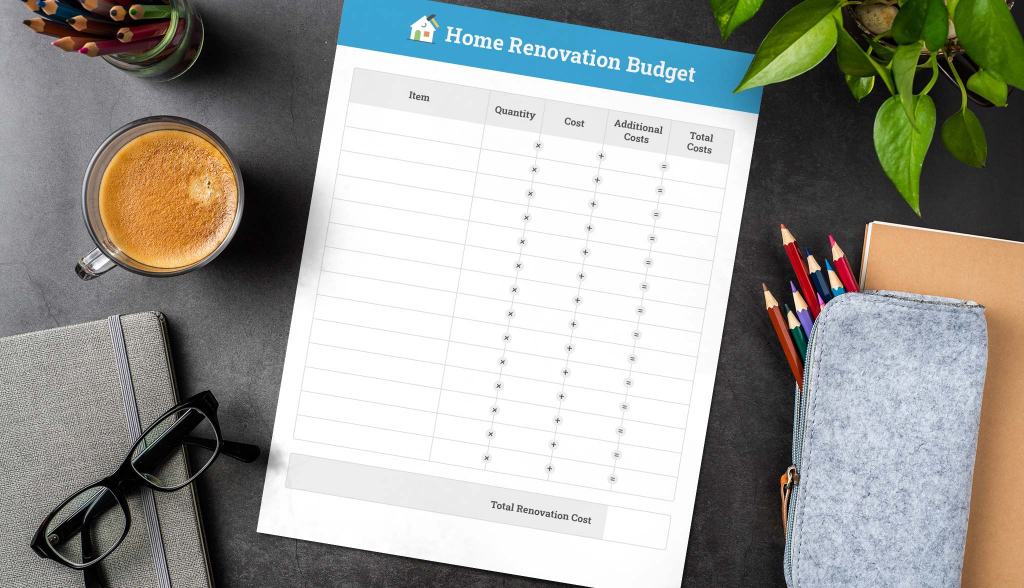
First, enter your budget amount at the top. This way you’ll have the budget in mind as you record prices. If you’re planning to DIY the project, enter the amount for supplies and any additional fees. If you’re hiring a professional, get an estimate and enter it into the total cost column.
We’ve included some cost estimates of materials below, but it’s always a good idea to confirm prices with your local hardware shop, especially if you’re looking for an item with a specific feature. Take your printable sheet with you as you’re browsing materials. Jot down the model numbers and costs to reference later.
There’s also a column for additional costs. Will you need help installing the item? Do you need a permit to make this home improvement? Be sure to write in these additional installation costs so they don’t push the project over your budget.
Low-Cost Home Improvements
1. Replace Light Bulbs
Cost: $8 – $40 per bulb
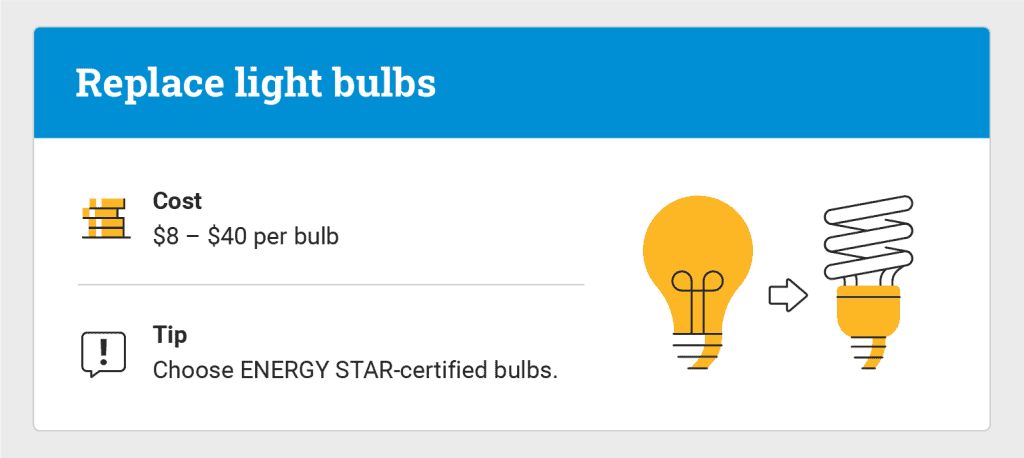
If you’ve got an older home, chances are incandescent bulbs are lurking in some of the fixtures. It might not be as easy as you’d expect to replace them with the same type of bulb when they burn out. On January 1, 2014, the Canadian government banned 75-watt and 100-watt incandescent bulbs, with the same fate befalling 40-watt and 60-watt bulbs on January 1, 2015.
Replacing your old energy guzzlers with ENERGY STAR-certified LED versions can yield $100 in energy savings over the lifespan of each bulb. Even more impressively, these lightbulbs last 15 times longer than incandescent bulbs and use 70% to 90% less energy.
2. Repaint Using Eco-Friendly and Sustainable Home Improvement Products
Eco-friendly paint cost: $50 – $140 per imperial gallon
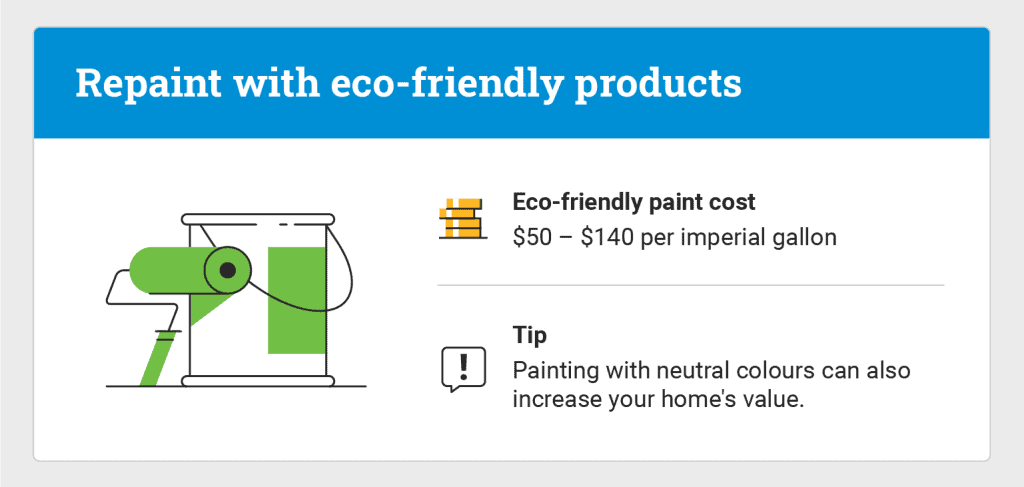
The paint used in many older homes negatively impacts air quality and is toxic to the environment. In particular, lead paint is hazardous for children and animals that may ingest chipped pieces. Even non-lead-based paint products can contain dangerous chemical additives.
Older paint products may contain volatile organic compounds (VOCs) that continue to vaporize and emit gasses into the air years after the paint has dried. In addition to minor health problems like headaches and respiratory irritations, VOCs have links to significant health problems such as cancer, kidney damage, liver damage and more. Applying a fresh coat of eco-friendly paint that’s known to have little or no VOCs can reduce toxins, both in the air of your home and in the environment at large.
Not only does a new eco-friendly paint job improve the health of your home, but it can increase its value. Studies have found that neutral coloured homes generally sell for more. When choosing a new paint colour, be sure to consider the impact it will have on the resale value of your home.
3. Fix Air Leaks
Cost of caulking: $3 – $7 per canister
Cost of weatherstripping: $20 – $70 per 6 metres
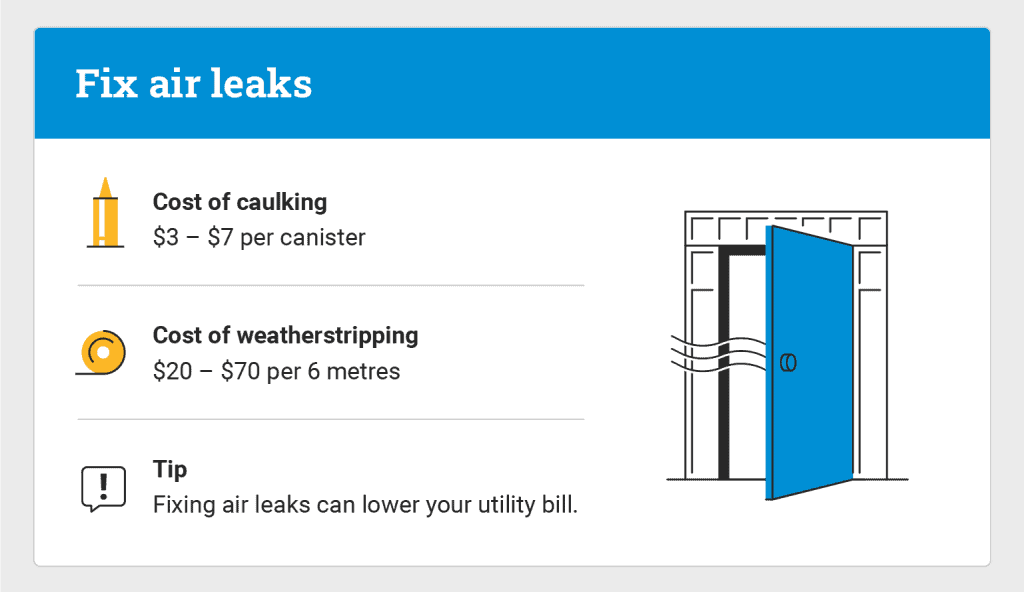
Older homes also tend to have older, drafty windows and doors that can severely impact energy efficiency. Fortunately, you can minimize this effect by applying a fresh layer of caulking and weatherstripping around the outside. In a short time, and for little more than $100, this is one of the most affordable yet effective ways to lower utility bills and make your home more comfortable.
4. Add Shutters or Window Coverings
Cost of window film: $35 – $70 per 1 X 2 metre
Cost of shutters: $270 – $700+ per pair
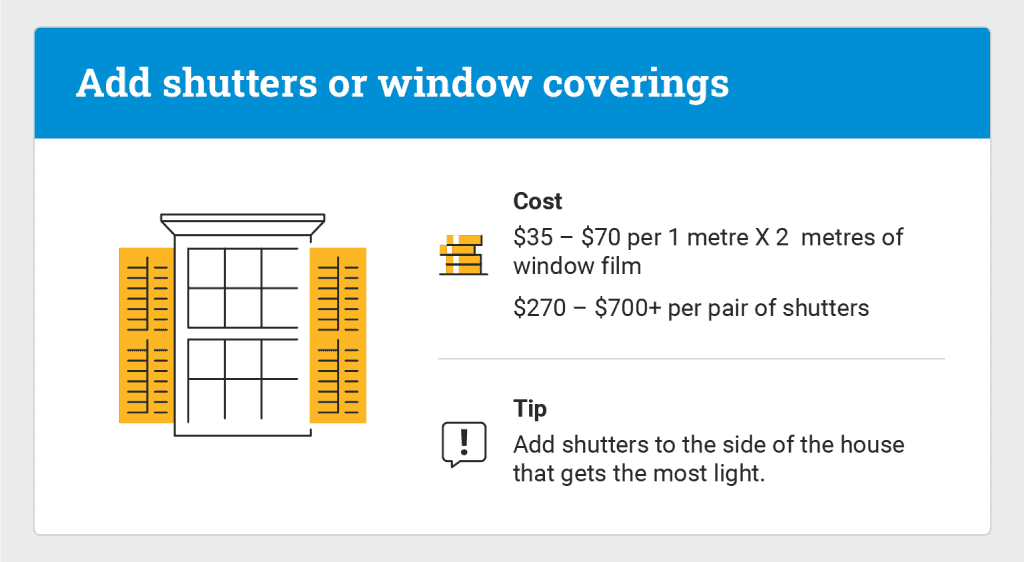
One way to add a little insulation to your windows is by attaching shutters. Shutters create shade on a hot day, reducing the amount you need to use your air conditioner. Place them on the side of your home that gets the most sun for optimal shade.
In addition to protecting your home, shutters can give you more privacy. Consider adding them to the street-facing side of your home to prevent anyone from peering inside.
For lower-cost alternatives consider adding blackout blinds or curtains — either blackout roller blinds, blackout curtains or honeycomb shades a — or window film. Window films come in a relatively easy press-on roll and attach directly to the window. There are films that offer designs and patterns; films that block heat and light and films that offer privacy.
5. Switch to a Low-Flow Showerhead
Cost: $20 – $250
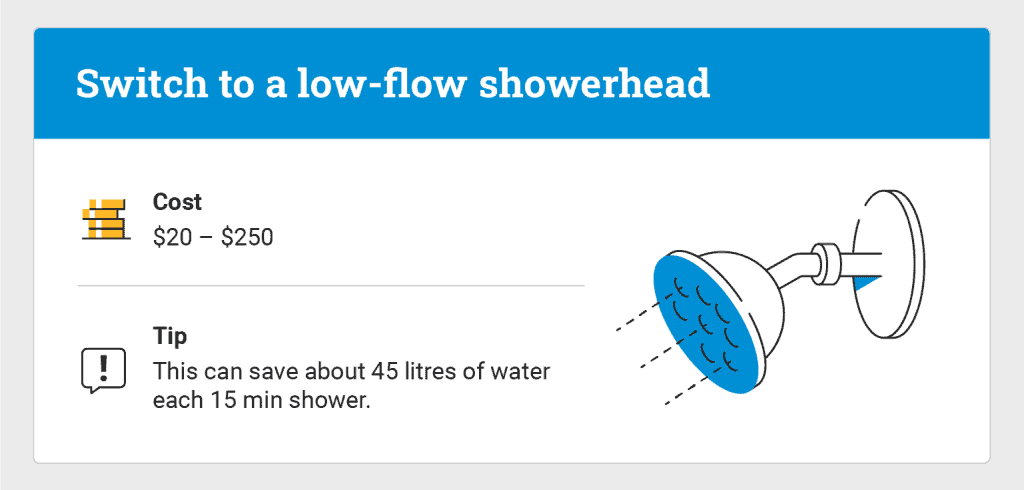
Showering and bathing contributes to 35% of residential water use in Canada. If you prefer a shower to a bath, there are ways to cut down your water usage. This first is most obvious: cut down your shower time. If you’re taking a 15-minute shower with a 12.5 litre per minute shower head, you’ll use 187.5 litres of water. By cutting that time in half, you’ll use half as much water.
Another easy solution is upgrading your shower head to a low-flow option. Low-flow showerheads release a maximum of 9.5 litres per minute. A 15-minute shower with a low-flow showerhead would use a maximum of 142.5 litres.
6. Shop Used and Restore
Cost: Varies
Another sustainable way to make home upgrades is by shopping second hand. There are plenty of good condition appliances that would otherwise end up in a landfill, potentially leaking chemicals. An eco-friendly alternative is to purchase these second-hand appliances and have them restored.
It may take a little digging, but many people list good condition materials and appliances through online marketplaces, just be careful with the buying and selling process. Here are some apps to browse before committing to a brand new home item:
- Kijiji
- Craigslist
- Facebook Marketplace
- Used.ca
- The Appliance Warehouse
- Restore (Habitat for Humanity’s new and used store)
What Are the Mid-Cost Sustainable Home Improvements You Can Make?

Ready to step up your sustainable home improvement efforts? You might need a little help from a contractor to complete these more complex home upgrades. Still, by reducing both energy costs and greenhouse gas emissions, your return on investment can be significant.
7. Get a Programmable Thermostat
Smart thermostat cost: $100 – $300
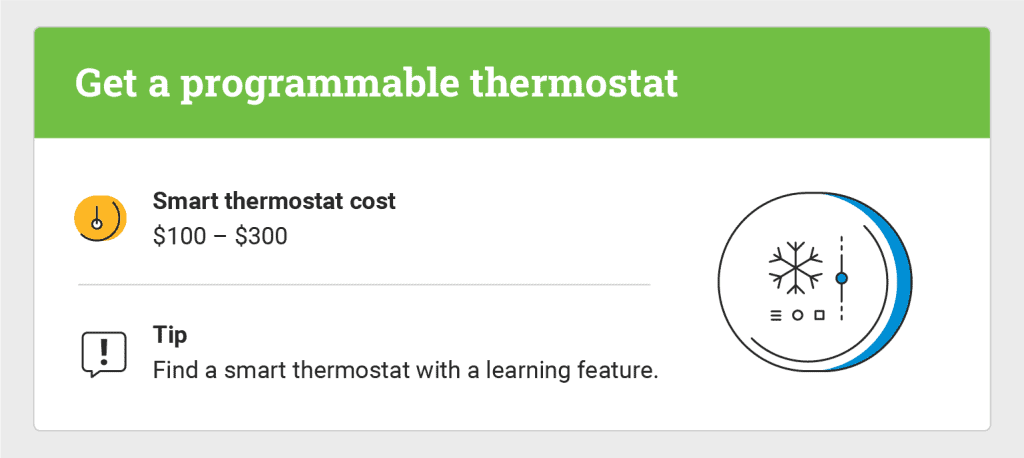
The “set and go” functionality of today’s user-friendly smart thermostats makes it easier than ever to maintain a consistently comfortable temperature in your home during off-peak hours. Some smart thermostats also have learning features. They are able to learn your household routine and schedule and adjust their settings based on it. Although smart thermostats have a higher up-front cost, these little devices can help to reduce your hydro bill by 10% or more.
8. Add a Ceiling Fan (Or Two)
Cost: $150 – $600 per fan
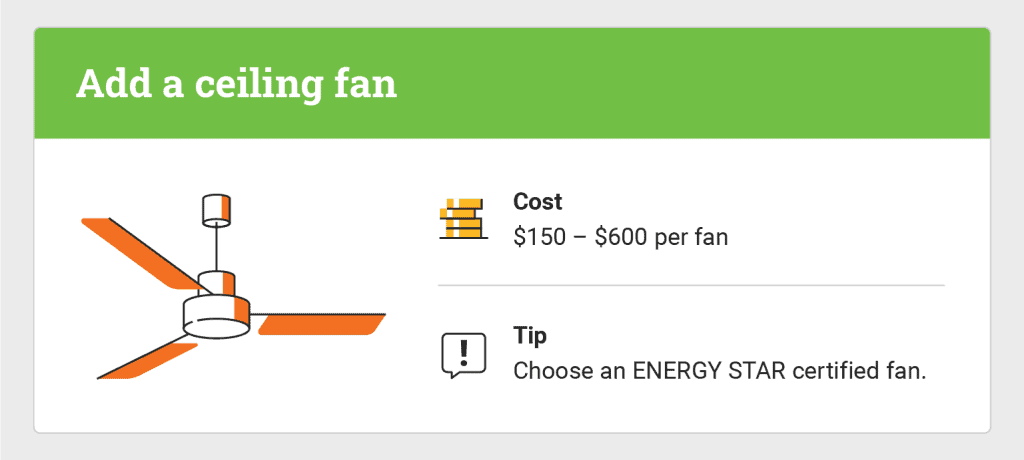
Ceiling fans are not just for decoration. They also control energy costs by circulating warm air throughout your home in the winter months and cold air in the summer.
Choose an ENERGY STAR-certified fan to be sure you’re getting the most energy-efficient model, and install one with cool LED lights to save even more.
9. Consider Extra Insulation
Foam board insulation cost: $30 – $50 per 1.2 metre x 2.4 metre square
Spray insulation cost: $10 – $20 per canister
Fiberglass roll insulation cost: $100 – $200 per 1 metre x 10.6 metre roll
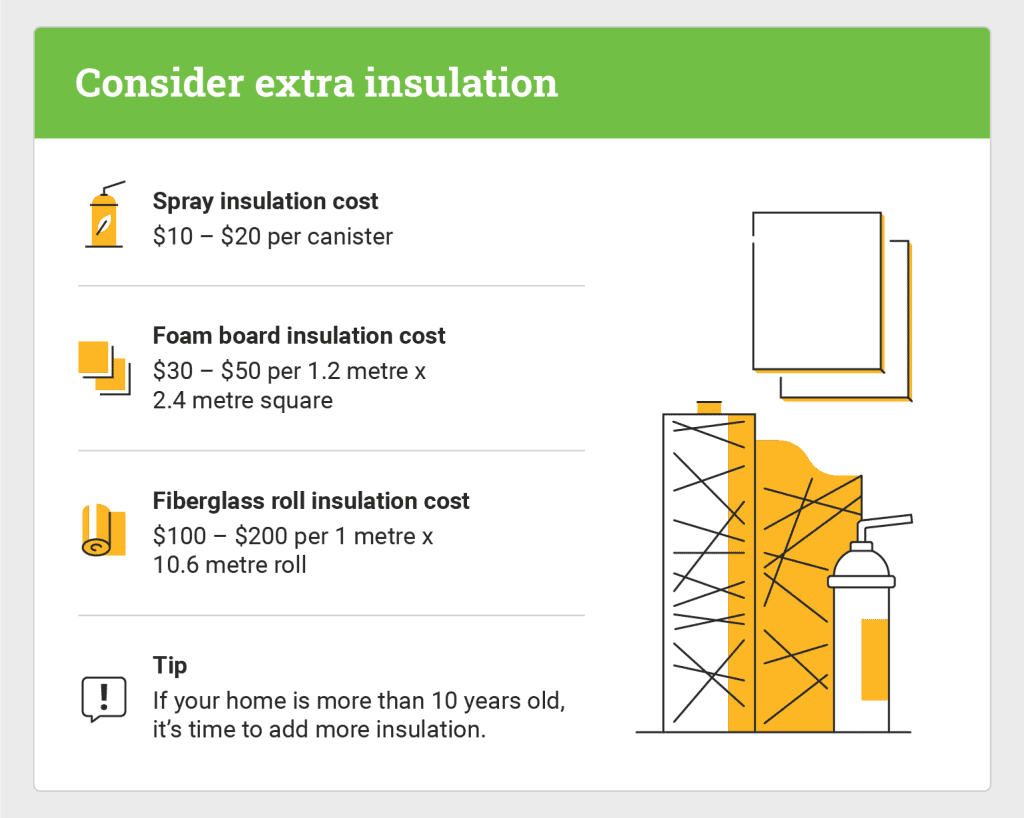
Even if you’ve never owned a home before, you probably know that the higher the R-value of insulation in your attic and walls, the more efficient it will be. If your home is more than ten years old, it’s probably time to upgrade and add more insulation.
The most common types are fibreglass, cellulose and foam, available as loose-fill, batts, foam board, rolls or spray board. You can purchase the insulation and rent the equipment from a big box store to do it yourself, or hire a reliable contractor to handle it for you.
10. Buy Energy-Efficient Appliances
Cost: Varies
Significant advances are happening in appliances like refrigerators, stoves, dishwashers, washers and dryers. Choose ENERGY STAR-certified models for the most considerable reduction in greenhouse gas emissions, electricity and water use. For example, ENERGY STAR washers use 25% less energy and 33% less water.
With an app or smart home device, today’s high-tech models can do everything from reminding you to change the fridge filter to sending cooking instructions directly to your oven. Not to mention, they look cool, too.
11. Update Your Bathroom Exhaust Fan
Cost: $70 – $200
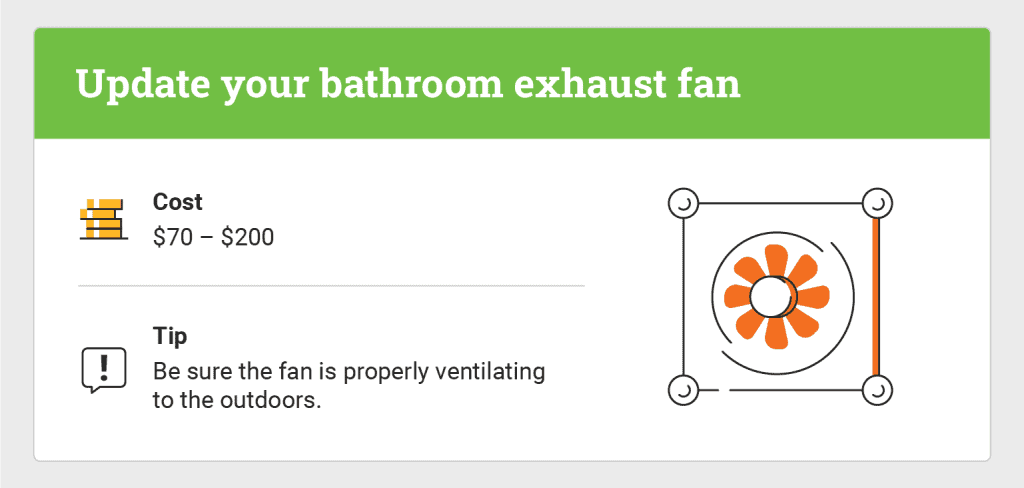
The bathroom exhaust fan removes moisture from the air. If you don’t use it, the moisture will linger in the room and can cause mould and mildew. Exhaust fans can also easily accumulate dust. This can cause it to function less efficiently, making it work harder and use more electricity.
If your exhaust fan is old, it may need a cleaning, repair or replacement to run properly. You should also confirm that it’s ventilating to the outdoors. Ventilation to the attic could cause excessive moisture to be trapped in the house. These small fixes can prevent mould and save energy.
12. Install a Low-Flush Toilet
Cost: $200 – $1,000
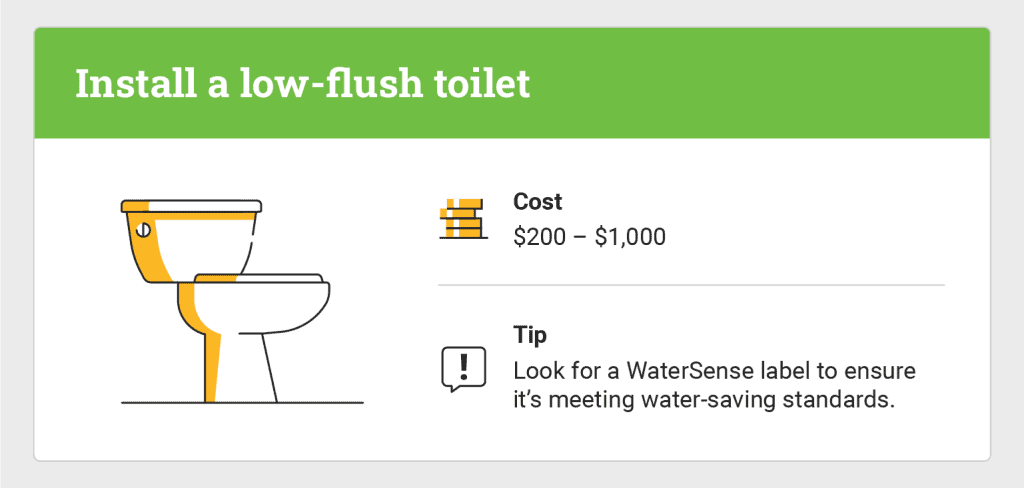
Data revealed that toilets account for 31% of water use in Canada. Homes with toilets installed before 1992 could be using up to 26.5 litres per flush. Luckily, you don’t need to stop flushing. Instead, update your appliance so that it conserves more water.
There are two types of energy-saving toilets. First, low-flow toilets have one setting, which uses about 4.8 litres per flush. The second is dual flush toilets, which have two settings. One setting is 4.8 litres per flush, and the other is only about 3 litres per flush. These eco-friendly toilets are also called High-Efficiency Toilets (HET).
When shopping for an eco-friendly toilet, you may notice that it has a WaterSense label. Similar to the ENERGY STAR products, this means that it’s operating efficiently, which is at a maximum of 4.8 litres per flush.
13. Start Your Own Composting
Cost: $90 – $200

Many Canadians use green bins to dispose of their compostable materials. While this is good for the environment, it can be even more beneficial to create your own compost bin so you can use the compost in your yard. This is also a sustainable solution for those who don’t have access to a green bin collection program.
Homeowners can buy or build a compost bin. If you are purchasing, you can likely take the composter with you when you move. If you’re building a compost bin out of wood, it will probably be a permanent addition to the house.
With this compost bin, you’ll be able to turn your waste into compost for your garden. This is a more sustainable solution compared to buying plastic bags of fertilizer.
14. Invest in Plants and Trees
Cost: $8 – $80 per plant
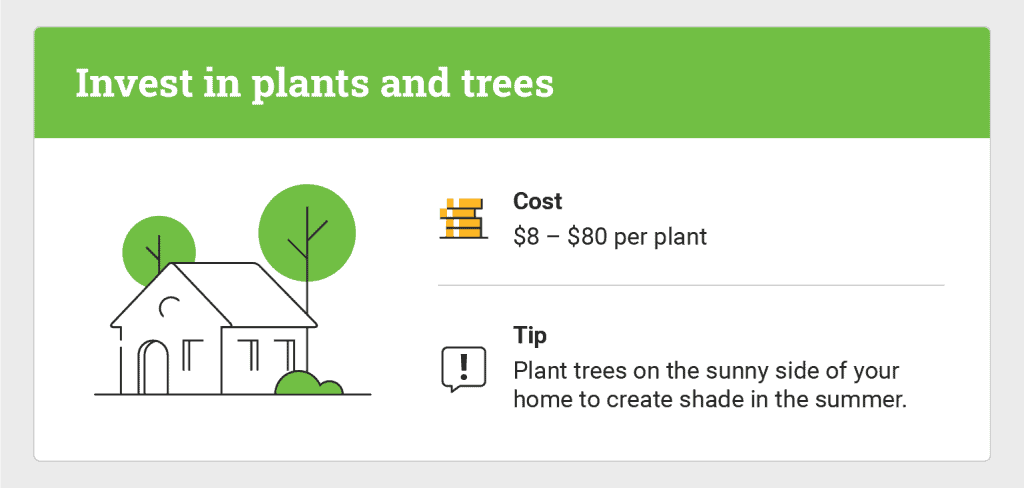
Plants are a great way to increase your home’s curb appeal, create shade and help fight climate change. Consider adding large trees to your yard on the side of the home that gets the most sunlight. This will keep the home from getting too warm on hot summer days and help you reduce the amount of electricity used to keep it cool.
As you know, plants remove carbon dioxide from the air and release oxygen into the atmosphere. By planting more plants and trees on your property, you’re improving the air you breathe.
Plants vary in cost, but there are ways you can reduce their price. Consider buying bulbs or seeds at a lower price. These will take longer to grow, but if you’re planting a lot, it will significantly reduce your cost.
Another trick is to try dividing perennials that you’re already growing in your yard. Every three to six years, you can separate and replant these perennials. This will help them grow better and give you more plants to fill out the garden.
More Substantial and Expensive Sustainable Home Improvements

15. Update Windows and Doors
Windows cost: $200 – $400 per window
Door cost: $300 – $700
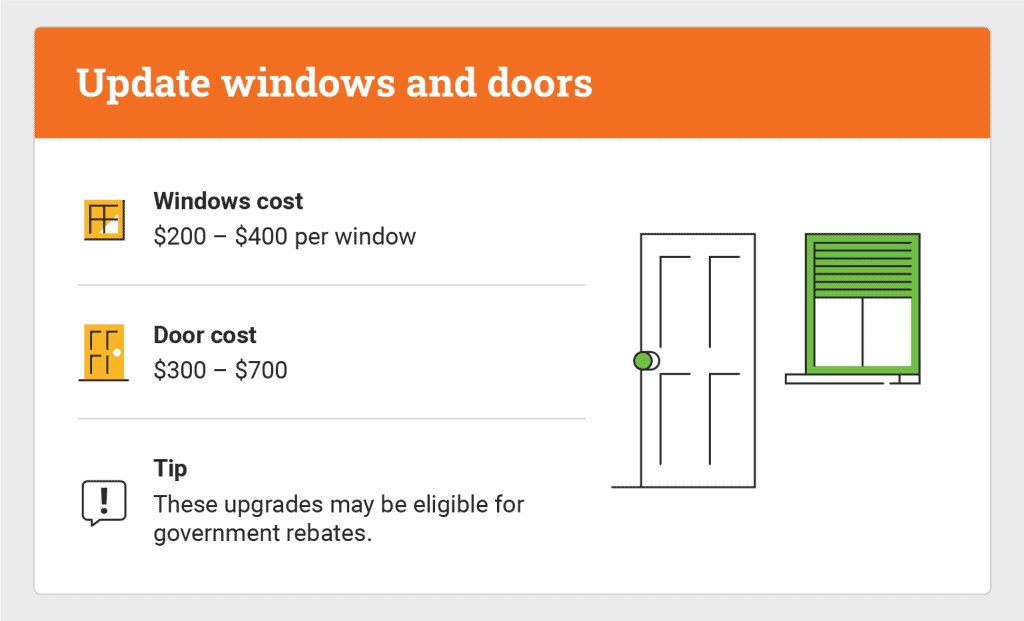
Do you have air leaks, or does ice form on your windows in the winter? Are your windows and doors becoming more challenging to open or close? If so, it might be smart to replace them, or at least some of them. New energy-efficient styles include double and triple-pane windows with Low-E coatings and argon or krypton gas fills. All of these styles will help to stop air and water leaks, keep out harmful UV rays and reduce energy bills.
Today’s exterior steel doors are also more secure and insulated than past versions, as are newer patio doors. Expect an impressive ROI on window upgrades when you sell your home, and be sure to check your eligibility for government rebates too.
16. Purchase a Water Heater
Cost: $500 – $1,300
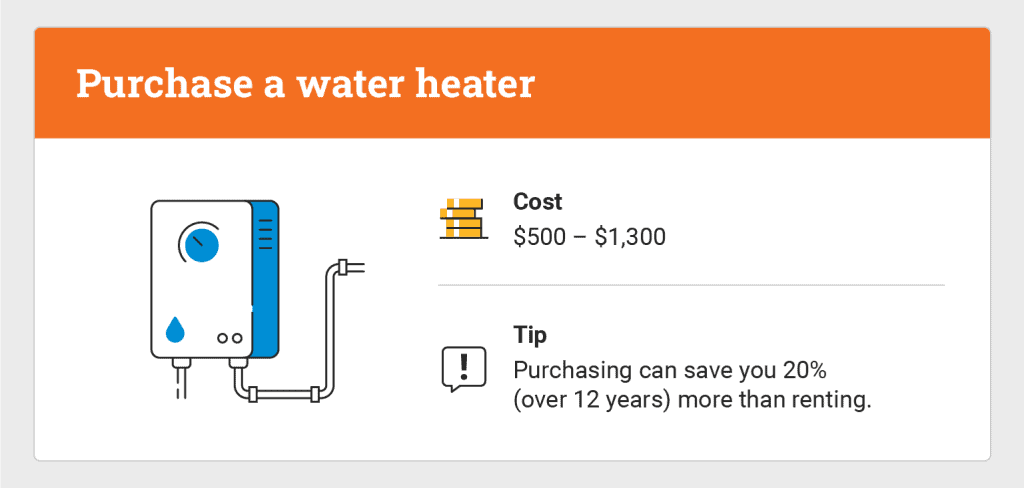
Are you still renting your water heater? Is it an old model? By keeping a steady supply of hot water ready at all times, regardless of whether it’s needed, old-style water heaters waste a lot of energy. Canadians use an average of 75 litres of hot water at home each day, and it’s reported that water heaters contribute to 19.3% of the energy used in an average Canadian home.
For homeowners who want to stop renting and purchase a water heater, home hardware store Lowe’s predicts that purchasing a water heater could save you at least 20% of what you’re currently paying to rent (over 12 years). Just be mindful that you will be responsible for all repairs and maintenance on an owned tank.
If you are considering a water heater upgrade, be sure to invest in a sustainable option. ENERGY STAR-certified water heaters function efficiently to reduce your electricity bill and carbon footprint. An even better option could be to switch to a natural gas-fuelled water heater. Rebates may also be available for additional savings on water heaters and installation costs.
17. Upgrade HVAC Systems
Cost: $3,000 – $6,000
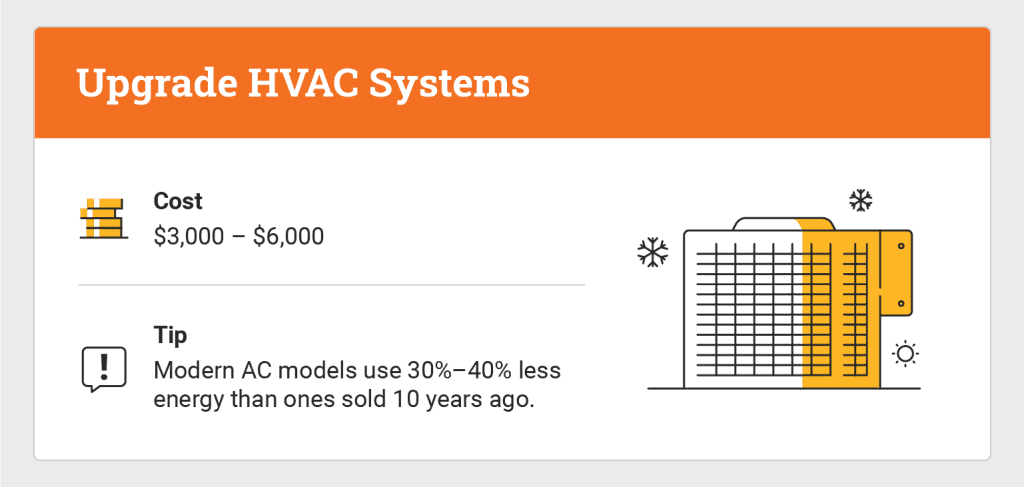
When planning a green renovation, you should strongly consider replacing your old HVAC system with a new ENERGY STAR-rated model. While this is an expensive up-front cost, homeowners can enjoy monthly savings on their energy bills.
ENERGY STAR-qualified air conditioning units use 30% to 40% less energy than the models sold 10 to 15 years ago. While, ENERGY STAR furnaces can save 6% to 9% more energy than mid-efficiency or older high-efficiency models. These energy-efficient HVAC systems can also improve the airflow and air quality in your house.
18. Invest in Solar Panels for Your Electricity Needs
Cost: Varies depending on wattage and days of sun
Example cost: $20,077 – $22,222 for 8.58 kW system in Ontario
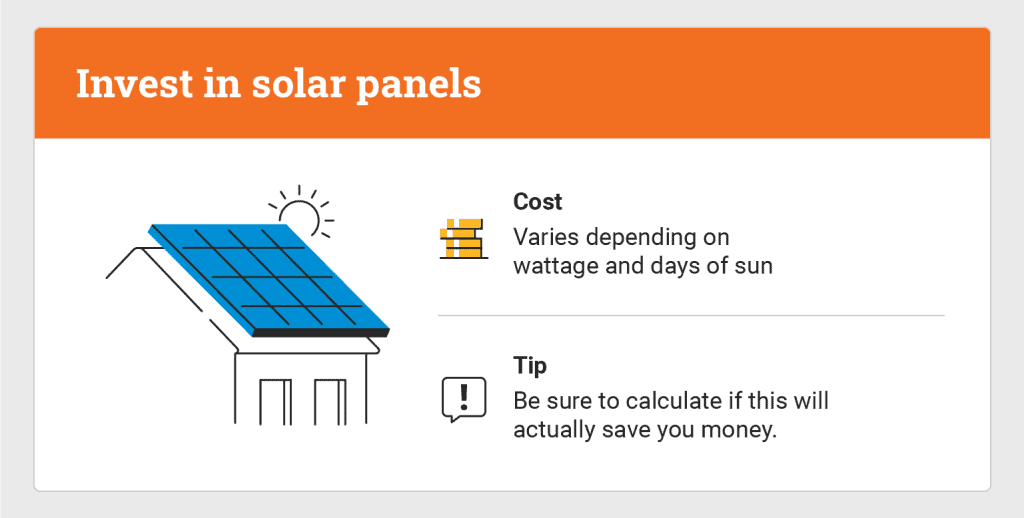
When you think of a sustainable upgrade, solar panels probably come to mind. While these panels can harness the sun to reduce your electricity bill, they aren’t always the best investment because their efficiency depends on the amount of sunlight you receive. If you’re considering this upgrade, be sure you’re in a location with plenty of sunlight where the solar panels will generate electricity for less than the cost of purchasing electricity from utility companies.
Even if you can generate electricity for less, the initial investment can still seem daunting. However, this cost is offset by the future potential to generate your own electricity and sell excess power back to the utility company. Connect all your systems and go completely off the grid for the maximum sustainable home improvement. Here again, solar incentive programs may be available through local municipalities to offset the initial investment.
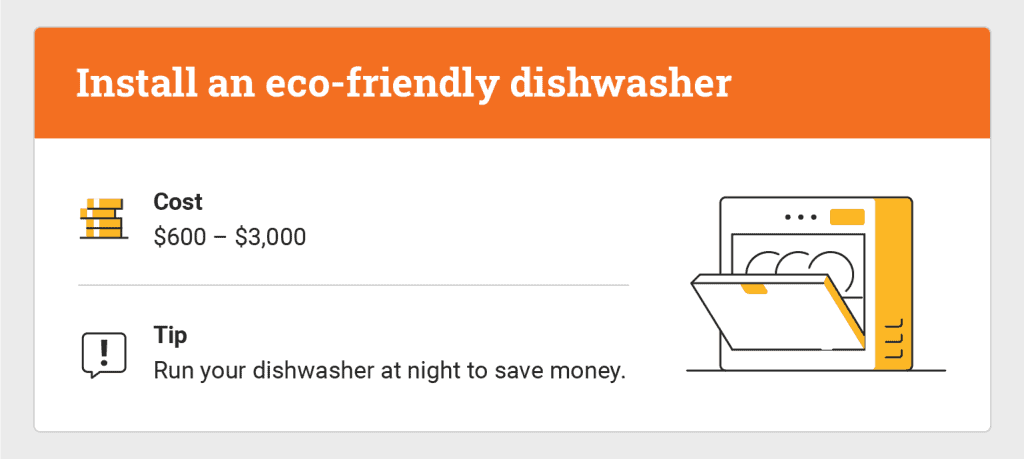
19. Install an Eco-Friendly Dishwasher
Cost: $600 – $3,000
In the 1990s, the average dishwasher used 37.9 litres of water per cycle. Modern dishwashers use as little as 7.6 litres per cycle. In addition to a decrease in water, these dishwashers save electricity, reducing your monthly utility bill.
When searching for an eco-friendly dishwasher, be on the lookout for an ENERGY STAR-certified model. These use 12% less energy and 30% less water than a standard model. Some provinces even offer a rebate for ENERGY STAR products.
Be sure to fill the dishwasher completely before running it as this will save water. It’s also suggested to use the “air dry” feature if your dishwasher has it. In some municipalities, electricity prices change based on the time of day. Mid-day electricity is more expensive because more people require it. Meanwhile, electricity used at night costs less. If this is true in your district, get in the habit of running your dishwasher at night to save money.
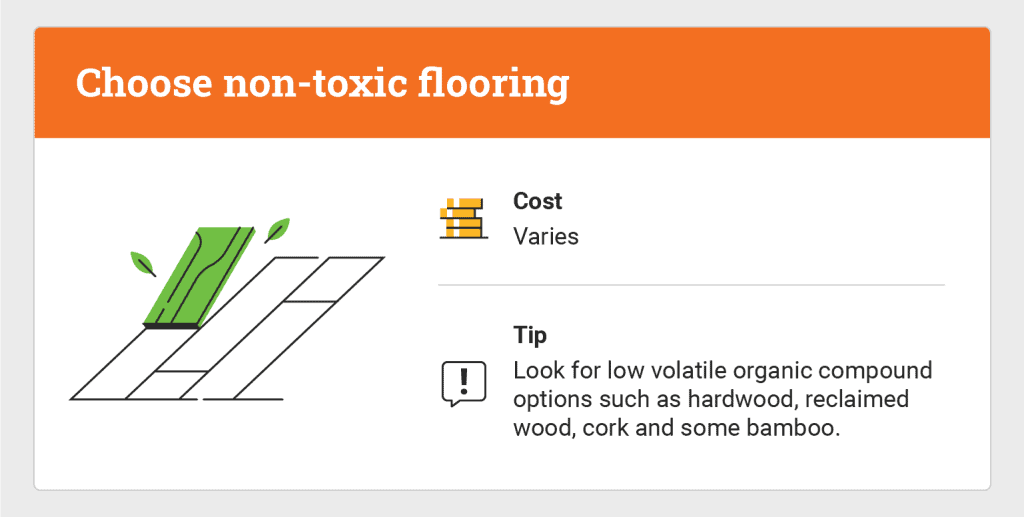
20. Choose Non-toxic Flooring
Cost: Varies
The flooring of your home doesn’t just impact the interior design; it can influence the air quality. If you’re looking to make a big sustainable upgrade to your house, installing non-toxic flooring will do the trick.
When thinking about purchasing sustainable flooring, you’ll want to consider a few questions:
- Was this material sustainably harvested?
- Is this material natural or a renewable resource?
- Was it manufactured sustainably?
- Will installing it require harmful chemicals?
- When you dispose of this material, what will its impact be?
Like paint, flooring can harbour volatile organic compounds (VOCs) that are dangerous for humans to breathe. Some low-VOC and sustainable flooring options include solid hardwood, reclaimed wood, cork and some bamboo varieties.
While these materials tend to have lower VOC levels, they may have other impacts on the environment. For instance, some bamboo flooring might not be sourced sustainably. Be sure to research each step of the process so that you know you’re picking a sustainable flooring option.
Hardwood Flooring
Hardwood is a natural material that can be carbon neutral. Choose FSC certified flooring to ensure the hardwood has been sustainably produced and manufactured.
Reclaimed Wood
A large amount of waste construction waste is due to upgrades, renovations and demolitions. Luckily, companies can repurpose this waste into new products. Reclaimed wood flooring is one way to save this perfectly good wood from entering landfills.
Cork
Manufacturers harvest cork flooring from the bark of the cork tree. While the material is sustainably sourced, it’s primarily harvested in southern Europe, so shipping it to your location will have a sizable impact on the environment.
Bamboo
Bamboo is a grass that grows back very quickly once harvested. If you’re considering bamboo flooring as a sustainable option, be sure to find out if it’s FSC certified. It’s also important to know what type of glue the manufacturer uses to create and install the flooring. If they use formaldehyde adhesives, VOCs pose a danger to the home.
DIY Home Renovation Resources
Now that you’re familiar with the size and complexity of each of these sustainable upgrades, you can decide if you’d rather hire a professional or do them yourself. If you choose the DIY route, here are some resources that may be helpful.
- HGTV – a variety of blog posts that explain step-by-step DIY home renovations.
- Bob Vila – a how-to center that provides help for common home revamps.
- Home RenoVision DIY – a YouTube channel that walks you through home upgrades.
- MoneySense – blog posts that provide money-saving tips for home upgrades.
- DIY Training Center – paid courses that teach you how to do complex renovations.
Whether you do a little or a lot, there are plenty of sustainable home improvement projects you can implement to help the planet and improve your home’s resale value, no matter where you live. More and more homeowners and home buyers strive to be environmentally responsible. With more “green” solutions available every day, there’s a real chance that such efforts can make the earth a better place to live for years to come.
Methodology
All costs reflect the price of materials and appliances. They do not account for additional tools required or labour to install. We sourced all costs by referencing prices at Home Depot and Lowe’s. Shutter prices were sourced from Home Guide. Other manufacturers may have differing prices.
References:
- Government of Canada
- Government of Canada
- Energy Hub
- Earth 911
- Government of Canada
- York Region
- Constellation
- Rise