Canadian winters build character and make Canadians tougher. Not to mention make us truly appreciate warm summer days. But venturing out into -40°C temperatures or trudging through 30 centimetres of snow isn’t everyone’s idea of fun, especially considering how long winter seems to drag on in some provinces. Perhaps it’s not surprising that many Canadians prefer to travel to places like Mexico, Cuba and the Dominican Republic between January and March.
However, trips are cancelled for at least the first few months of 2021. In fact, most of us won’t travel much further than the grocery store. If you feel a bit trapped in your home because it’s too dark and cold to go outside, you’re not alone. The good news is, many homeowners are using this break from travel to give their outdoor living spaces some much-needed attention this year. If you could use an outdoor refuge sooner rather than later, you may want to add one of these three upgrade projects to your to-do list.
How Can You Upgrade Your Outdoor Living Space?
1. Cover Your Patio or Gazebo
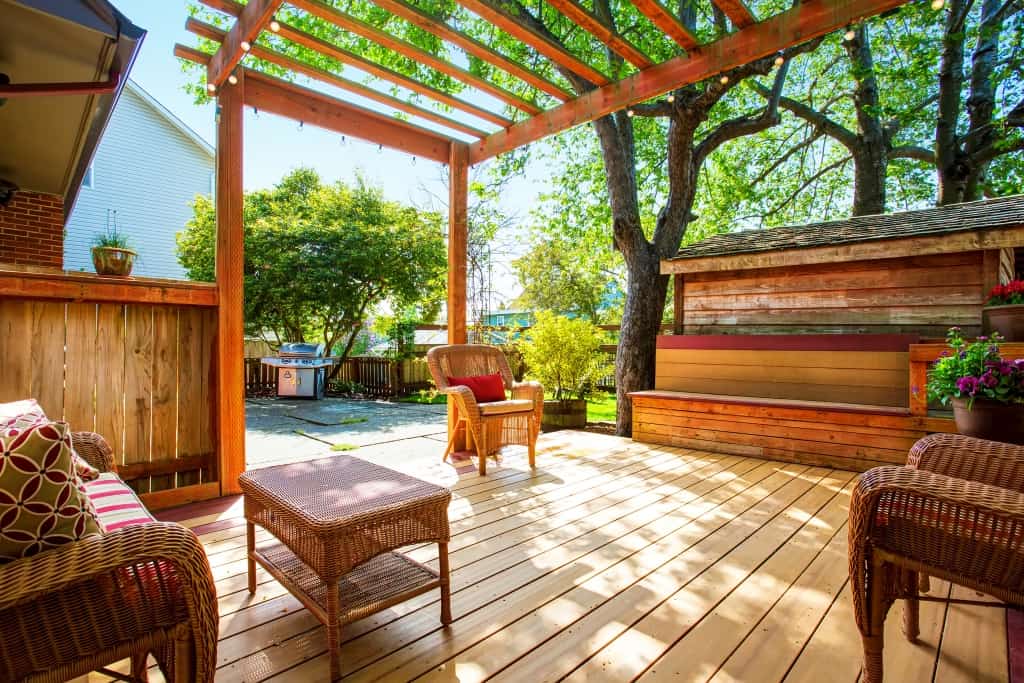
Even if winter weather doesn’t provide the ideal conditions for relaxing outdoors, you can still enjoy a bracing breath of fresh air. Covering your backyard patio or gazebo with a waterproof cover helps keep the wind and snow away, and provides a cozier outdoor retreat when the temperatures fall. Gazebos can be winter-proofed relatively quickly and inexpensively. You can find waterproof tarps or covers at most hardware stores, and it’s easy to put them up.
You can also bundle up a pergola because they have a roof – but it will be more challenging to find something that fits well if your pergola is an odd shape or very large. Make sure to regularly brush snow off of the top of your tarp or cover so that it doesn’t damage or break the frame.
If your outdoor living space doesn’t have a roof or other overhead protection, you may be able to build a covering for it. But this isn’t typically a one-day, inexpensive project. Depending on the size, design and type of material, you could spend anywhere from $1,000 to $10,000. You’ll first want to check the local codes, and review rules and regulations if you are part of a strata or homeowners’ association (HOA) to make sure you can carry out this project. Once you’ve got the go-ahead, one option is to build the overhead directly on the existing patio slab. However, if the concrete is not thick enough to support the overhead’s weight, you will have to pour new footings around the slab. You can get a better idea of what the project entails here.
2. Add Lighting to Brighten the Space
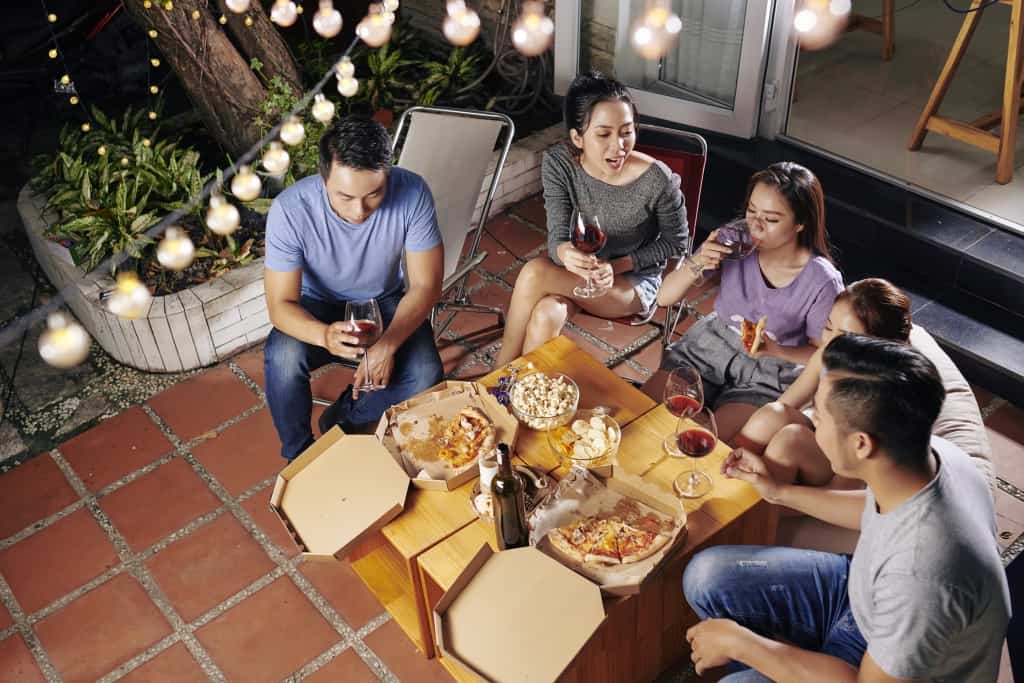
No matter how big or small your outdoor living space is, adding a little light is a bright idea that can make a large impact on the way your space looks and feels. For example, soft lighting creates a warm and inviting atmosphere. To brighten your space, you could do something as simple as hang string lights or Christmas lights. Or, if you’re able to make significant changes to your property, you can install permanent light fixtures.
If you have any concerns about outdoor lighting increasing your electricity bill, you can purchase solar-powered fixtures or LED light fixtures, which use much less energy. LED bulbs also give off less heat than traditional halogen bulbs, so there’s a much lower risk of nearby coverings and plants being affected by the heat.
If you’re feeling crafty and are short on fixtures to hang your lights from, consider making your own freestanding solution using planters and wood posts.
3. Turn Up the Heat
If you’re going to spend more than ten minutes outside when it feels like -10° (or colder), you’re going to need a source of heat. Whether it’s portable or permanent, an outdoor heater or fireplace is a must-have.
It’s important to know that outdoor heaters are sturdy but aren’t always easy to transport. This is partly due to their size and weight, as well as the fact that many have components that get extremely hot when in use, making repositioning difficult. Some heaters may even be installed as permanent fixtures, so choosing the right placement for your outdoor living space is important. You can find models for under $200, or splurge and and get a model with more features for over $500.
Three things to keep in mind if you’re investing in an outdoor heater:
- Make sure the heater has been certified
- Read the instructions thoroughly
- Store the cylinders properly if the heater runs on propane
The Technical Standards and Safety Authority (TSSA) recommends keeping propane cylinders outdoors in a secure area, away from potential fire hazards.
Outdoor fireplaces come in many different styles and materials, making it easy to find one that compliments your space. If you’re looking for a wood-burning option, you can find contained open-air fireplaces, often referred to as chimineas, at many retail outlets. But before you break out the marshmallows, you’ll want to check your city bylaws, since many places forbid open-air burning.
Gas fire pits are a safe, stylish, and clean-burning option designed to operate with propane or natural gas. The drawback here is that they are not meant for food preparation. Gas campfire units that are ULC and CSA approved are permitted in most Canadian cities, provided you supervise them at all times and follow the manufacturer’s operating instructions.
Is Upgrading Your Outdoor Living Space Worth It?
Adding a bit of light, heat and protection to your balcony, gazebo, or patio can help you create a warm and inviting outdoor space. In most cases, it doesn’t even have to cost a lot of money. With a few simple adjustments, you can transform your outdoor living space into the perfect refuge for all seasons.